The Ultimate Mat Prevention Checklist: Keep Your Pet Happy & Tangle-Free!
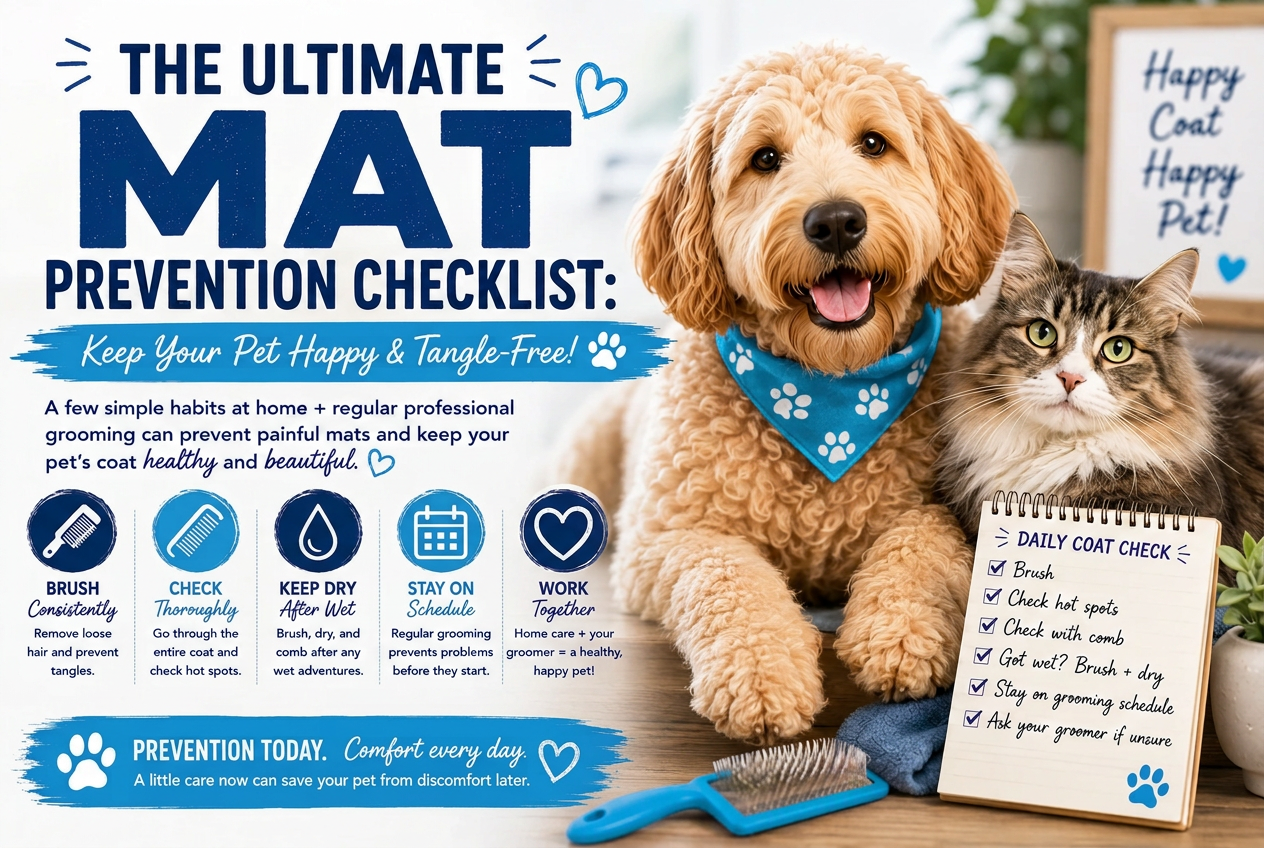
We've talked about what mats are, how they form, why they can become painful, and why groomers can't always simply brush them out. Now comes the most important part: How do we prevent them in the first place? The good news is that mat prevention doesn't have to be complicated. A few consistent habits at home, combined with regular professional grooming, can make a huge difference in your pet's comfort and coat health. So we've put everything together into one easy checklist you can come back to whenever you need it. 💙
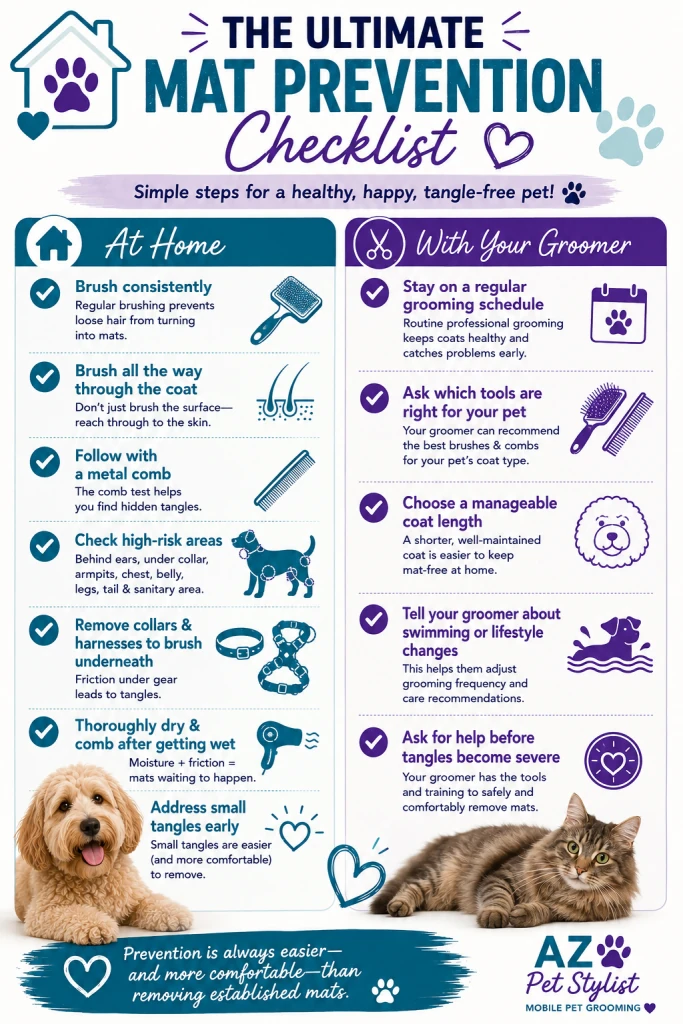
The Ultimate Mat Prevention Checklist
At Home
- ✔ Brush consistently
- ✔ Brush all the way through the coat
- ✔ Follow with a metal comb
- ✔ Check high-risk areas
- ✔ Remove collars & harnesses to brush underneath
- ✔ Thoroughly dry and comb after getting wet
- ✔ Address small tangles early
With Your Groomer
- ✔ Stay on a regular grooming schedule
- ✔ Ask which tools are right for your pet
- ✔ Choose a manageable coat length
- ✔ Tell your groomer about swimming or lifestyle changes
- ✔ Ask for help before tangles become severe
Prevention is always easier—and more comfortable—than removing established mats.
1. Brush Consistently
How often your pet needs brushing depends on their coat. Long, curly, fluffy, and continuously growing coats generally require much more home maintenance than short, smooth coats.
But here's the important part: don't wait until you see tangles to start brushing. By the time you can see matting on the surface, there may already be additional tangles developing underneath.
Regular brushing removes loose hair before it has a chance to become trapped and tangled within the coat — and it keeps home maintenance manageable between professional appointments.
A better approach: short, consistent brushing sessions beat one giant brushing session after tangles appear.
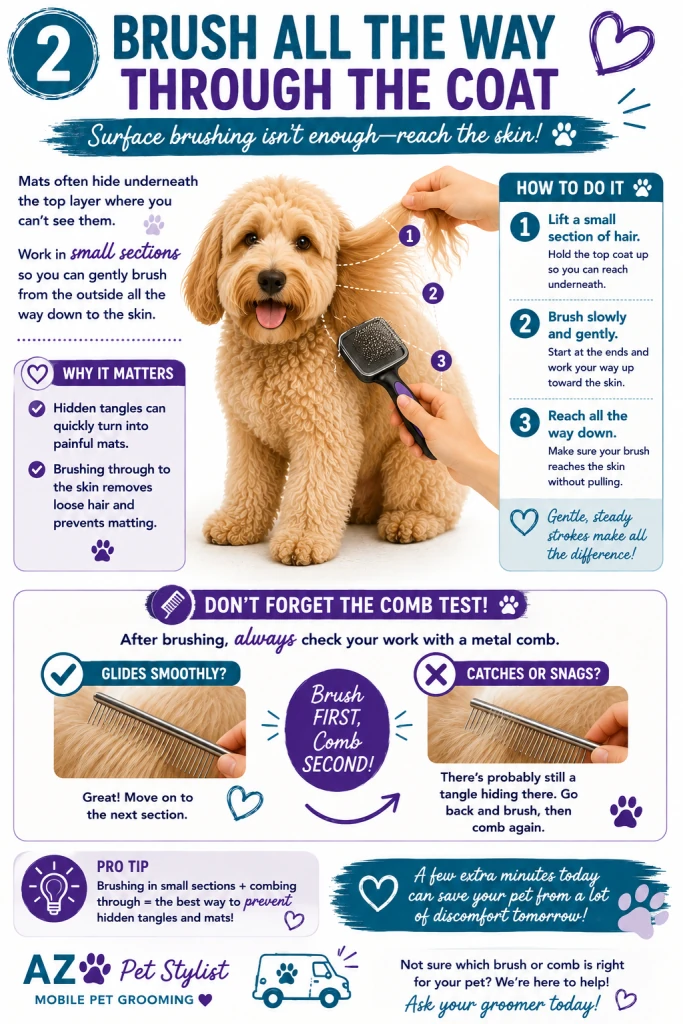
2. Brush All the Way Through the Coat
One of the sneakiest things about matting is that a pet can look perfectly fluffy on top while tangles are developing underneath. This is why surface brushing isn't enough.
For longer or thicker coats, work in small, manageable sections so you can gently brush through the full depth of the coat.
Then comes the most important part: check your work with a comb.
3. Do the Comb Test
After brushing, gently run a metal grooming comb through the coat. Does it glide through easily? Great — move to the next section. Does it catch? There's probably still a tangle hiding there. Go back with your brush, gently work through the area, and check it again.
Brush first. Comb second.
Your metal comb is one of the easiest ways to find hidden tangles before they become larger mats.
If you're not sure which brush or comb is appropriate for your pet, check out our guide: Brush Smarter, Not Harder: Choosing the Right Grooming Tools.
4. Check the Areas Mats Love Most
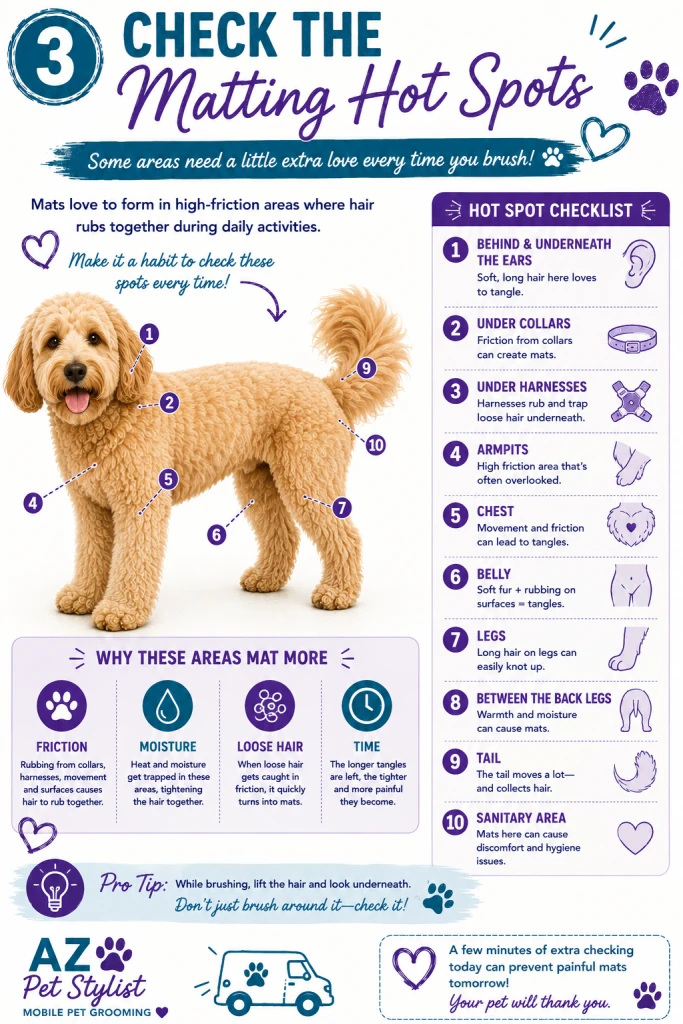
Some areas deserve a little extra attention every time you brush. Make a habit of checking:
- 🐾 Behind and underneath the ears
- 🐾 Under collars
- 🐾 Under harnesses
- 🐾 Armpits
- 🐾 Chest
- 🐾 Belly
- 🐾 Legs
- 🐾 Between the back legs
- 🐾 Tail
- 🐾 Sanitary area
Why these areas? Friction. As your pet walks, runs, plays, sleeps, or wears a collar or harness, the hair repeatedly rubs together. That friction encourages loose hairs to intertwine and eventually form tangles.
5. Take Off Collars & Harnesses
This one is easy to forget! If your pet regularly wears a:
- • Collar
- • Harness
- • Sweater
- • Bandana
- • Clothing
...make sure you're removing it during brushing. Hair underneath these items experiences constant friction and pressure, making these areas prime locations for mats.
Don't just brush around the harness — take it off and check underneath it.
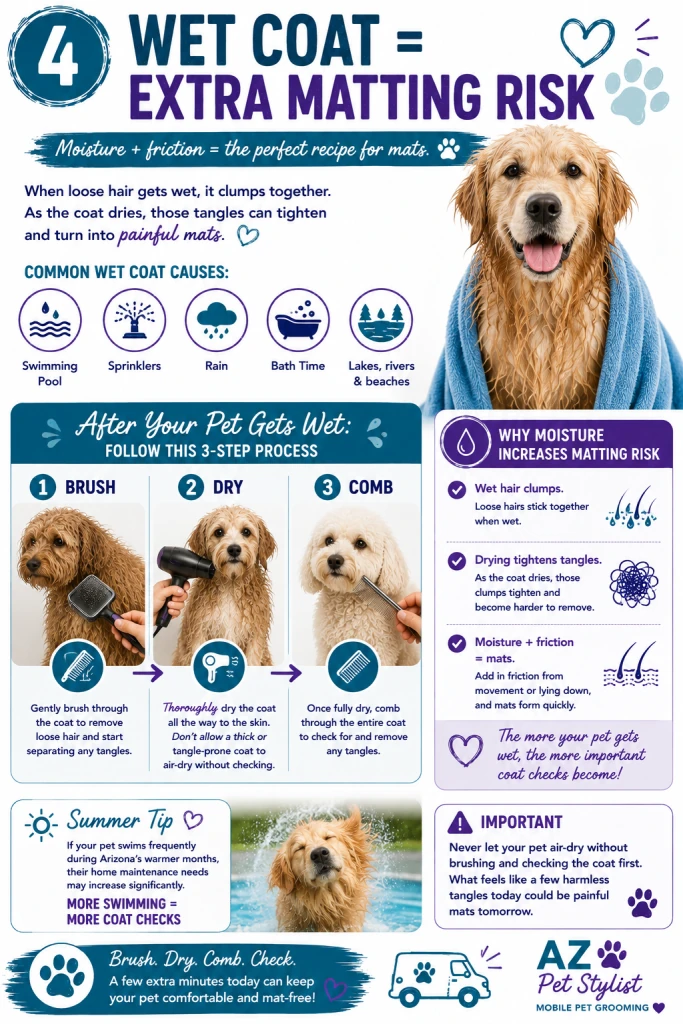
6. Got Wet? Brush, Dry & Comb!
Swimming pool. Sprinklers. Rain. Bath time. A trip to the lake. Even playing in wet grass. They're all fun, but moisture can dramatically increase your pet's risk of developing mats.
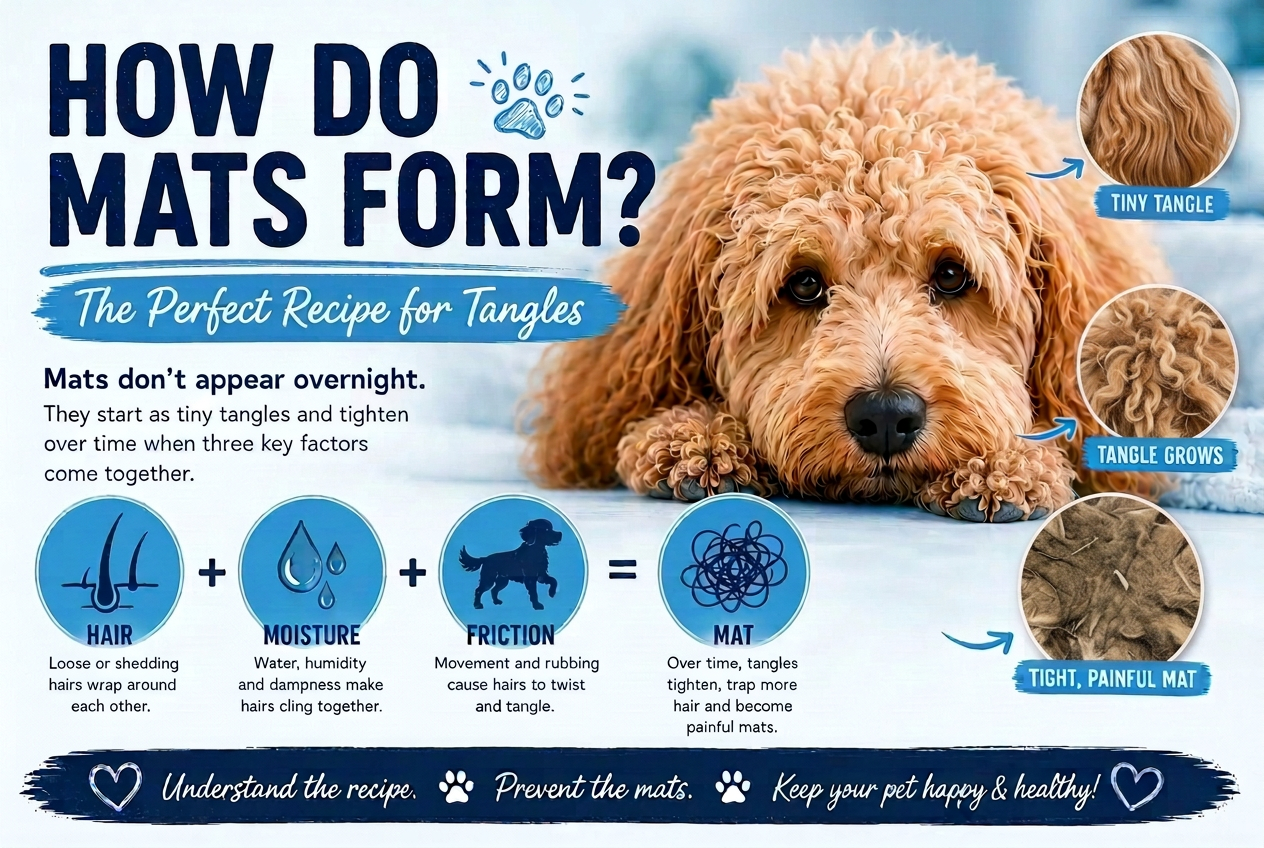
When loose hair gets wet, it can clump together. As the coat dries, those tangles can tighten — moisture from swimming, sprinklers, rain, baths, and similar activities is a major accelerator of mat formation.
After your pet gets wet:
- • Brush
- • Dry thoroughly
- • Comb through the coat
Don't allow a thick or tangle-prone coat to repeatedly air-dry without checking it.
Summer Tip ☀️: If your pet swims frequently during Arizona's warmer months, their home maintenance needs may increase significantly. More swimming = more coat checks.
7. Catch Small Tangles Early
A tiny tangle is much easier to address than a large mat. That's why regular coat checks matter — when you catch a small tangle early, you may be able to gently work through it before it tightens.
But there's an important distinction: small tangle ≠ tight mat.
If you're pulling harder, your pet is becoming uncomfortable, or the mat is tight against the skin, stop. Don't keep brushing harder.
And never reach for scissors to cut a tight mat out yourself. Mats can pull skin up into the tangled hair, making it difficult to tell where the coat ends and the skin begins — attempting to cut a severe mat with scissors can cause serious injury.
Instead, contact your groomer and we can help safely.
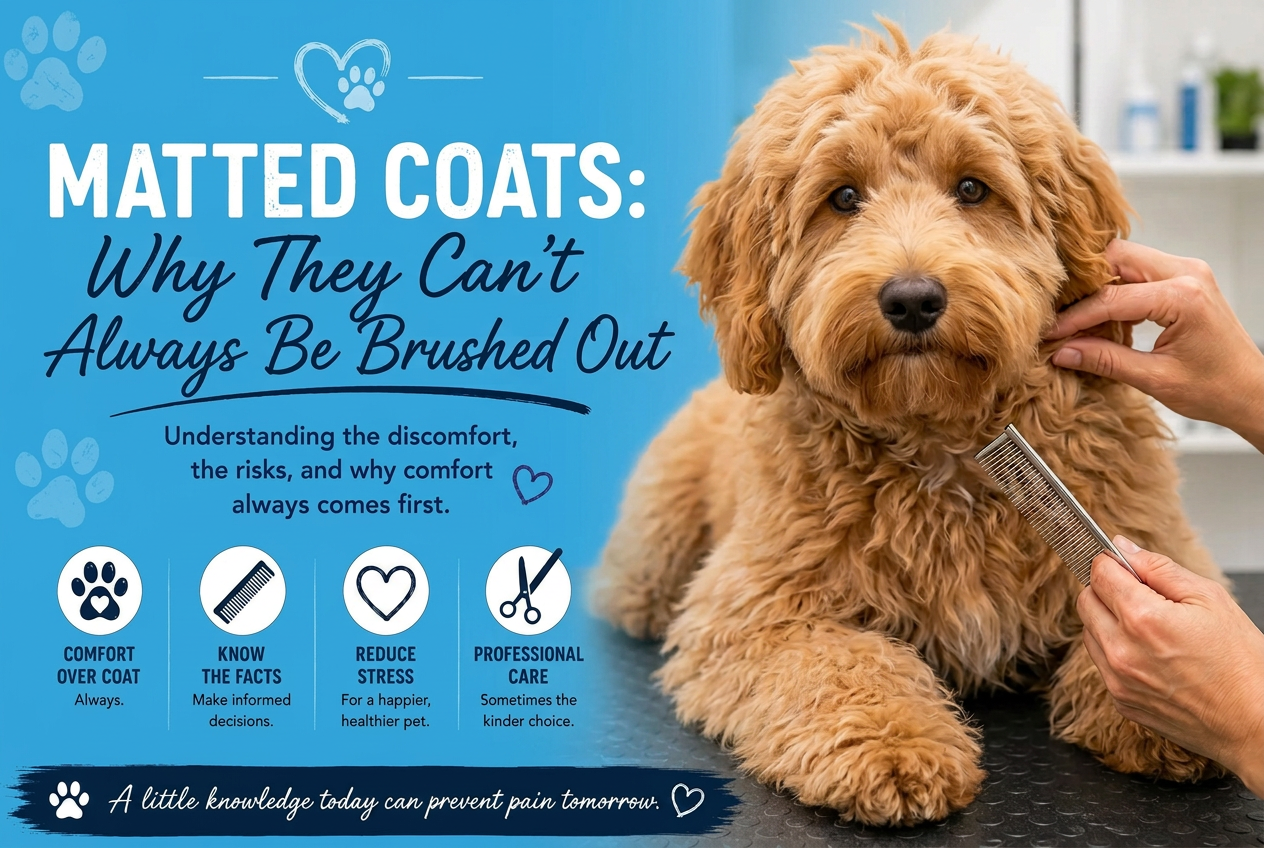
That's also why mats can't always be brushed out — and what groomers do instead.
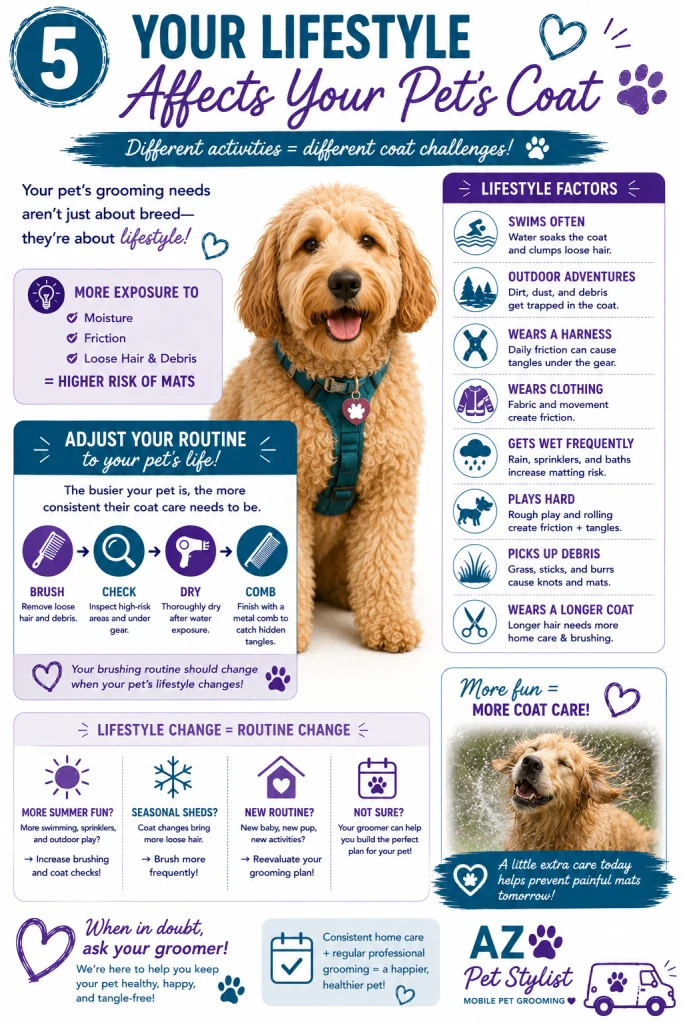
8. Adjust Your Routine to Your Pet's Lifestyle
Your pet's grooming needs aren't determined by breed alone — think about their everyday life. Does your pet:
- • Swim frequently?
- • Hike or spend lots of time outdoors?
- • Wear a harness every day?
- • Wear clothing?
- • Get wet frequently?
- • Play hard with other dogs?
- • Pick up dirt and debris outside?
- • Wear a longer haircut?
The more opportunities there are for moisture, friction, loose hair, and debris, the more coat maintenance your pet may need. Your brushing routine should change when your pet's lifestyle changes.
9. Choose a Haircut You Can Maintain
We love a fluffy dog as much as anyone. But longer isn't always better — longer coats generally require more brushing, more combing, and more maintenance between professional appointments.
If you love the fluffy look and enjoy keeping up with the brushing — great! But if home brushing is becoming difficult, there's nothing wrong with choosing a shorter, more manageable style.
The best haircut isn't just the cutest one. It's one that works for your pet AND your lifestyle. Talk with your groomer about finding that balance.
10. Stay on a Regular Professional Grooming Schedule
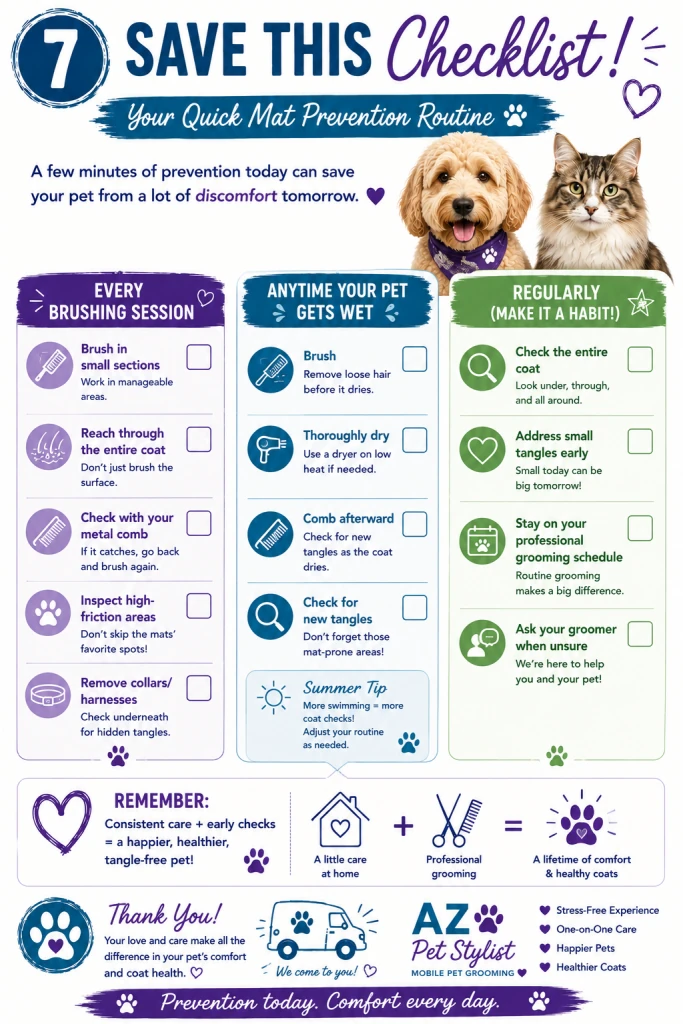
Home maintenance and professional grooming work together.
Routine professional grooming helps remove loose coat, identify developing tangles, maintain the skin and coat, and catch problem areas before they become more difficult to manage.
And your groomer can help you determine:
- • Which tools to use
- • How often to brush
- • Which coat length is manageable
- • Where your pet tends to mat
- • How frequently your pet should be professionally groomed
Your pet's ideal schedule depends on their individual coat and needs — explore our dog grooming services.
For cat parents, regular professional grooming can also help prevent painful matting, remove loose undercoat, reduce shedding, and maintain coat health. Explore our cat grooming services.
Mat Prevention Is a Team Effort
You don't have to become a professional groomer to keep your pet's coat healthy — your job is simply to stay consistent and catch problems early.
At home: brush, comb, check, dry. At the groomer: maintain, assess, adjust, prevent.
When we work together, we can help prevent small tangles from becoming painful mats, and make grooming a much happier experience for your pet.
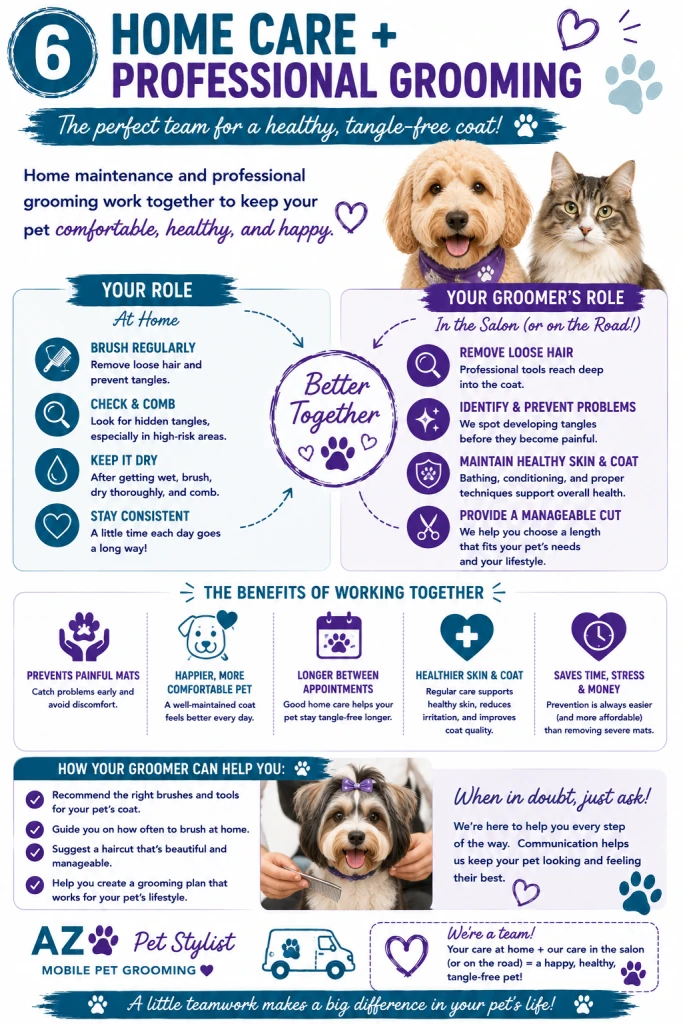
Your Quick Mat Prevention Routine
Every Brushing Session
- ✔ Brush in small sections
- ✔ Reach through the entire coat
- ✔ Check with your metal comb
- ✔ Inspect high-friction areas
- ✔ Remove collars/harnesses to check underneath
Anytime Your Pet Gets Wet
- ✔ Brush
- ✔ Thoroughly dry
- ✔ Comb afterward
- ✔ Check for new tangles
Regularly
- ✔ Check the entire coat
- ✔ Address small tangles early
- ✔ Stay on your professional grooming schedule
- ✔ Ask your groomer when you're unsure
Remember:
A few minutes of prevention today can save your pet from a lot of discomfort tomorrow. 💙
Next in Our Matting Season Education Series 🐱
We've talked a lot about dogs throughout this series. But there's another pet that can experience matting, even though they're famous for grooming themselves: cats!
Next up: Yes… Even Cats Get Mats! — we'll explain why cats develop mats, where they tend to hide, what signs pet parents should watch for, and how regular grooming can help keep cats comfortable.
Keep Your Pet Happy, Healthy & Tangle-Free
Mat prevention isn't about achieving a perfectly fluffy coat every day — it's about comfort. Consistent home maintenance and professional grooming can help keep your pet's coat manageable and catch small problems before they become bigger ones.
And if you're ever unsure about a tangle, tool, brushing technique, or grooming schedule, ask us. We're here to help. 💙
AZ Pet Stylist provides mobile dog and cat grooming throughout the East Valley, including Queen Creek, Chandler, Gilbert, San Tan Valley, Ahwatukee, Mesa, Tempe, Apache Junction, and Arcadia.
Learn more about AZ Pet Stylist. For coat-care habits at every age, read A Lifetime of Healthy Coats.
Frequently Asked Questions
How often should I brush my dog at home?
It depends on your dog's coat and haircut — longer or thicker coats need more frequent brushing than short, smooth ones. As a rule of thumb, a few short sessions each week are far more effective than one long session, and every session should reach all the way through the coat, not just the top layer.
What is a comb test, and how do I do one?
After brushing, run a metal comb all the way through the coat, down to the skin. If the comb glides smoothly everywhere, you're in good shape. If it stops or snags on tangles near the skin, there are mats hiding under the top layer that need more attention.
What should I do if I find a mat I can't brush out?
Don't cut it out with scissors — skin can easily be caught in the tight mat, and mats close to the skin are painful to remove at home. Call us and we'll safely work it out during a gentle grooming session, and show you how to keep that spot comfortable between visits.
Related reading

Ready to pamper your pet?
Our mobile spa comes to your driveway — climate-controlled, filtered water, and one-on-one attention from start to finish.