Yes… Even Cats Get Mats! Causes, Signs & How to Prevent Them
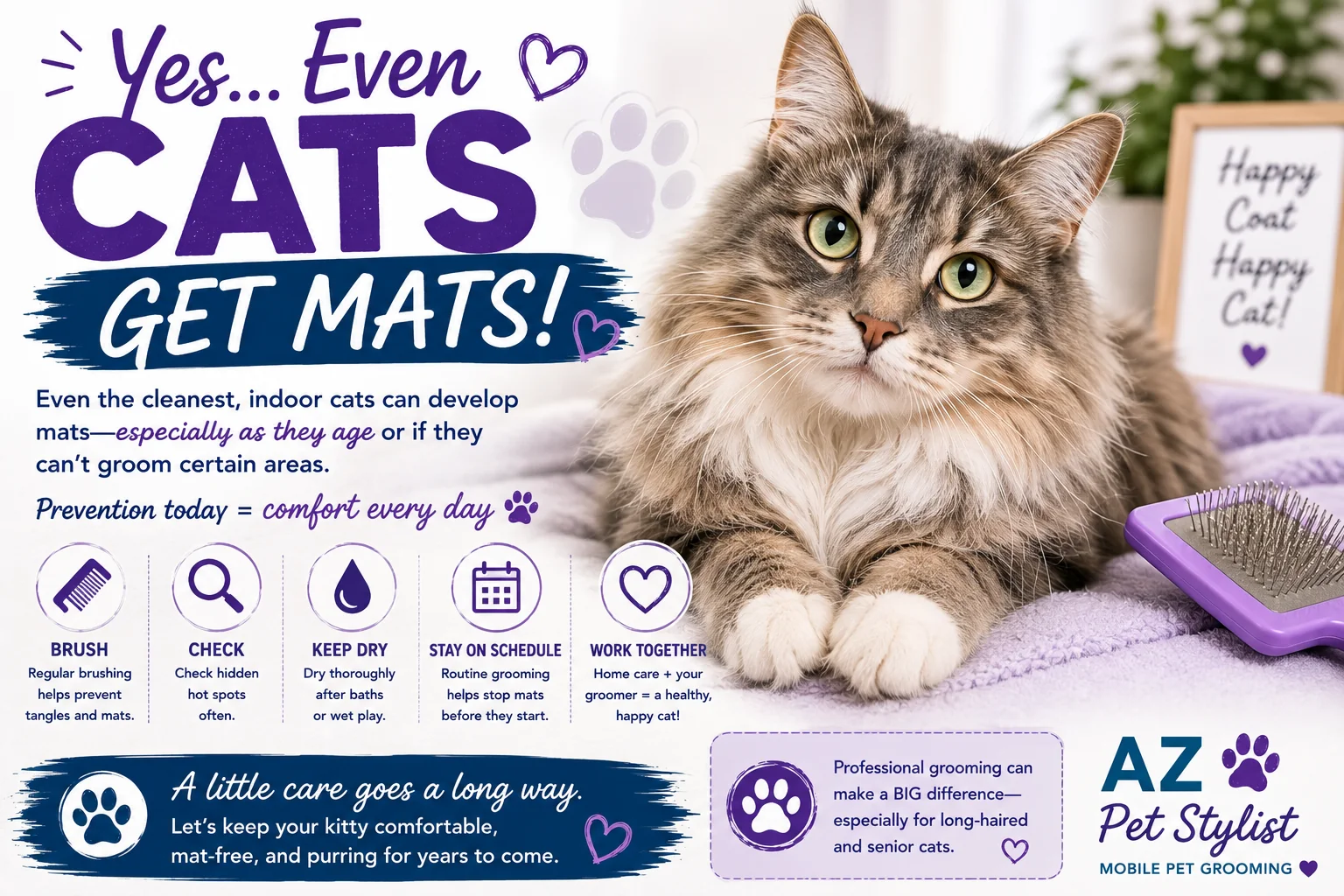
Most people think cats are completely self-sufficient when it comes to grooming. After all, they spend hours each day licking their coats — so how could they possibly develop mats? The truth is, even the cleanest cats can become painfully matted. Whether your cat has long luxurious fur or a surprisingly thick short coat, mats can form anywhere dead hair, dirt, oils, and loose undercoat become trapped together. Left untreated, those small tangles can quickly become painful and even lead to skin problems. The good news? They're also one of the easiest grooming issues to prevent.
Why Do Cats Get Mats?
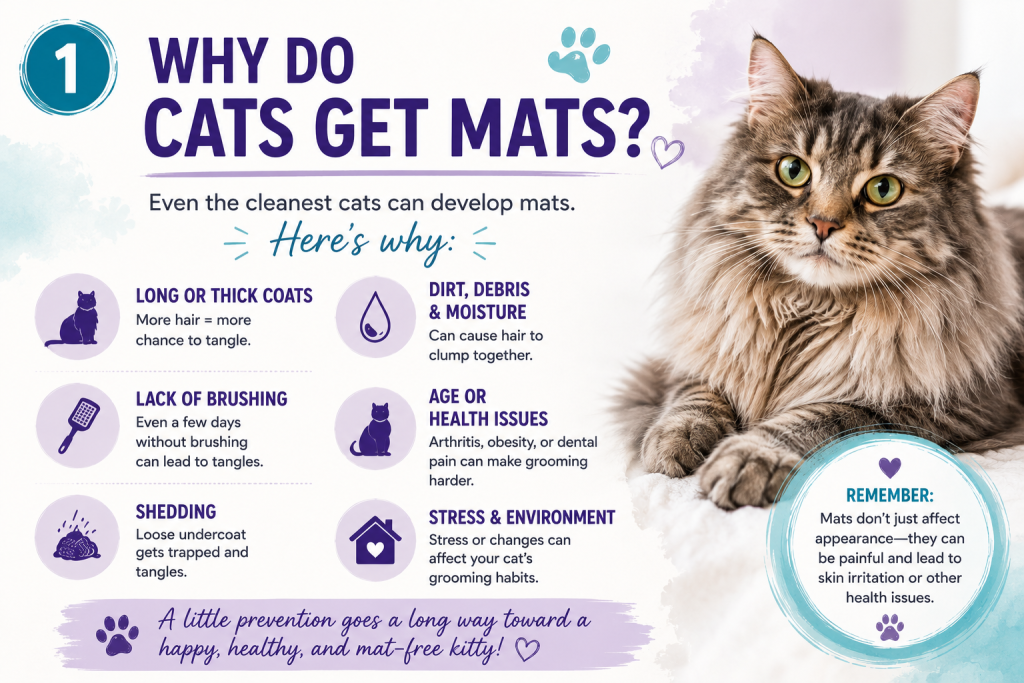
Even cats that groom themselves can develop mats because of:
- • Thick or long coats
- • Shedding that traps loose undercoat
- • Dirt, oils, and moisture
- • Arthritis or health issues that make grooming difficult
- • Weight making it harder to reach certain areas
- • Stress or illness reducing grooming habits
A healthy cat spends a significant portion of each day grooming, but self-grooming isn't perfect. As cats age or experience health changes, they often miss certain spots. Loose fur begins collecting underneath healthy hair, eventually tightening into mats.
Cats with long or dense coats are especially prone to matting, but we've seen plenty of short-haired cats develop painful mats as well.
The Most Common Places Cats Get Mats
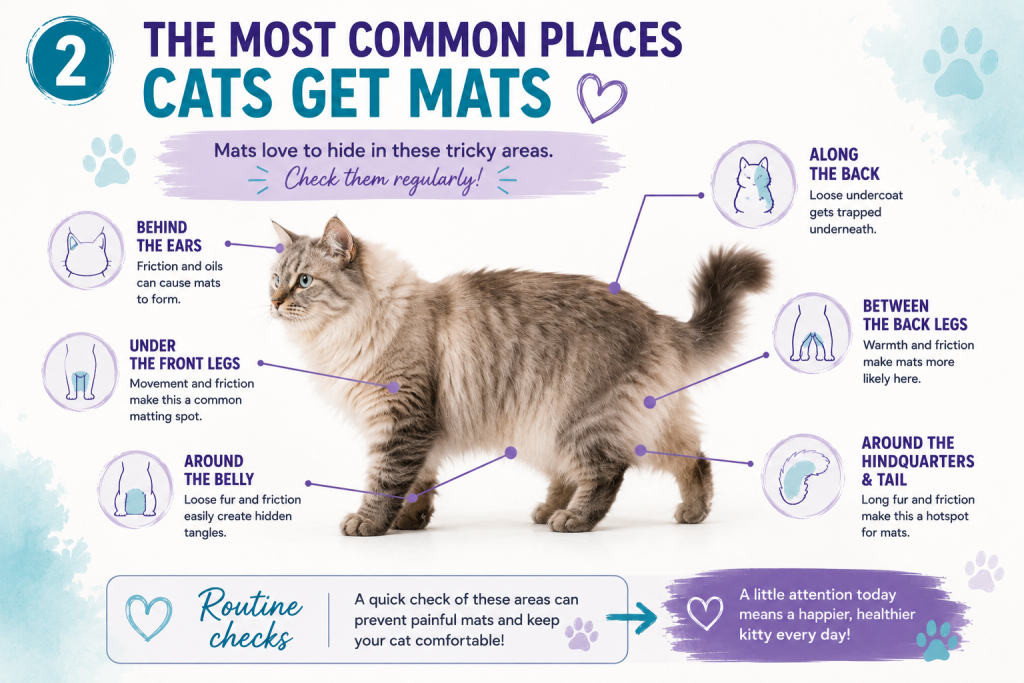
Keep an eye on these areas:
- ✔ Behind the ears
- ✔ Under the front legs
- ✔ Around the belly
- ✔ Along the back
- ✔ Between the back legs
- ✔ Around the hindquarters and tail
These areas experience the most movement and friction, making them perfect places for tangles to form unnoticed.
Because many cats don't enjoy being handled in these spots, mats often become severe before owners even realize they're there.
Signs Your Cat May Have Mats
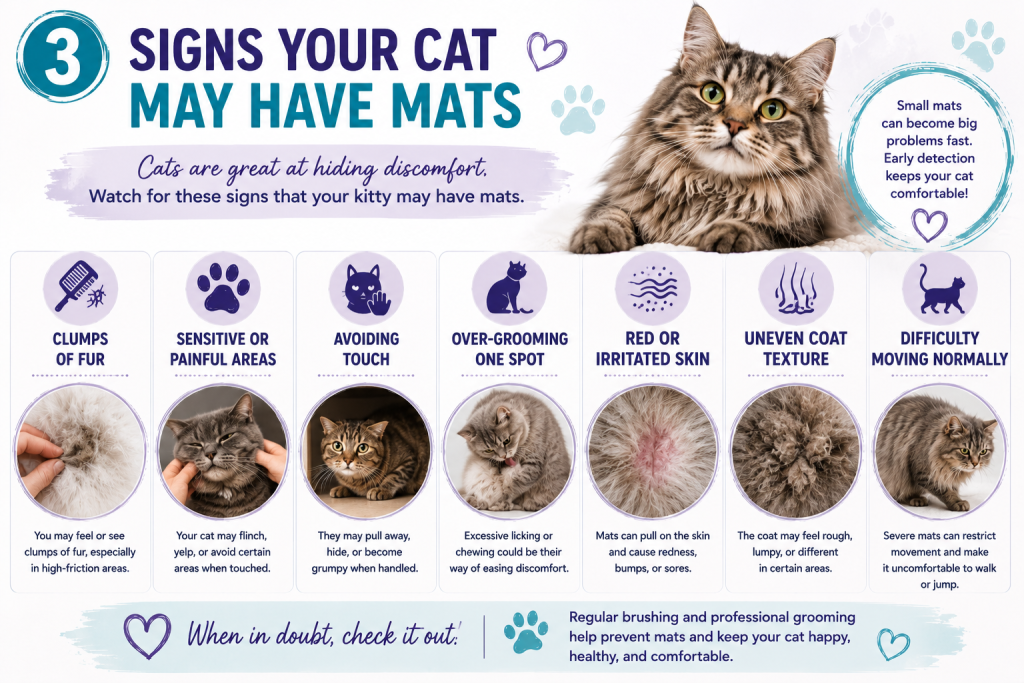
Watch for:
- • Clumps of fur
- • Sensitive or painful areas
- • Avoiding touch
- • Over-grooming one spot
- • Red or irritated skin
- • Uneven coat texture
- • Difficulty moving normally
Cats are masters at hiding discomfort. Many continue acting "normal" even when mats are pulling tightly on their skin.
If your cat suddenly dislikes being brushed or touched, it's worth checking for hidden mats.
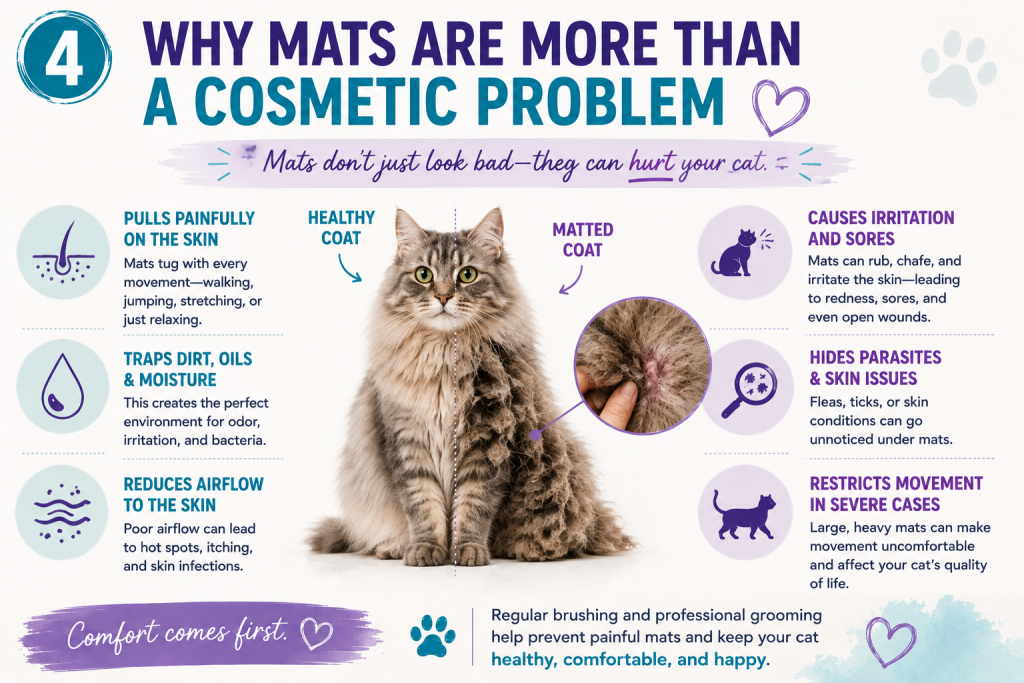
Why Mats Are More Than a Cosmetic Problem
Mats can:
- 💙 Pull painfully on the skin
- 💙 Trap dirt, oils, and moisture
- 💙 Reduce airflow to the skin
- 💙 Cause irritation and sores
- 💙 Hide parasites or skin infections
- 💙 Restrict movement in severe cases
Many people think a mat is simply tangled hair. In reality, it behaves much more like a tight bandage wrapped against the skin. As it tightens, it pulls continuously whenever your cat walks, stretches, or lies down.
That's why professional groomers often recommend removing severe mats rather than trying to brush them out. Your cat's comfort always comes first.
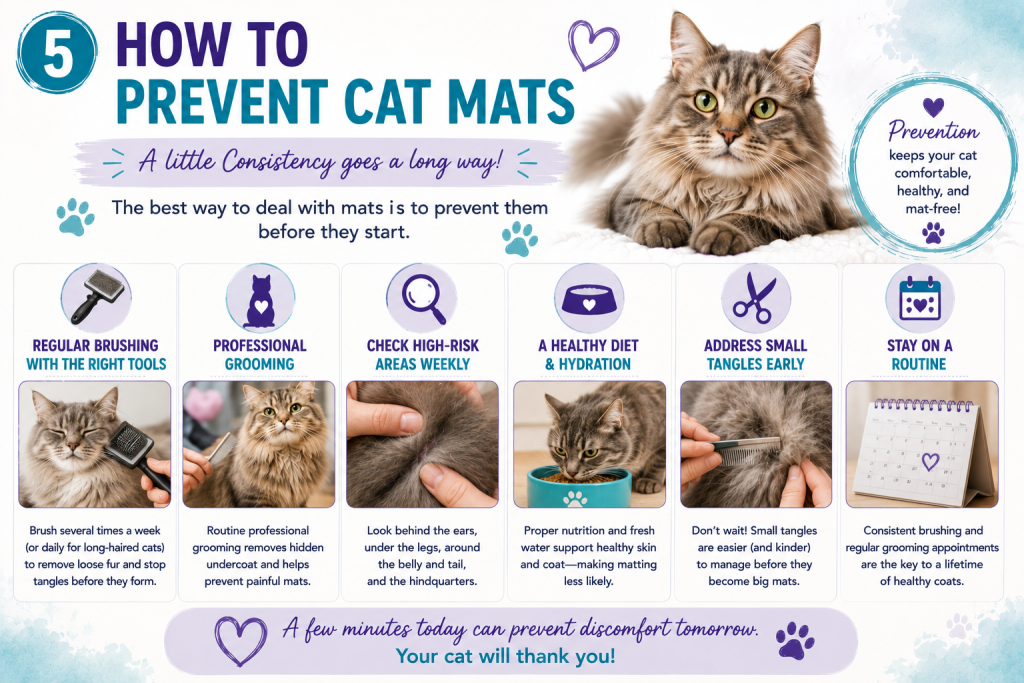
How to Prevent Cat Mats
The best prevention includes:
- • Regular brushing with the right tools
- • Professional grooming on a routine schedule
- • Checking high-risk areas weekly
- • A healthy diet and hydration
- • Addressing small tangles before they grow
A few minutes of brushing each week is much easier—and much kinder—than trying to deal with large mats later. Want an easy way to stay on top of your pet's coat care? Use our Ultimate Mat Prevention Checklist for a simple routine you can follow at home between professional grooming appointments.
If you're unsure which brush or comb works best for your cat, ask your groomer. Different coat types require different tools, and using the right one can make home maintenance much easier. Learn more in our guide, “Brush Smarter, Not Harder: Choosing the Right Grooming Tools.”
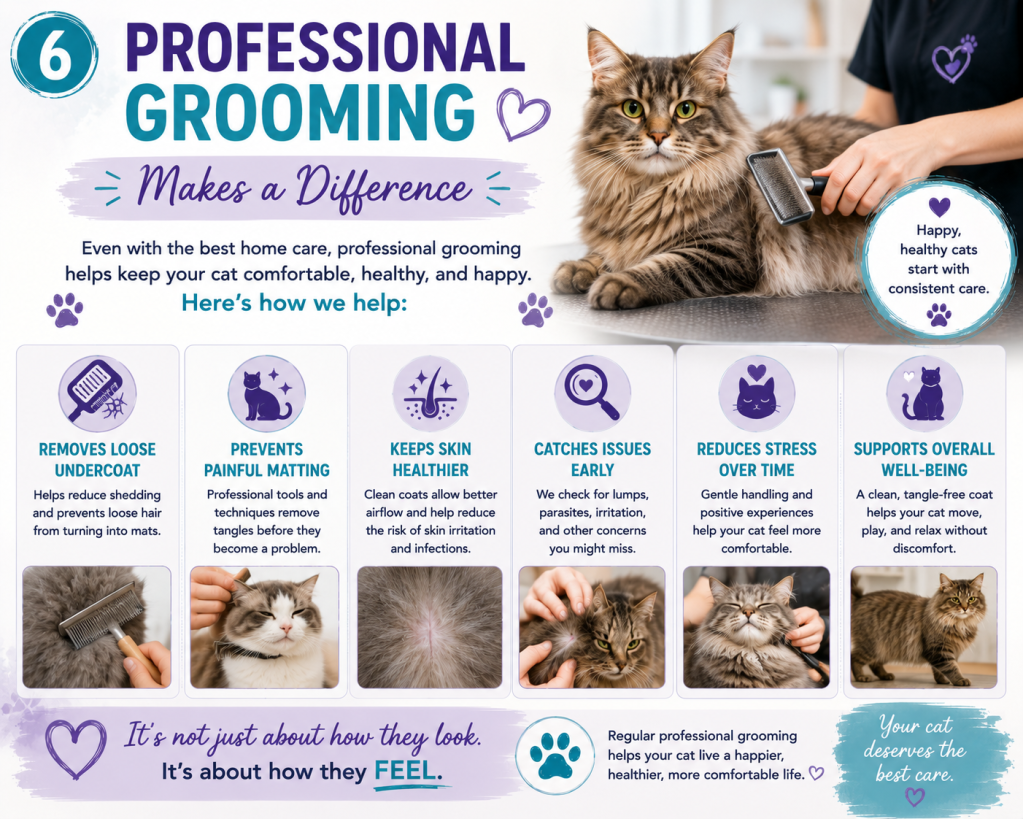
Professional Grooming Makes a Difference
Professional cat grooming helps:
- ✔ Remove loose undercoat
- ✔ Prevent painful matting
- ✔ Keep skin healthier
- ✔ Reduce shedding
- ✔ Catch skin issues early
- ✔ Keep your cat comfortable year-round
Many cats only need professional grooming every few months, while others benefit from more frequent visits depending on their coat, age, and lifestyle.
Our goal is never just to make your cat look beautiful. It's to keep them comfortable, healthy, and feeling their best.
Every Cat Deserves a Comfortable Coat 💙
Mats aren't simply a grooming inconvenience, they can affect your cat's quality of life.
With regular home care and routine professional grooming, you can help your cat stay comfortable, healthy, and mat-free for years to come. And prevention doesn't stop with matting—your pet's coat needs will continue to change throughout their life.
Next in our Matting Season Education Series: Learn how regular grooming, home maintenance, nutrition, and changing coat needs all work together in “A Lifetime of Healthy Coats.”
Whether your cat is fluffy, short-haired, young, or a senior, we're here to help make grooming as stress-free as possible.
Ready to Keep Your Cat Comfortable?
Our experienced groomers provide gentle, low-stress mobile cat grooming designed with your cat's comfort in mind, right in your driveway in Queen Creek, Gilbert, Mesa, Chandler and across the Southeast Valley. Whether your cat needs help with shedding, coat maintenance, nail care, or mat prevention, we're here to help.
🐱 Learn more about our Cat Grooming Services or schedule your cat's next grooming appointment today.
Cat Mat FAQs
Can I cut mats out of my cat's fur myself?
We don't recommend it. Cat skin is thin and gets pulled up into the mat, so scissors can easily cause cuts. A professional groomer can safely remove mats with the right tools.
How often should a long-haired cat be groomed?
It depends on your cat's coat, age and health. Many long-haired cats do best on a regular grooming schedule plus brushing at home. Our stylists can recommend a routine that fits your cat.
Do short-haired cats get mats too?
Yes. Short, dense coats can trap loose undercoat, especially on older or less flexible cats who can't reach every spot.
Related reading


Ready to pamper your pet?
Our mobile spa comes to your driveway — climate-controlled, filtered water, and one-on-one attention from start to finish.