What Is Matting? Why It's More Than Just Tangled Fur

If you've ever heard your groomer say your pet has a mat, you may have wondered what that really means. Is it just a tangle? Can it be brushed out? And how did it get there in the first place? Matting is extremely common, especially in pets with longer, curly, dense or continuously growing coats, but it can happen to many coat types. Because mats don't always look dramatic from the outside, pet parents often don't realize they're there until they feel them or their groomer finds them. That's why we're starting our Matting Season Education Series with the basics: what exactly is a mat? 💙
Watch: Matting Part 1 — What Is Matting?
Before we dive in, watch Part 1 of our Matting Education Video Series. It's the perfect place to start if you're new to the topic.
Throughout this blog series, we'll keep breaking matting down into easy-to-understand pieces so you can better understand your pet's coat and grooming needs.
So… What Is a Mat?
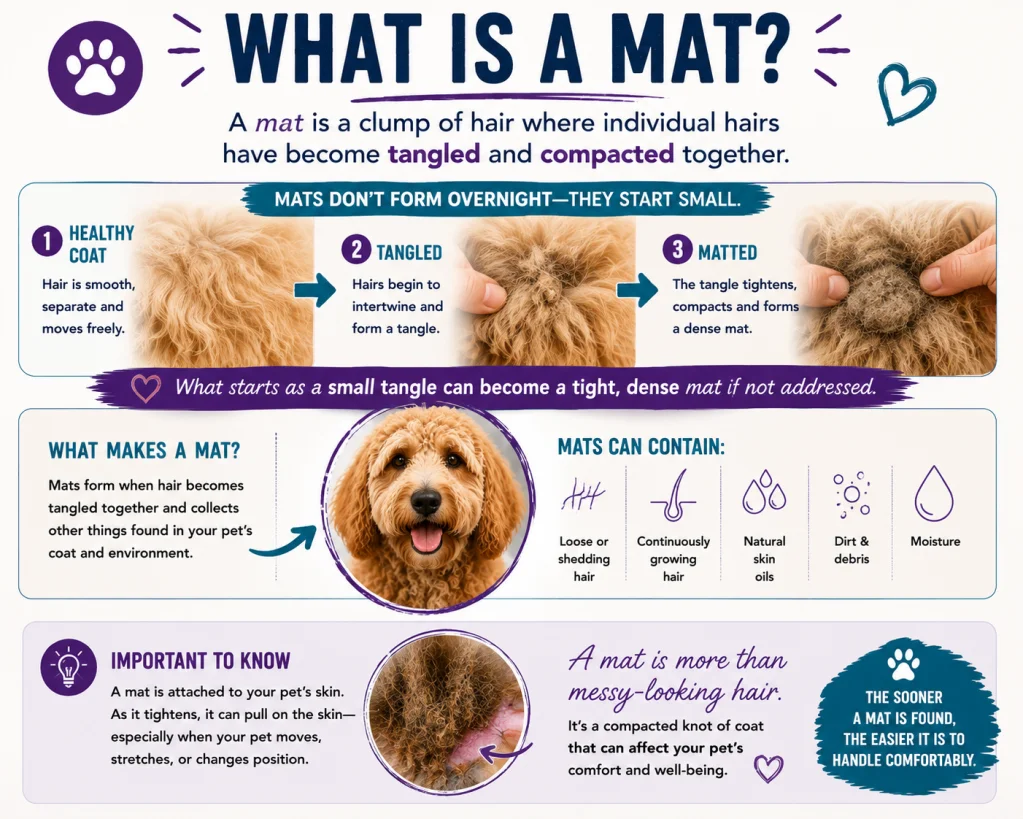
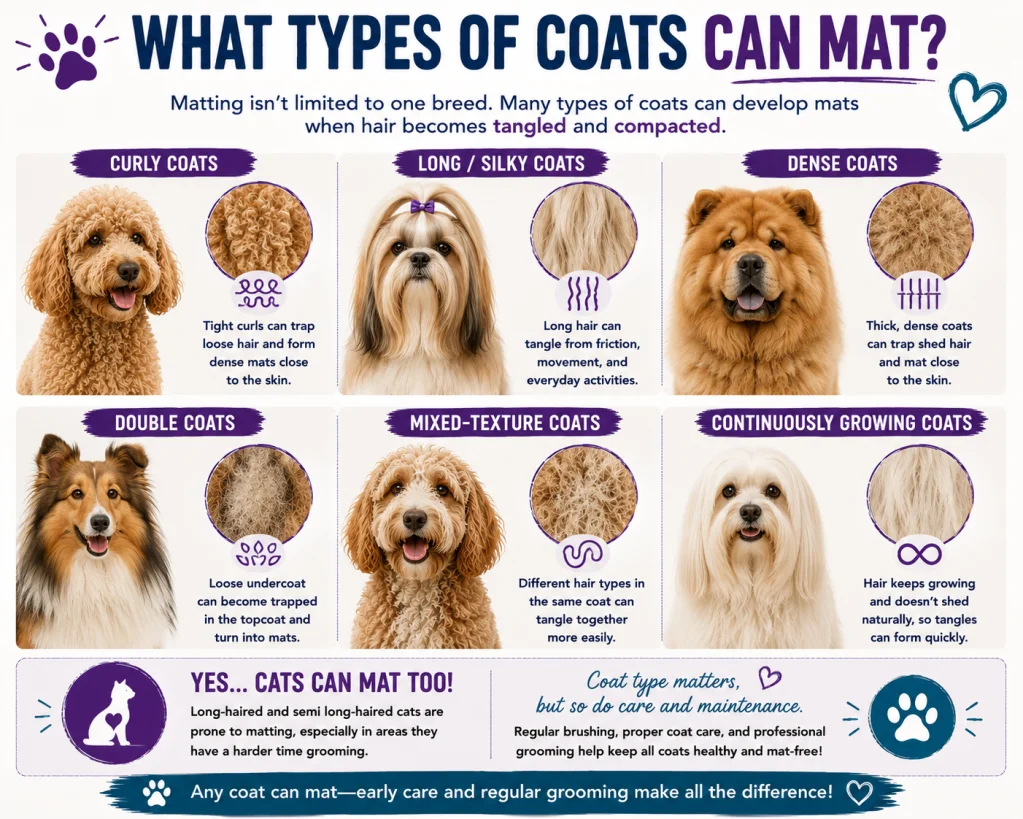
A mat is an area of coat where individual hairs have become tangled together and compacted into a knot or clump.
Mats can vary significantly. Some may be:
- • Small and relatively loose
- • Hidden underneath longer hair
- • Concentrated in one small area
- • Dense and tightly packed
- • Spread across larger portions of the coat
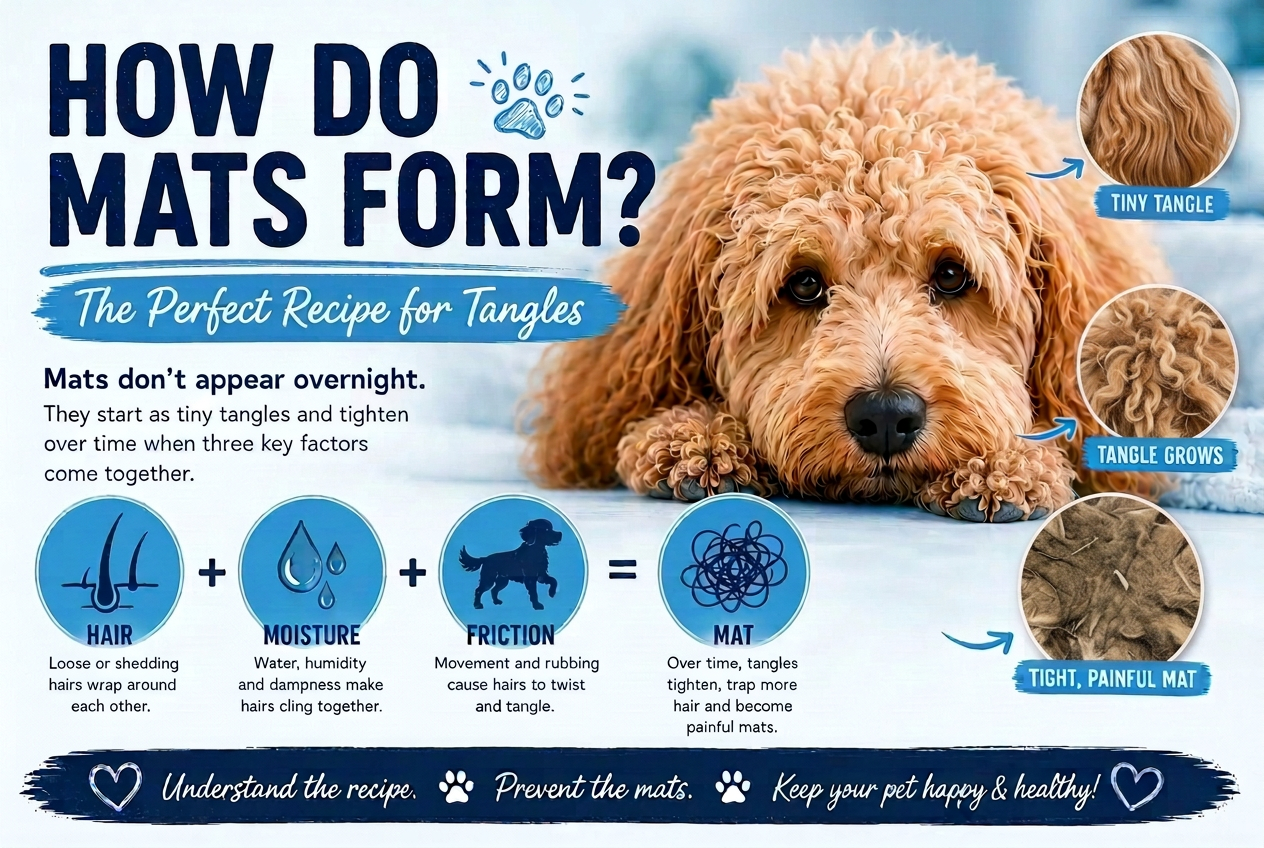
A mat doesn't usually start out as the tight clump you might picture. It often begins as a little tangle that gradually becomes more intertwined and compacted.
We explain exactly how that happens in Part 2: Why Dog Mats Form So Quickly.
A Tangle and a Mat Aren't the Same Thing
You'll hear us use both words throughout this series, so it helps to understand the difference.
- • A tangle: a smaller, looser area where hairs have begun intertwining. Depending on the coat, it may still separate fairly easily.
- • A mat: more compacted. The hairs are intertwined enough to form a defined knot or clump, ranging from small spots to large sections of coat.
Think of a knot in a shoelace. There's a big difference between a loose knot you can easily work apart and one that has been pulled tighter again and again.
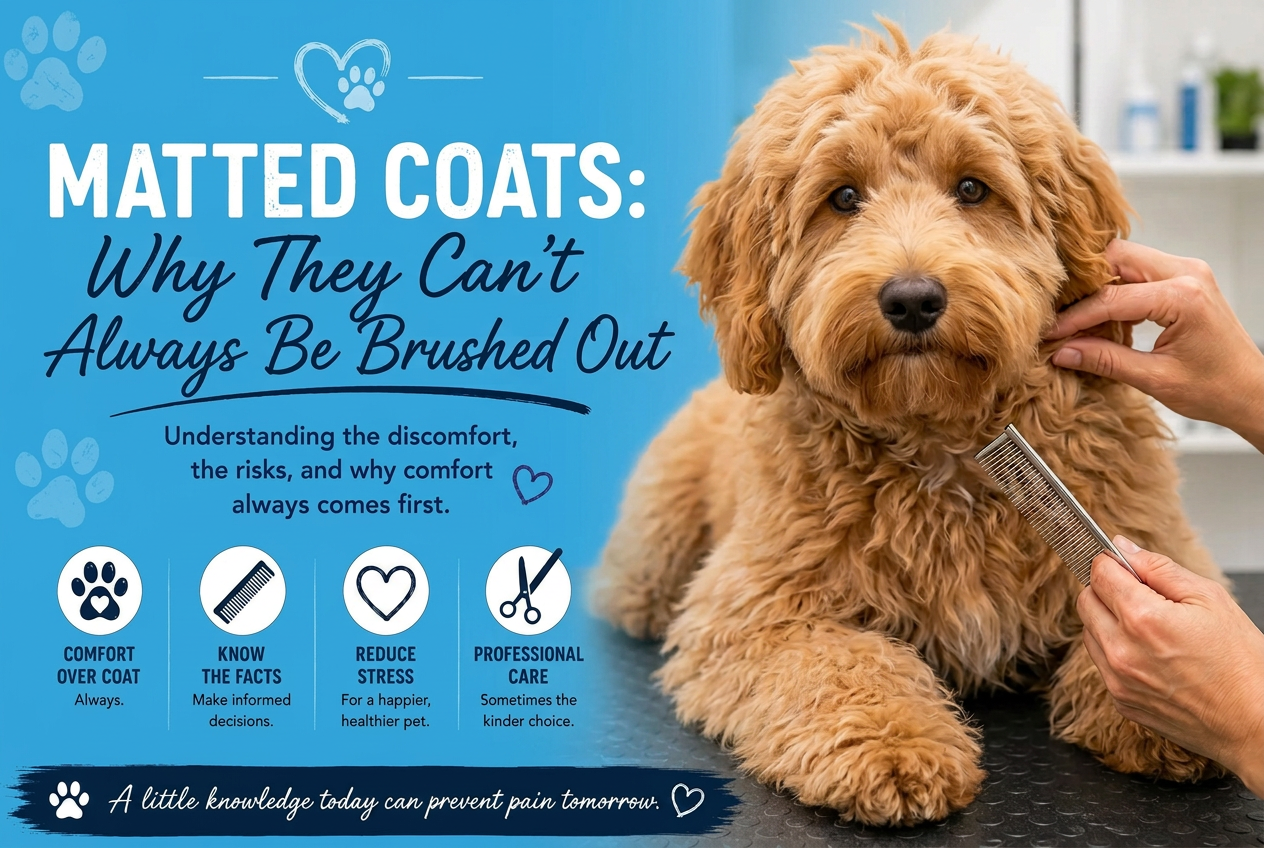
The same idea applies to a tangled coat, with one very important difference: your pet's hair is attached to their skin. That's one reason groomers pay close attention to matting, and why you can't always just brush mats out.
Mats Aren't Always Easy to See
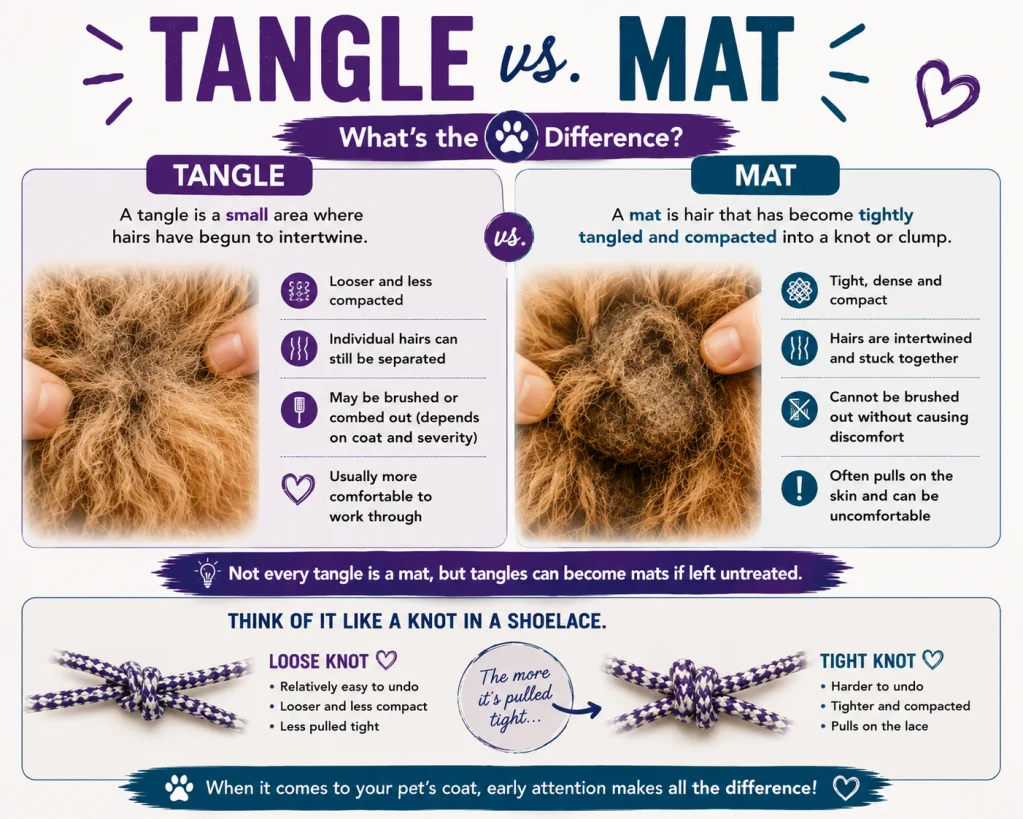
One of the biggest misconceptions about matting is that you'll always be able to see it. You may not.
A pet can look fluffy, clean, brushed and tangle-free on the surface while hiding tangles or mats underneath. This is especially true with longer or thicker coats, where the outer layer hides what's happening closer to the body.
Sometimes you'll feel a mat before you see it. It might feel like:
- • A small knot
- • A thicker area of coat
- • A clump
- • A dense or felt-like patch
- • An area where the hair doesn't separate normally
That's also why a groomer may find matting that wasn't obvious at home. A metal comb run close to the skin is the easiest way to check; learn how in The Ultimate Mat Prevention Checklist.
What Types of Pets Can Get Mats?
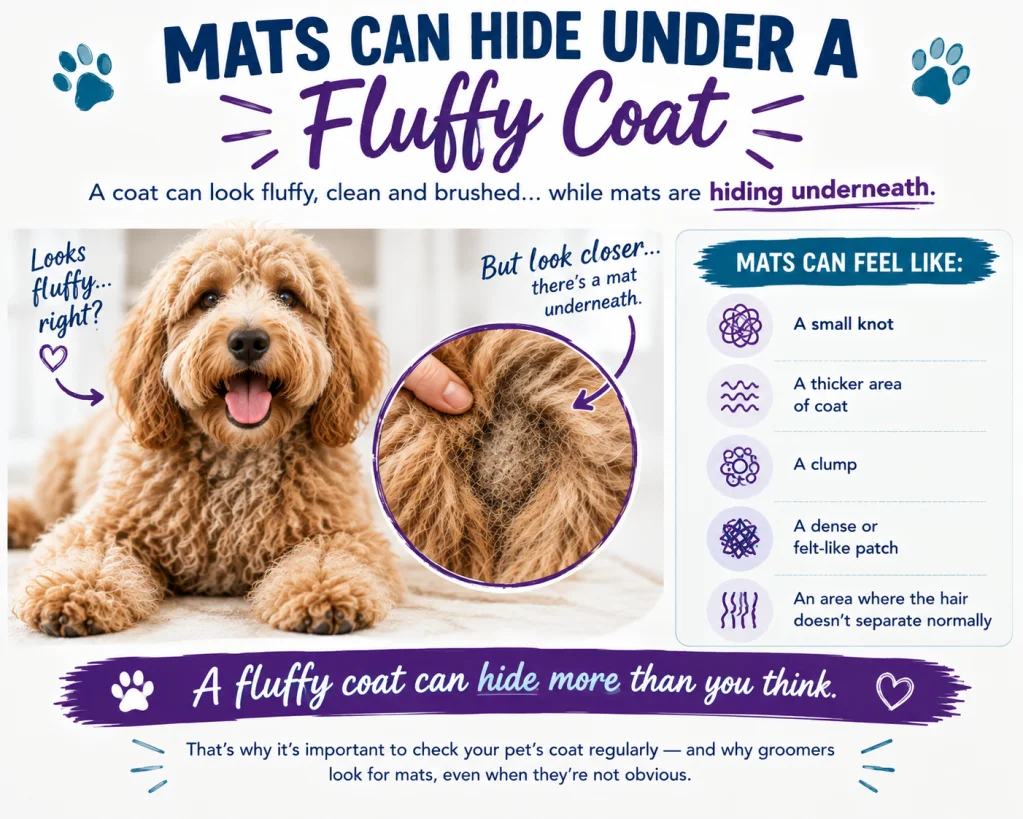
Matting isn't exclusive to Doodles or Poodles. Different coats can become tangled or compacted for different reasons. We commonly see matting in pets with:
- • Curly coats
- • Long or silky coats
- • Dense coats
- • Double coats
- • Mixed-texture coats
- • Continuously growing coats
And yes… cats can get mats too. 🐱 Cats have their own coat and grooming considerations; read Yes… Even Cats Get Mats! or explore our cat grooming services.
The key takeaway: matting isn't limited to one breed, one coat type or even one species.
Where Are Mats Commonly Found?
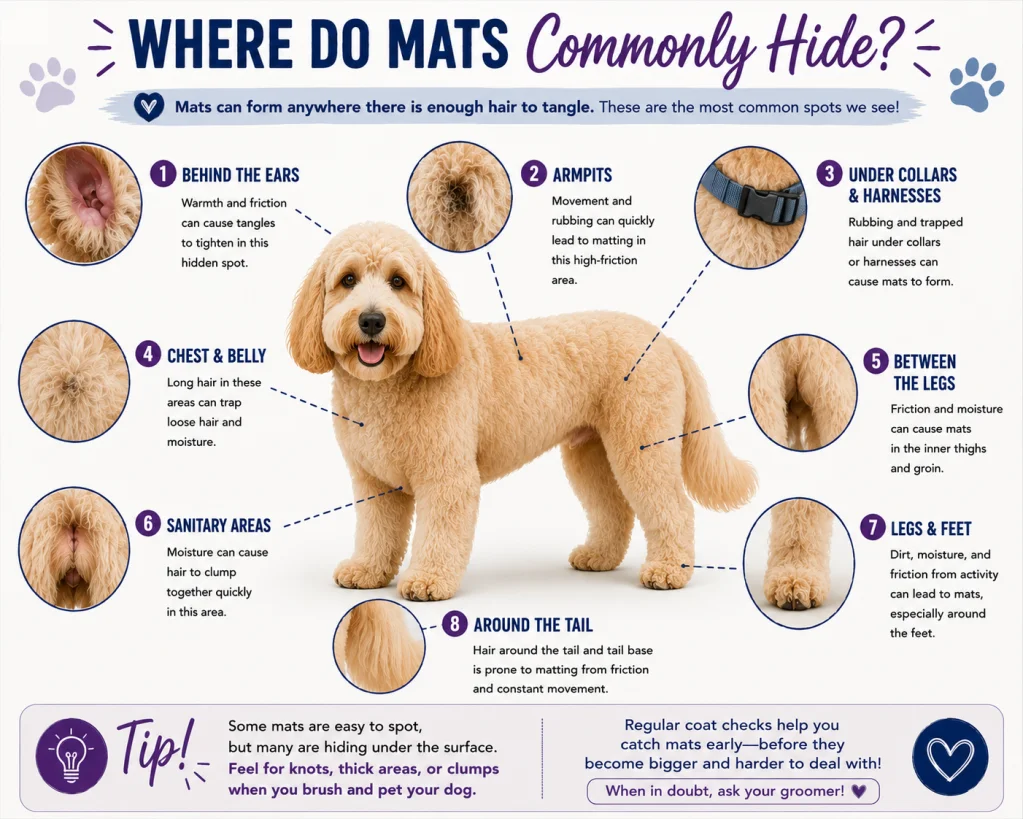
Mats can develop anywhere there's enough coat to tangle, but groomers find them most often in a few spots:
- • Behind the ears
- • Armpits
- • Under collars and harnesses
- • Chest and belly
- • Between the legs
- • Sanitary areas
- • Legs and feet
- • Around the tail
Many of these areas are easy to overlook during everyday petting or brushing. That's why matting can seem to “appear out of nowhere.” It may simply have been hiding where you weren't looking.
Why Do We Call It “Matting Season”?
Even though this is our Matting Season Education Series, matting isn't limited to one season. Pets can become matted year-round.
We use “Matting Season” because certain times of year bring lifestyle and coat changes that make matting especially noticeable for groomers.
The information in this series is meant to help you care for your pet's coat 365 days a year. So even if you're reading this in December, you're in the right place. 💙
Why Regular Grooming Helps
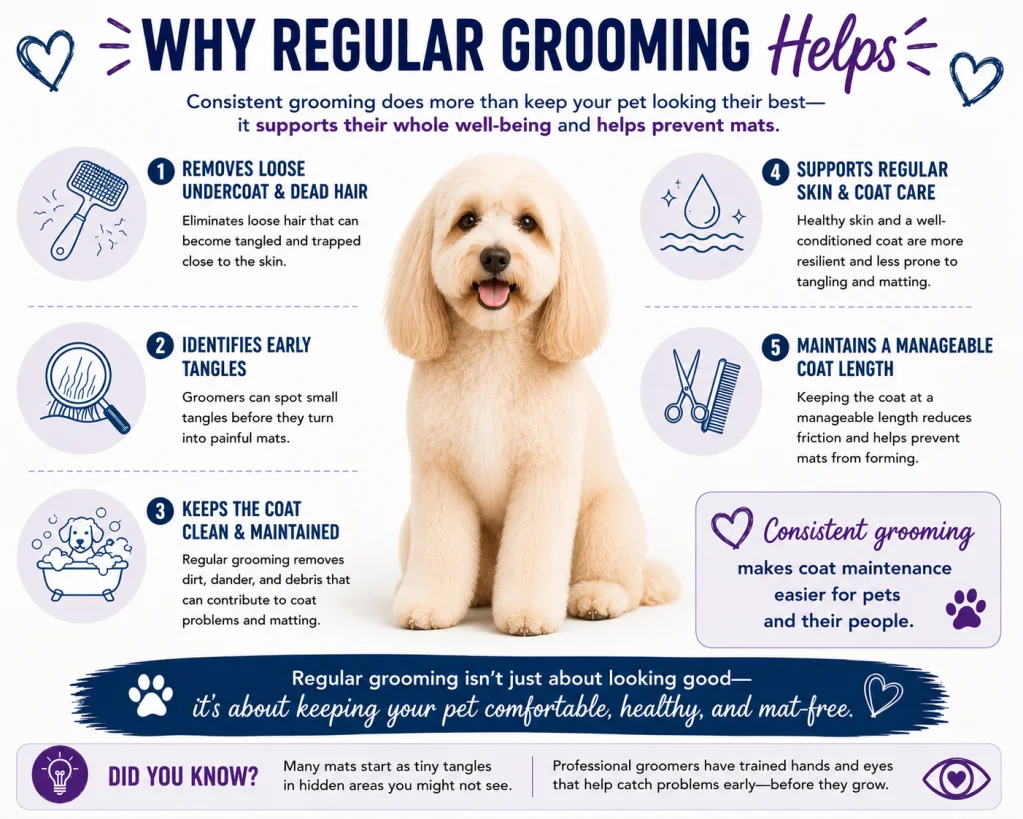
Routine grooming plays an important role in maintaining your pet's coat and spotting potential problems early. Professional grooming can help with:
- • Removing loose undercoat and dead hair
- • Identifying early tangles before they become more compacted
- • Keeping the coat clean and maintained
- • Supporting regular skin and coat care
- • Maintaining a coat length that's manageable for your pet and your lifestyle
One of the biggest benefits is simply having another set of experienced hands going through your pet's coat. A groomer may notice a little tangle in an easy-to-miss spot before you ever knew it was there.
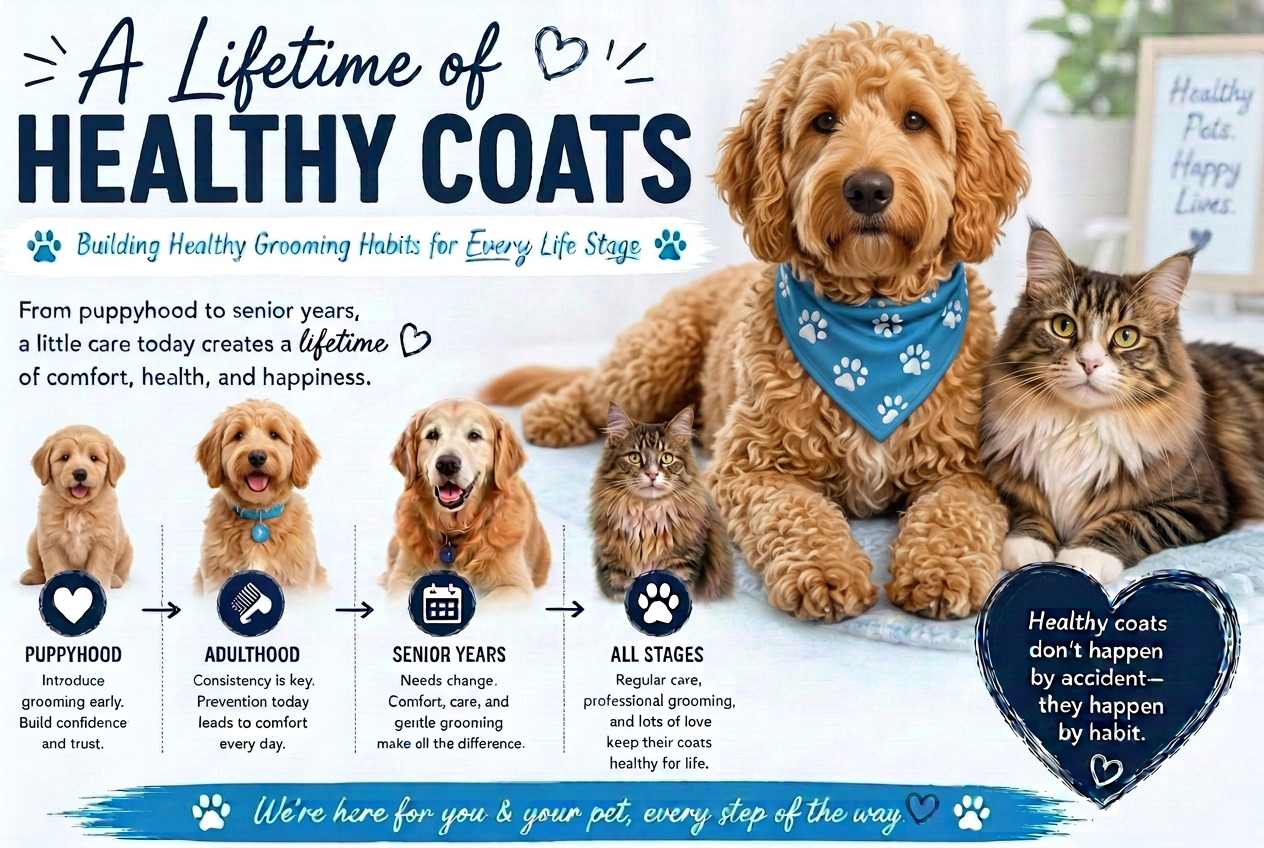
Consistent grooming makes coat maintenance easier for both pets and their people. Explore our dog grooming services.
Why We're Talking About Matting
Our goal with this series isn't to make anyone feel bad because their pet developed a mat. Tangles happen. Pets run, play, sleep, wear collars and harnesses, go outside, get wet, shed and live their lives.
Instead, we want to help pet parents understand what's happening underneath all that fur, one topic at a time, so you can make informed decisions about grooming care.
The biggest takeaway: a mat is more than messy-looking hair. It's coat that has become tangled and compacted together, and the sooner it's recognized, the easier it is to choose the right next step.
Next: How Do Mats Form?
Now that you know what a mat is, the obvious next question is: how does it happen?
That's exactly what we cover in Part 2: Why Dog Mats Form So Quickly (and How to Stop Them Before They Start). We break down what happens inside the coat and why a little tangle can seem to become a mat so quickly.
Ready to Keep Your Pet's Coat Tangle-Free?
AZ Pet Stylist provides mobile dog and cat grooming in Queen Creek and across our Southeast Valley service area.
Frequently Asked Questions
What is matting in dogs and cats?
Matting is when individual hairs become tangled together and compacted into a knot or clump within the coat. Mats can be small and loose or dense and spread across large areas.
What's the difference between a tangle and a mat?
A tangle is a smaller, looser area of intertwined hair that may still separate fairly easily. A mat is more compacted, forming a defined knot or clump.
Can my pet have mats even if their coat looks fluffy?
Yes. Mats often form underneath the outer coat, closer to the skin. You may feel a knot, clump or dense patch before you can see it.
Which pets are most likely to get mats?
Pets with curly, long, silky, dense, double, mixed-texture or continuously growing coats are commonly prone to matting, and cats can get mats too.
Where should I check my pet for mats?
Check behind the ears, armpits, under collars and harnesses, chest and belly, between the legs, sanitary areas, legs and feet, and around the tail.
Related reading
Ready to pamper your pet?
Our mobile spa comes to your driveway — climate-controlled, filtered water, and one-on-one attention from start to finish.