A Lifetime of Healthy Coats: Building Healthy Grooming Habits for Every Life Stage
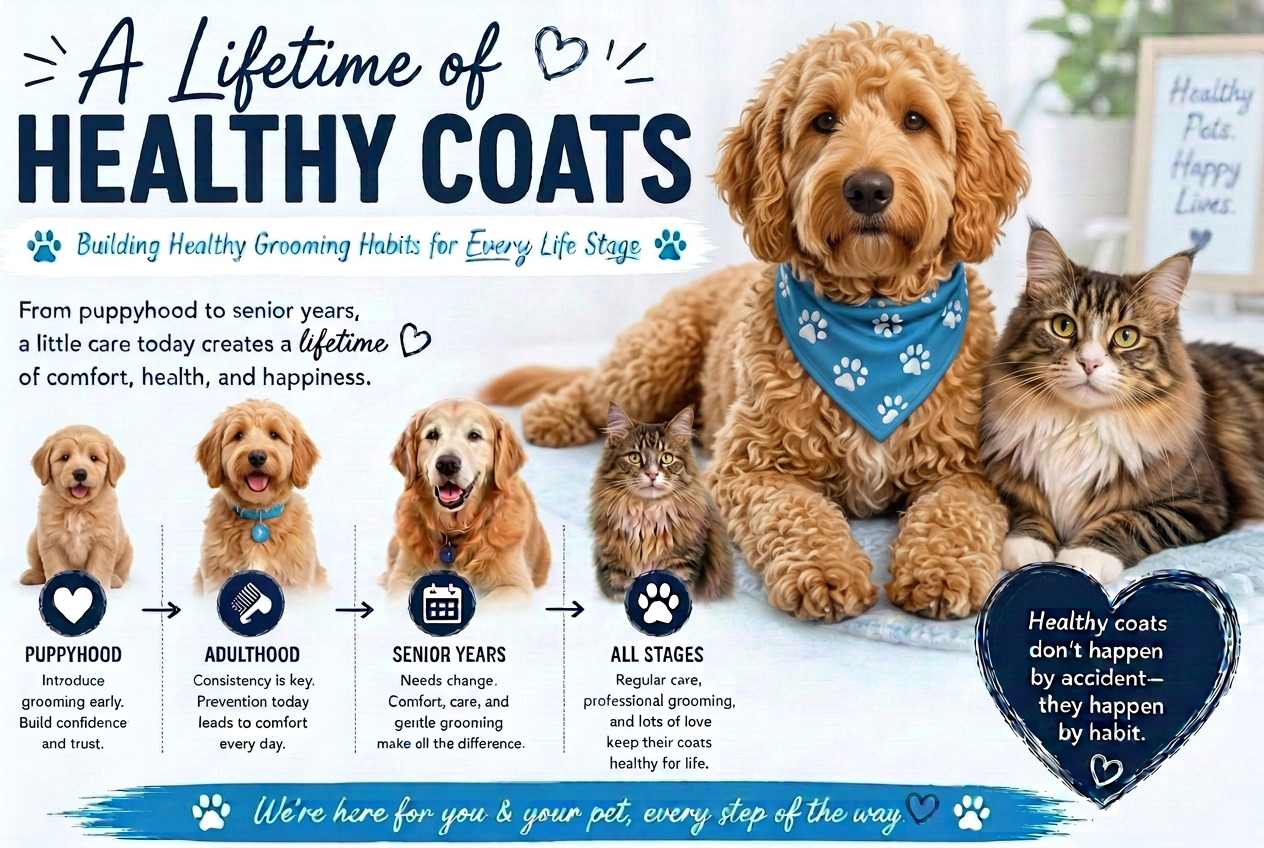
Over the past several weeks, we've talked a lot about mats — how they form, why they can become painful, why they can't always simply be brushed out, and what you can do at home to help prevent them. (If you missed it, start with “Yes… Even Cats Get Mats!”.) As we wrap up our Matting Season Education Series, there's one final thing we want every pet parent to remember: a healthy coat isn't something you achieve once. It's something you maintain throughout your pet's life.
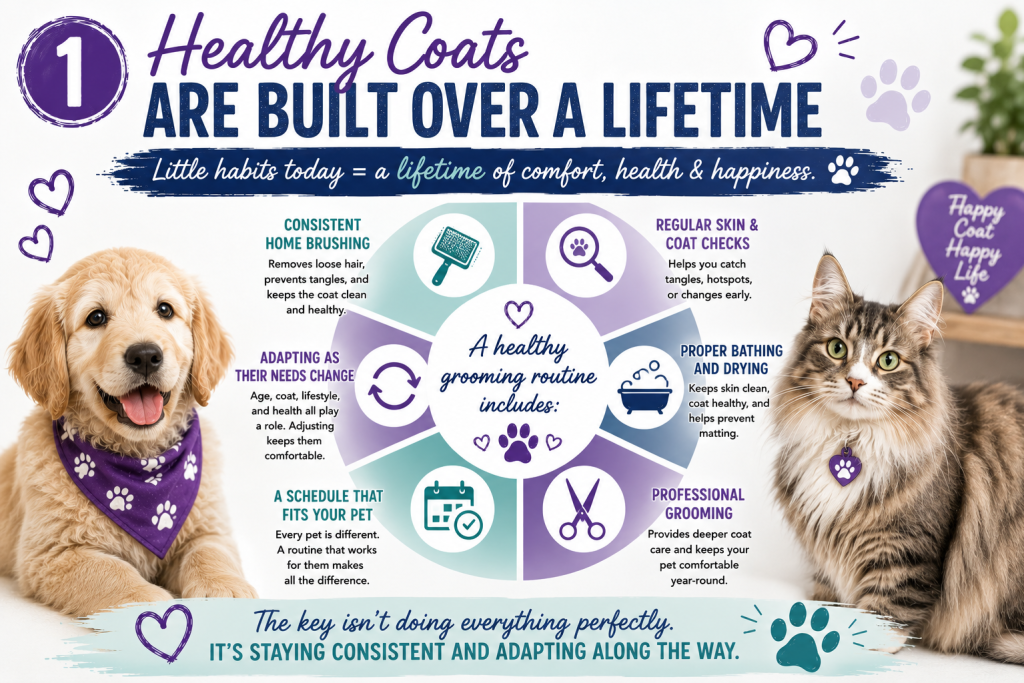
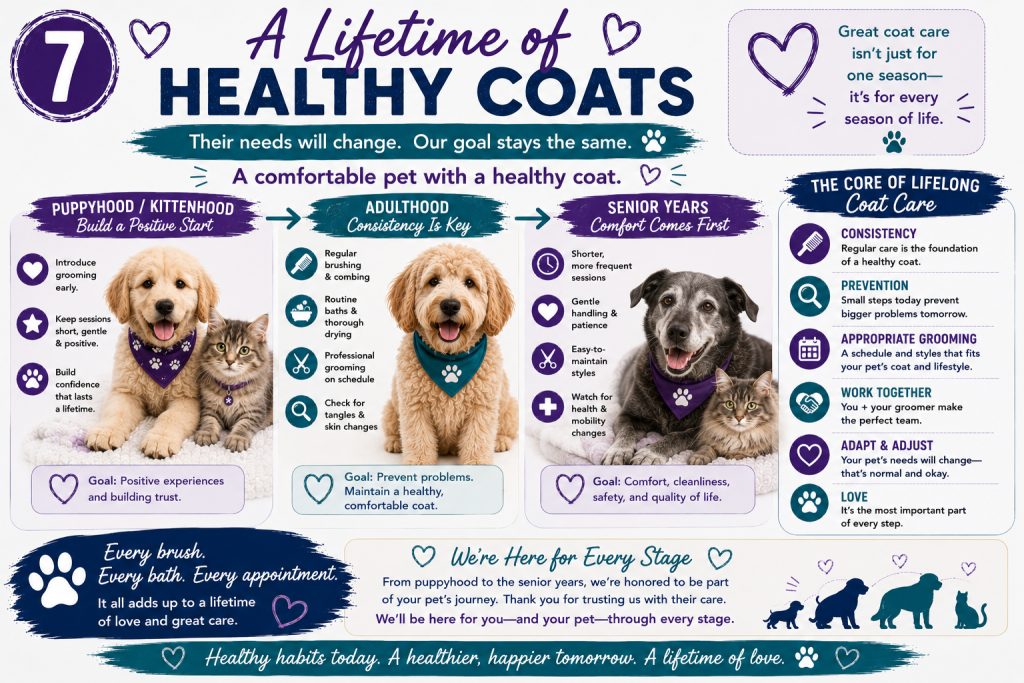
Healthy Coats Are Built Over a Lifetime
Your pet's coat, skin, lifestyle, health, and grooming needs will change over time. The routine that works perfectly today may need to look completely different a few years from now. And that's okay.
A healthy grooming routine includes:
- • Consistent home brushing
- • Regular skin and coat checks
- • Proper bathing and drying
- • Professional grooming
- • A schedule that fits your pet
- • Adjusting care as their needs change
The key isn't doing everything perfectly—it's staying consistent and adapting along the way.
Start Early: Puppyhood & Kittenhood
One of the best things you can do for your pet's future grooming experience is introduce grooming before they desperately need it. Young pets are learning what is normal, which makes puppyhood and kittenhood the perfect time to gently introduce:
- • Brushing and combing
- • Paw handling and nail care
- • Ear and face handling
- • Bathing and drying
- • Grooming equipment
- • Professional grooming visits
Early grooming isn't only about maintaining the coat. It's about building confidence. Keep early sessions short, gentle, and positive. The goal isn't a perfectly groomed puppy or kitten—it's creating a pet who feels safe with the grooming process.
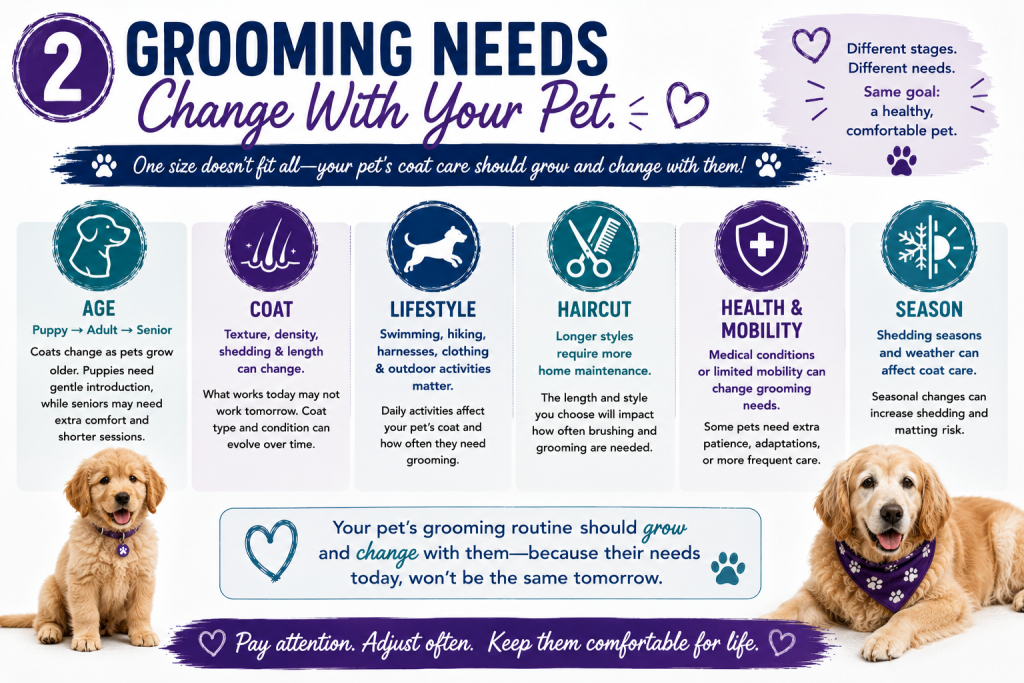
There's No One Grooming Routine for Life
Your pet's grooming needs may change because of:
- • Age — puppy, adult, and senior coats behave differently
- • Coat — texture, density, shedding, and length can shift over time
- • Lifestyle — swimming, hiking, harnesses, and clothing affect the coat
- • Haircut — longer styles require more home maintenance
- • Health and mobility — they change how a pet tolerates grooming
- • Season — it affects shedding and coat changes
Your grooming routine should grow and change with your pet.
The Adult Years: Consistency Is Your Best Friend
Once your pet reaches adulthood, coat care becomes less about introduction and more about routine. Depending on your pet's coat, that may include:
- ✔ Regular brushing and combing
- ✔ Extra coat care after swimming or getting wet
- ✔ Checking matting hot spots
- ✔ Routine bathing and drying
- ✔ Professional grooming on an appropriate schedule
Remember what we've learned throughout this series: small problems are much easier to manage than big ones. A tiny tangle caught today may take seconds to address. That same tangle ignored for several weeks can become a tight, painful mat.
Your Tools May Need to Change Too
The brush that worked perfectly when your dog had a short puppy cut may not be enough once they're wearing a longer adult coat. Changes in coat length, density, shedding, texture, haircut, and lifestyle can all change which grooming tools work best.
Don't assume that because a tool worked once, it's automatically the best tool forever. If you're unsure, ask your groomer to evaluate your pet's current coat and recommend the right brush, comb, and home-care routine.
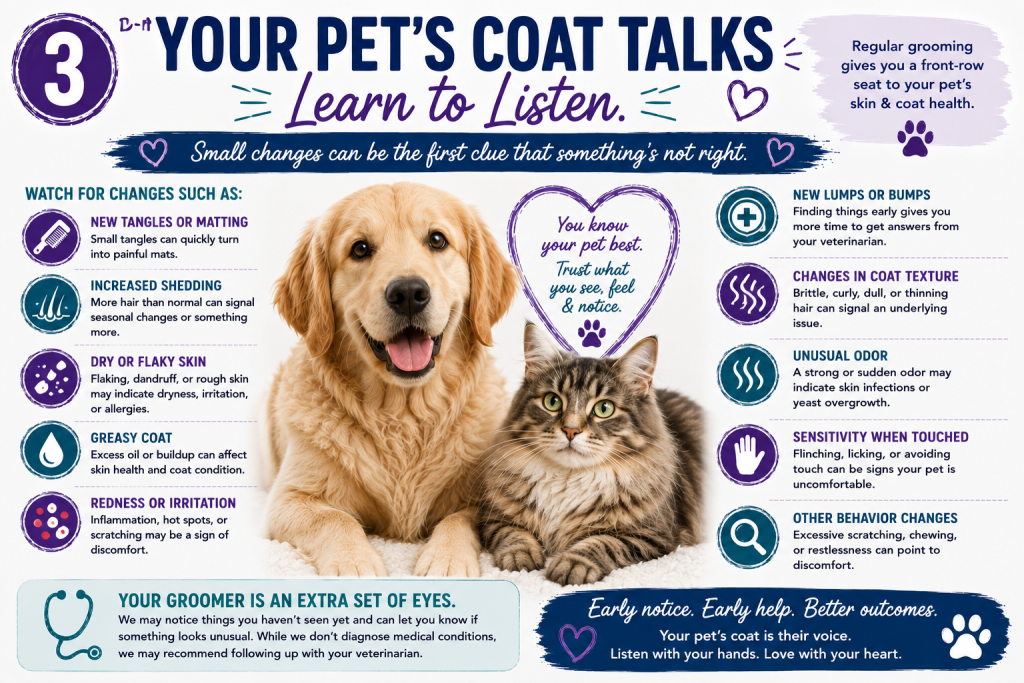
Watch for Changes in the Skin & Coat
Your regular grooming routine gives you a chance to notice when something looks or feels different. Watch for:
- • New tangles or matting
- • Increased shedding
- • Dry or flaky skin
- • Greasy coat
- • Redness or irritation
- • New lumps or bumps
- • Changes in coat texture
- • Unusual odor
- • Sensitivity when touched
Your groomer may notice changes during an appointment too. Groomers don't diagnose medical conditions, but because we work closely with your pet's skin and coat, we may notice something that wasn't obvious at home. If something looks concerning, we may recommend discussing it with your veterinarian.
Healthy Coats Need More Than Brushing
Brushing is one of the most important tools pet parents have for preventing mats. But coat health also depends on:
- • Bathing — removes dirt, oils, debris, and buildup
- • Thorough drying — damp, tangled hair drying together makes tangles worse
- • Combing — finds the tangles your brush may have missed
- • Professional grooming — deeper coat maintenance and a chance to see how the coat is changing
Think of these pieces as working together, rather than separately.
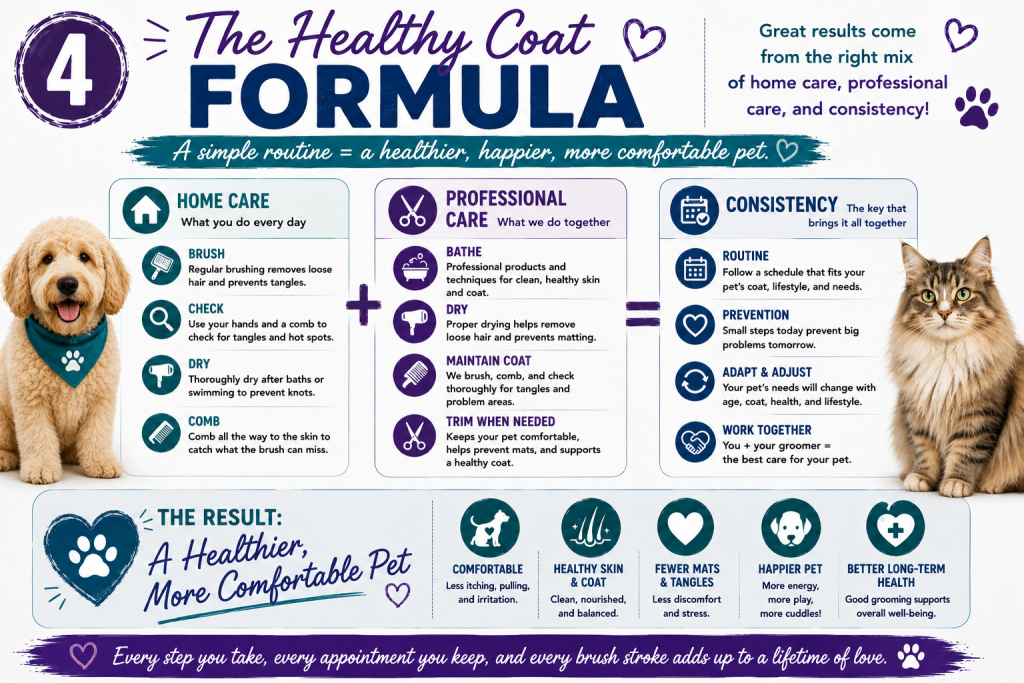
Your Healthy Coat Formula
Home care (brush, check, dry, comb) + professional care (bathe, dry, maintain coat, trim when needed) + consistency on a schedule that fits your pet = a healthier, more comfortable coat.
That's the formula we want every pet parent to remember.
Lifestyle Matters at Every Age
Your pet doesn't live their life standing perfectly still in your living room. They swim, roll, hike, play, wear harnesses, run through sprinklers, and sometimes find the dirtiest spot in the yard five minutes after being groomed. All of those things affect the coat.
A dog who swims several times a week may need more frequent coat maintenance. A pet wearing a harness every day may need extra brushing underneath it. A long, fluffy haircut requires more maintenance than a short one. Grooming recommendations should fit the pet in front of us, not simply the breed listed on their paperwork.
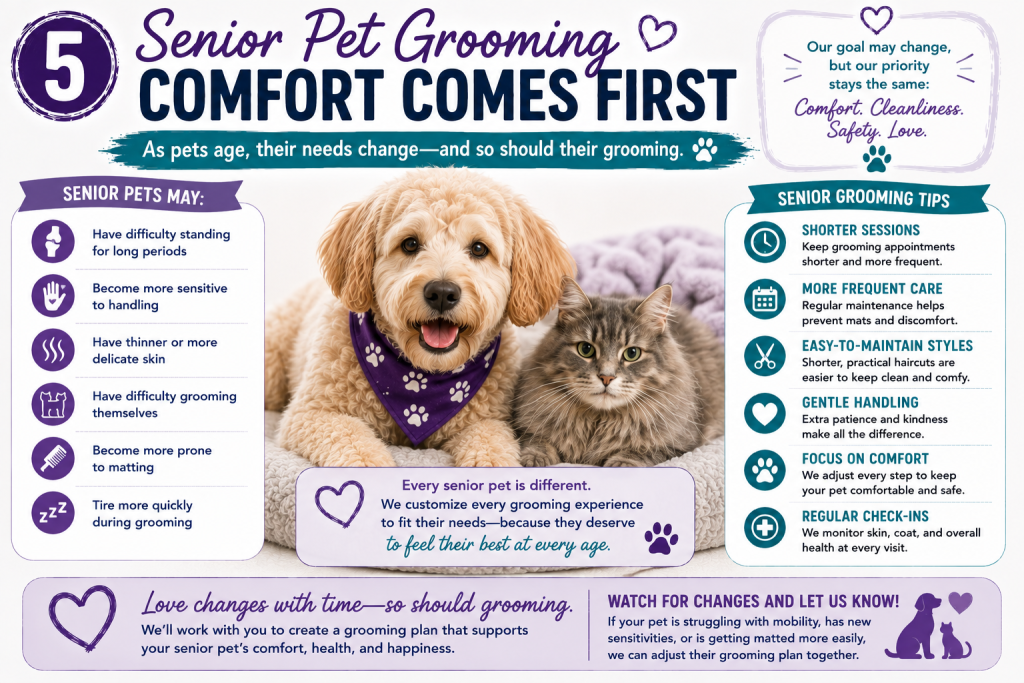
Senior Pets Deserve Special Consideration
As pets age, grooming can change significantly. A senior pet may:
- • Have difficulty standing for long periods
- • Develop arthritis or reduced mobility
- • Become more sensitive to handling
- • Have thinner, more delicate skin
- • Develop new lumps or bumps
- • Have trouble grooming themselves
- • Become more prone to matting
- • Tire more quickly during grooming
Senior pets may benefit from:
- ✔ Shorter grooming sessions
- ✔ More frequent maintenance
- ✔ Easier-to-maintain hairstyles
- ✔ Gentle brushing and handling
- ✔ Regular skin and coat checks
- ✔ A comfort-first approach
For an older pet, the priority may become comfort, cleanliness, and safety—and that's a perfectly good grooming goal. Learn more about our gentle senior dog grooming and Fear Less™ services.
And Yes—This Applies to Cats Too!
Cats are famous for grooming themselves, but self-grooming doesn't guarantee a mat-free coat. A cat who kept themselves beautifully groomed for years may suddenly begin developing mats simply because reaching certain areas has become difficult.
Cats who often need extra help:
- • Long-haired cats
- • Senior cats
- • Cats with dense coats
- • Cats who can't easily reach certain areas
Routine brushing and professional cat grooming help remove loose coat before it becomes trapped and tangled. For the full story, read “Yes… Even Cats Get Mats!”
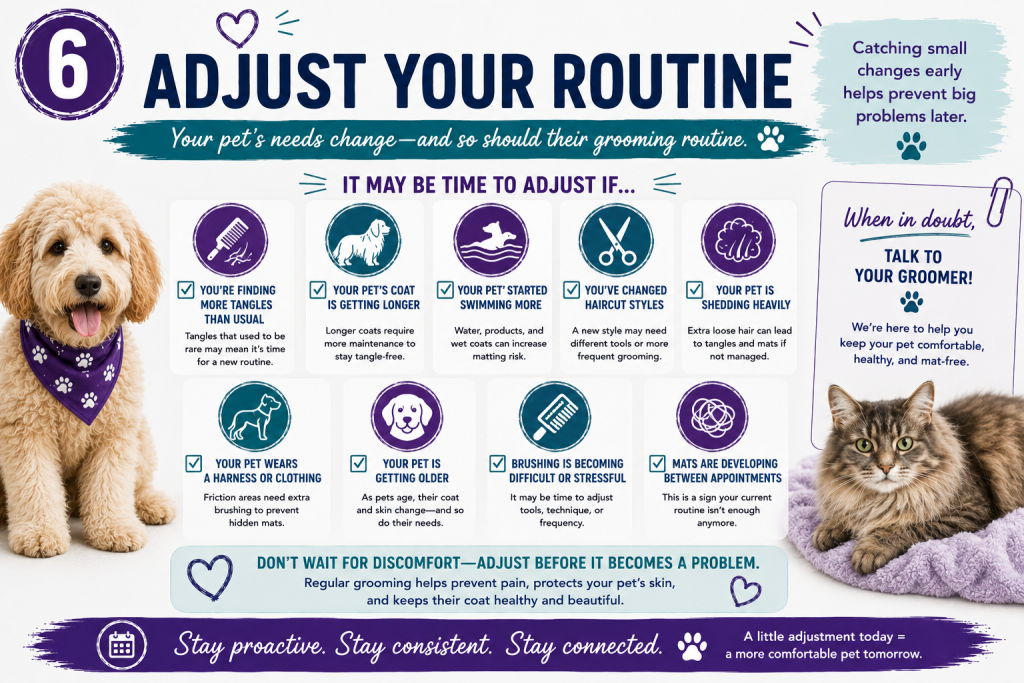
It May Be Time to Adjust If...
- • You're finding more tangles than usual
- • Your pet's coat is getting longer
- • Your pet started swimming more
- • You've changed hairstyles
- • Your pet is shedding heavily
- • Your pet has become less mobile
- • Brushing sessions are becoming difficult
- • Your pet is getting older
- • Mats are developing between appointments
Don't wait for a major problem. Talk with your groomer and adjust the routine before your pet becomes uncomfortable.
Your Groomer Is Your Partner in Coat Care
You don't have to figure this out alone. Your groomer sees your pet's coat up close and can help you decide:
- ✔ Which tools are working
- ✔ Which areas need extra attention
- ✔ Whether your current haircut is manageable
- ✔ How often your pet may need grooming
- ✔ Whether the coat is changing
- ✔ Where mats are beginning to develop
- ✔ How to make home maintenance easier
Most importantly, tell us what's happening between appointments. Did your dog start swimming? Did you change harnesses? Has your senior pet become uncomfortable standing? That information helps us make better recommendations for your individual pet.
The Goal Isn't Perfection
The goal is:
- 💙 Comfort
- 💙 Consistency
- 💙 Prevention
- 💙 Appropriate grooming
- 💙 A manageable routine
- 💙 Working together
- 💙 Adjusting as your pet changes
From puppyhood to adulthood to the senior years, their needs will change. Our goal stays the same: a comfortable pet with a healthy coat.
The End of Our Matting Season Education Series
Over this series, we've learned:
- • Why matting season can be especially challenging
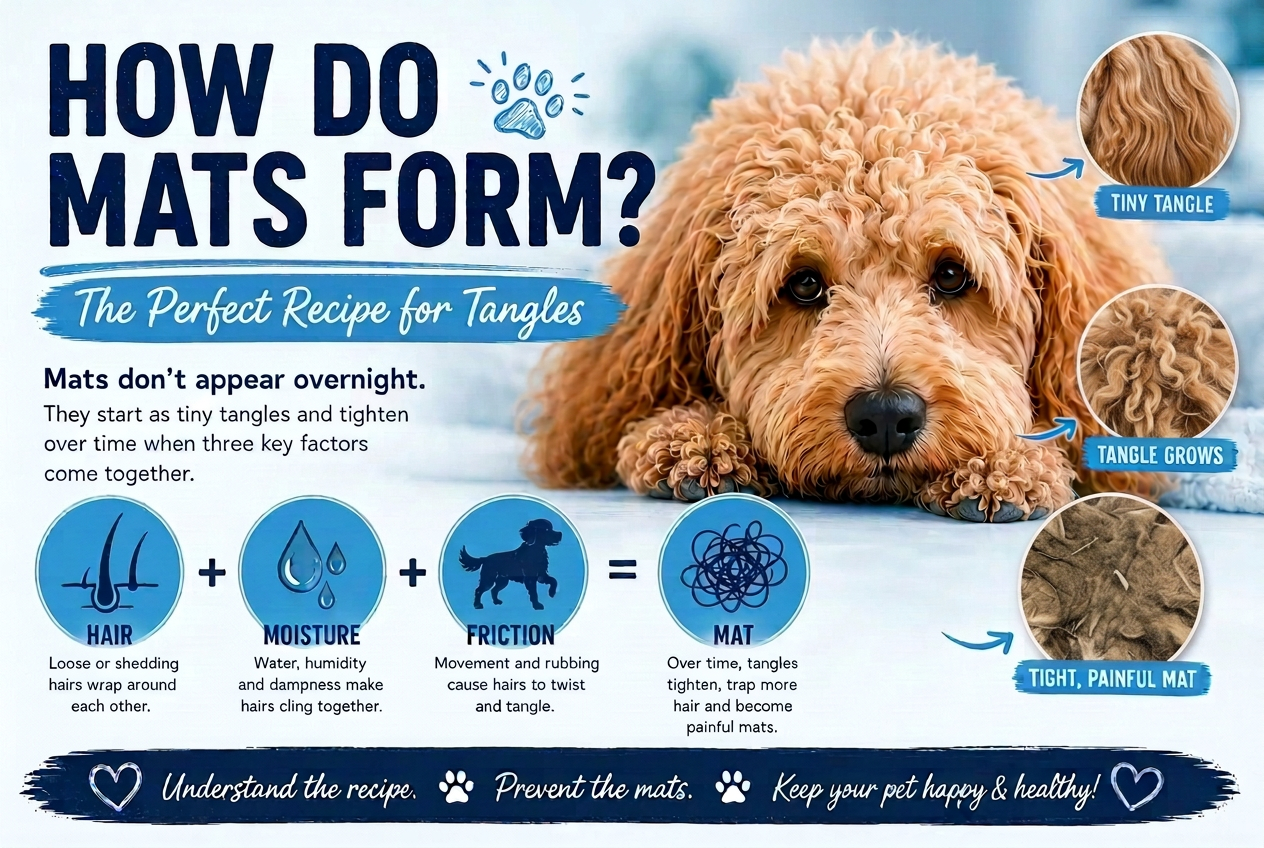
- • How loose hair, friction, moisture, and time create tangles
- • Why mats affect much more than appearance
- • Why severe matting sometimes must be removed instead of brushed out
- • How the right brush, comb, and technique make home care easier
- • How to build a practical home-care routine
- • Why our feline friends need coat care too
And now, A Lifetime of Healthy Coats—because mat prevention isn't just something we think about during “matting season.” It's part of caring for your pet throughout their entire life.
Thank You for Following Along!
If there's one thing we hope you take away from this series, it's this: prevention is easier than correction. You don't need to be a professional groomer, have dozens of expensive tools, or a perfect coat every second of every day.
You simply need a routine that works for your pet, their coat, and your lifestyle:
- ✔ Brush consistently
- ✔ Check often
- ✔ Stay on an appropriate professional grooming schedule
- ✔ Adjust when your pet's needs change
- ✔ Ask for help when you need it
We'll be here for you, and your pet, through every stage.
Ready to Build a Healthy Coat Routine?
Our Professional Pet Stylists bring gentle, low-stress mobile grooming for dogs and cats of every age right to your driveway in Queen Creek, Gilbert, Mesa, Chandler and across the Southeast Valley.
🐾 Explore our grooming services and pricing or schedule your pet's next appointment today.
Frequently Asked Questions
How often should my pet be professionally groomed?
It depends on coat type, haircut, lifestyle, and age. Your groomer can recommend a schedule that fits your pet and adjust it as their needs change.
When should I start grooming my puppy or kitten?
As early as possible. Short, gentle, positive sessions at home help young pets feel safe with brushing, handling, and professional visits.
How does grooming change for senior pets?
Senior pets often do best with shorter sessions, more frequent maintenance, easier-to-maintain styles, and a comfort-first approach that respects mobility and sensitive skin.
Related reading
Ready to pamper your pet?
Our mobile spa comes to your driveway — climate-controlled, filtered water, and one-on-one attention from start to finish.