Why Dog Mats Form So Quickly (and How to Stop Them Before They Start)
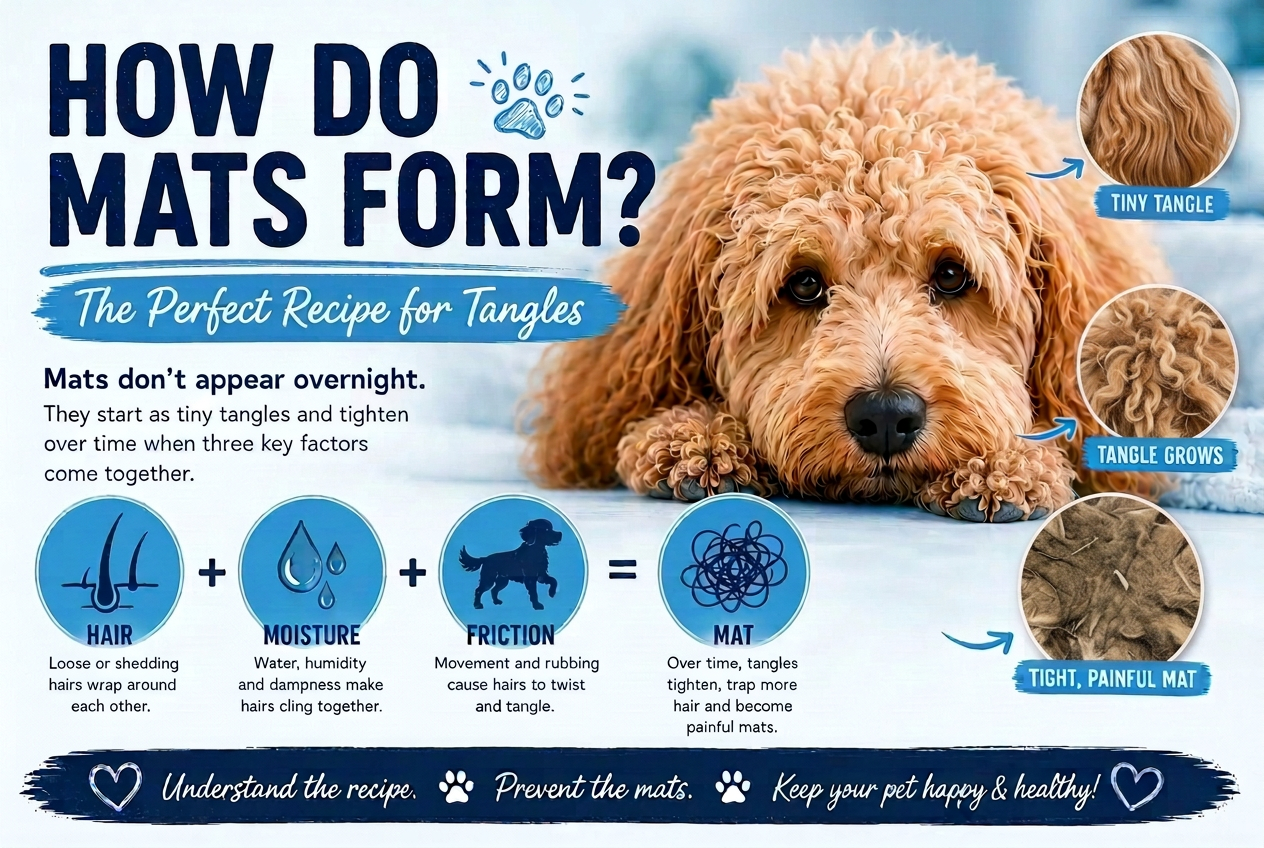
If you've ever wondered, “How did my dog get matted so quickly?” you're not alone. It's one of the most common questions professional groomers hear. The truth is, dog mats rarely appear overnight. Most begin as tiny tangles that tighten over time, trapping loose hair, dirt, moisture and natural oils until they become dense, compacted knots. And because many tangles start beneath the surface, a coat can look perfectly fluffy on top while a mat quietly forms close to the skin. Understanding how mats form is the first step toward preventing them and keeping your pet comfortable all year long. 💙
The Perfect Recipe for a Mat
Most mats form when three simple ingredients come together:
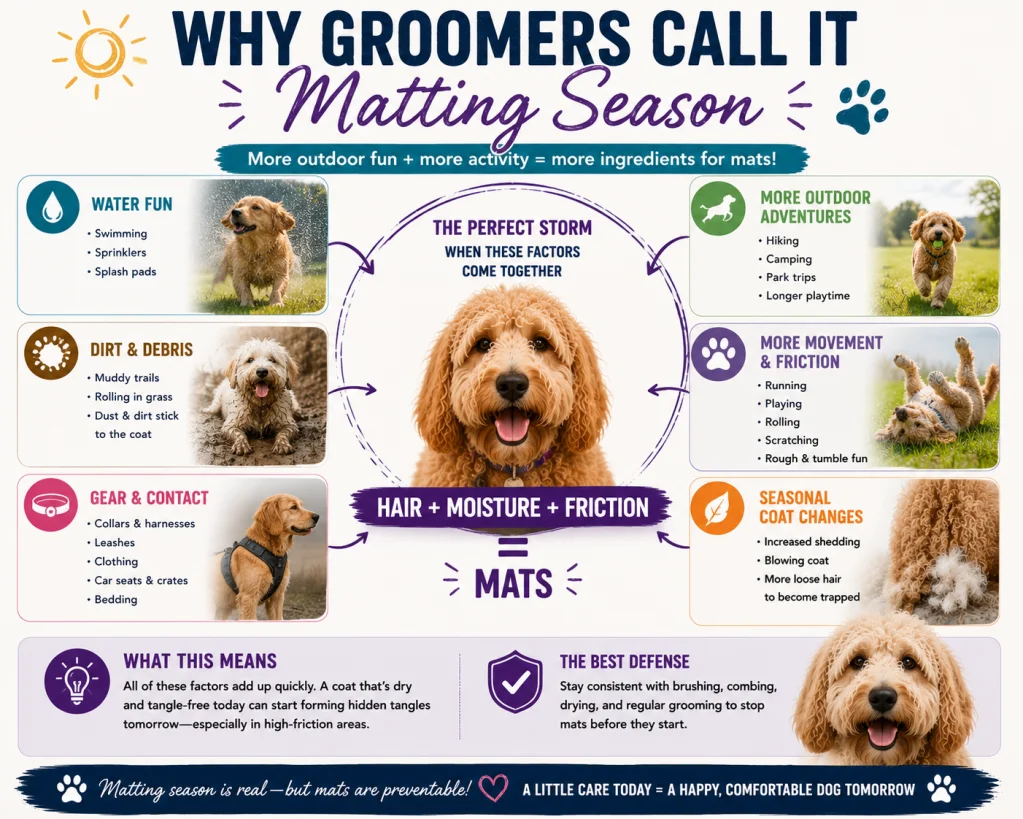
Hair + Moisture + Friction = Mat
When these factors combine, even a coat that looks healthy on the surface can begin developing hidden tangles underneath.
Add movement, dirt, oils, debris and time, and those little tangles can become increasingly tight and compacted.
Let's take a closer look at each ingredient.
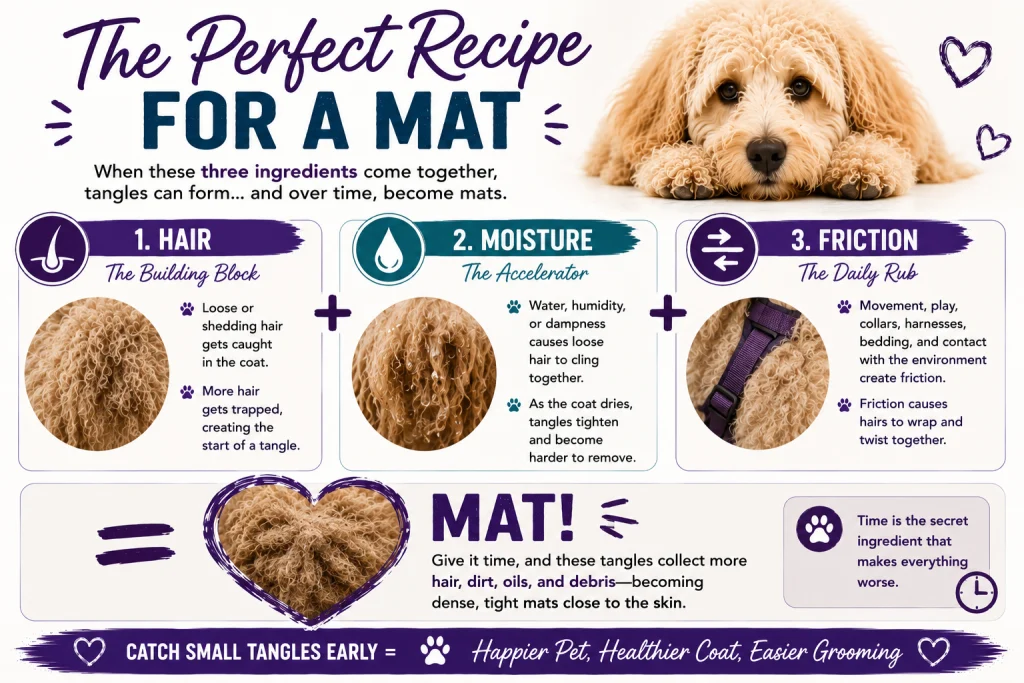
Ingredient #1: Hair — Where Tangles Begin
Every dog's coat goes through a natural growth cycle. Depending on the coat, loose hairs may shed and fall away, or they may get caught in the surrounding hair.
As individual hairs loosen, they can twist and wrap around neighboring hairs. At first, these tangles are tiny and easy to miss. But they don't stay tiny.
Over time, that little tangle can collect:
- • More loose hair
- • Dirt
- • Natural skin oils
- • Debris
- • Moisture
As more material becomes trapped, the tangle grows larger, denser and tighter. Eventually, it becomes a mat.
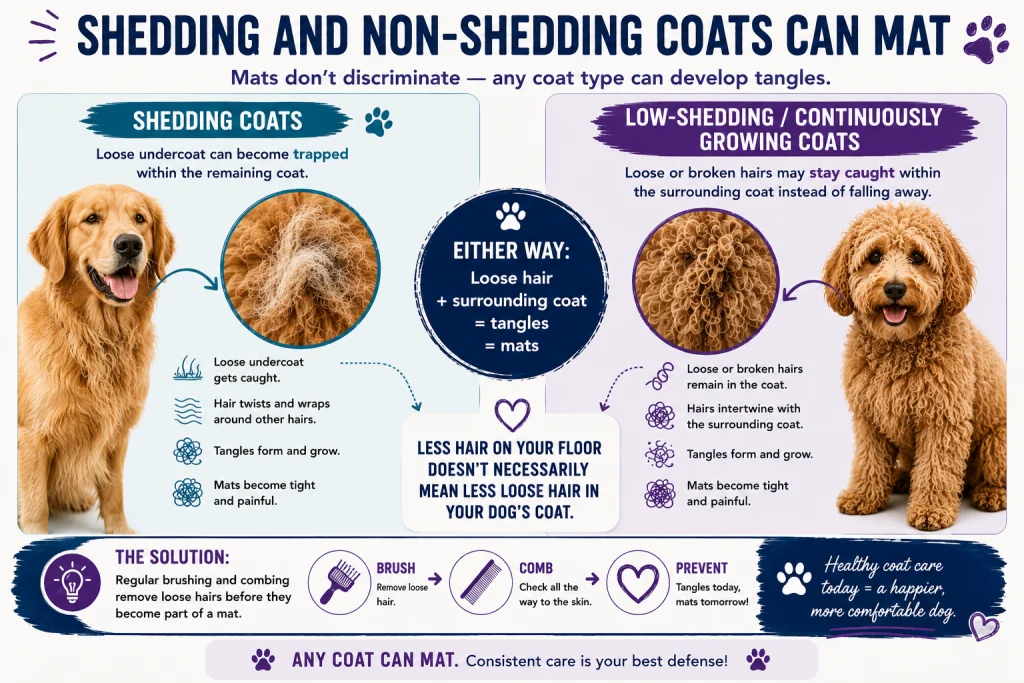
Shedding and Non-Shedding Coats Can Both Mat
This is a common misconception: any mat-prone coat can develop tangles.
In shedding coats, loose undercoat can become trapped within the remaining coat instead of falling away.
Continuously growing and low-shedding coats can be especially mat-prone, because shed or broken hairs tend to stay caught in the surrounding coat. That includes many:
- • Poodles
- • Goldendoodles
- • Labradoodles
- • Shih Tzus
- • Maltese
- • Bichons
Instead of piling up on your floor, that hair may stay inside the coat, where it contributes to tangling.
Less hair on your floor doesn't necessarily mean less loose hair in your dog's coat.
Regular brushing and combing remove those loose hairs before they become part of a mat. Poodles and doodles in particular need a consistent maintenance routine, both at home and with professional dog grooming.
Ingredient #2: Friction — The Hidden Cause of Mats
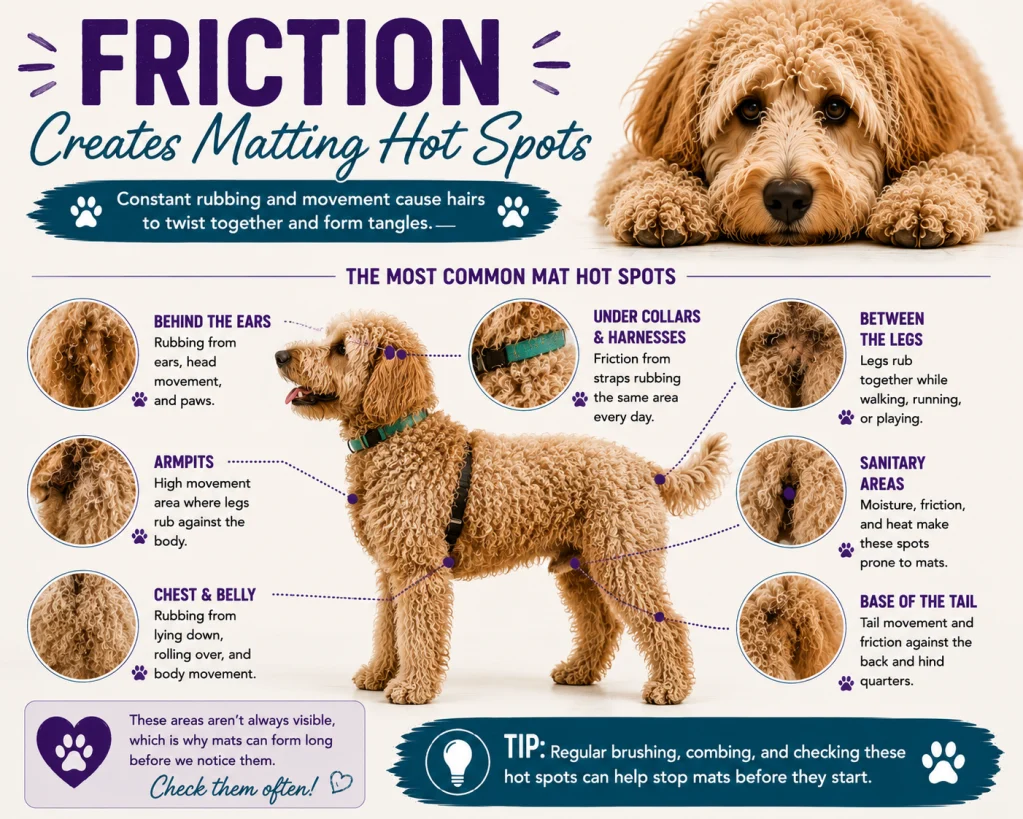
The second ingredient is something your dog experiences all day long: friction.
Every time your pet walks, runs, plays, scratches, rolls over or lies down, their hair rubs against itself. Then add things rubbing against the coat:
- • Collars
- • Harnesses
- • Clothing
- • Bedding
- • Your pet's own body
That repeated rubbing encourages hairs to twist and intertwine, which is why mats keep appearing in the same high-friction areas.
Common matting hot spots to check:
- • Behind the ears
- • Armpits
- • Belly and chest
- • Under collars and harnesses
- • Between the legs
- • Sanitary areas
- • Base of the tail
Because many of these areas are underneath your pet rather than on top, tangles can develop long before you notice them.
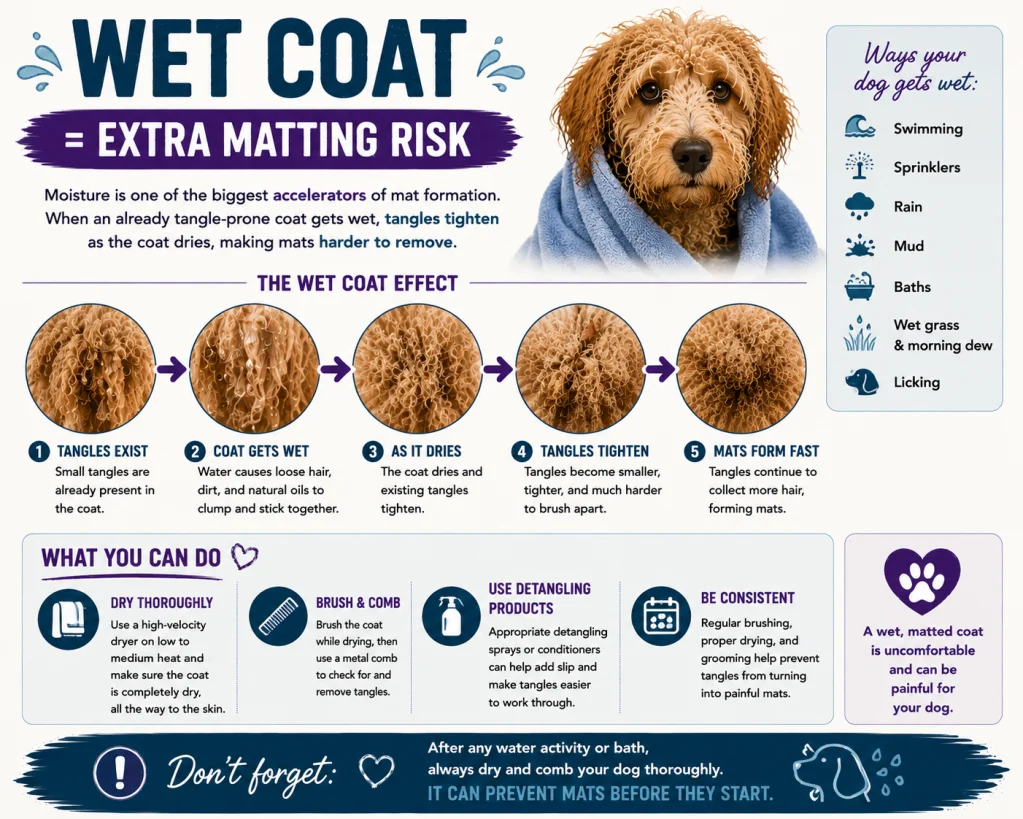
Ingredient #3: Moisture — The Matting Accelerator
Moisture is one of the biggest accelerators of mat formation. Think about all the ways your pet gets wet:
- • Swimming
- • Sprinklers
- • Rain
- • Mud
- • Baths
- • Wet grass and morning dew
- • Licking
When a tangle-prone coat gets wet, loose hair, dirt and natural oils cling together. As the coat dries, existing tangles tighten and become harder to brush apart.
That's why a coat can seem to mat incredibly quickly after getting wet. If your pet isn't thoroughly dried, brushed and combed after water activities, little tangles can turn into much bigger problems.
Movement, Debris and Time Keep the Recipe Mixing
Your pet doesn't sit still while these ingredients combine. Walking, playing, scratching, stretching, lying down and rolling around all move the coat, working neighboring hairs into any tangle that has already formed.
Think of movement as the spoon that keeps stirring the matting recipe.
The coat also collects grass, plant material, dust, natural oils, saliva and loose undercoat. That doesn't mean a matted pet is “dirty” — a perfectly clean pet can become matted. Dirt and oils simply make an existing tangle harder to separate.
And then there's time, the factor pet parents underestimate most. A tangle grows like a snowball:
Tiny tangle → catches more hair → friction tightens it → moisture tightens it further → more hair gets trapped → dense mat
A tangle that was manageable when it first formed can become much harder to safely work through later.
Why Groomers Call It “Matting Season”
Spring and summer bring more outdoor adventures, and more chances for the three matting ingredients to come together:
- • Swimming and sprinklers → moisture
- • Hiking and camping → dirt and friction
- • Rolling in grass → moisture, debris and friction
- • Harnesses on walks → friction
- • More outdoor activity → movement and friction
Seasonal coat changes add to it, as loose undercoat gets caught in the remaining coat. That's why groomers across the Valley see more tangled and matted coats during warmer, more active months.
Some Coat Types Need Extra Attention
Any mat-prone coat can tangle, but some need especially consistent maintenance:
- • Long, silky coats (Yorkies, Maltese, Shih Tzus): fine, longer hair tangles easily in high-friction areas.
- • Curly, continuously growing coats (Poodles, Goldendoodles, Labradoodles, Bichons): loose hairs stay caught in the curls.
- • Double coats (Golden Retrievers, Australian Shepherds, Border Collies, Pomeranians): loose undercoat packs into the remaining coat, especially during seasonal shedding.
- • Mixed-texture coats: many doodles and mixed breeds inherit combinations that make maintenance less predictable.
Coat type matters, but lifestyle matters too. A long-coated dog who swims every weekend may need very different home care than a similar dog who spends most of their time indoors.
“But I Brush My Dog!”
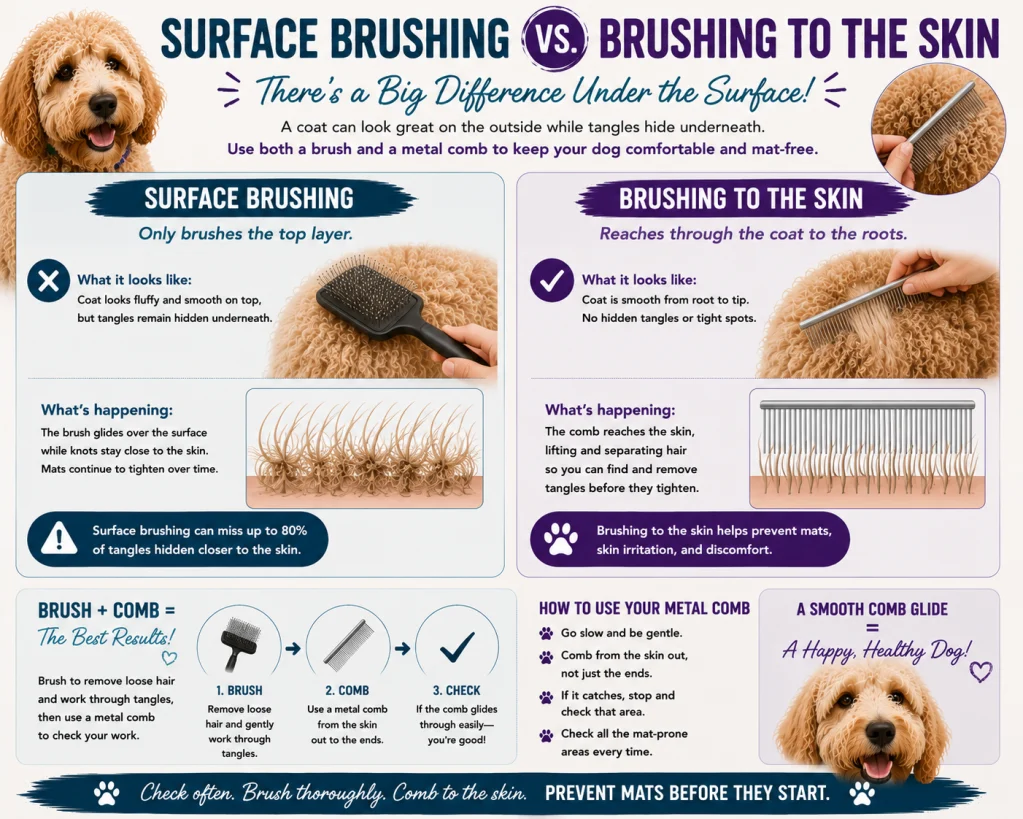
And you probably do! Many pet parents truly brush regularly. The challenge is that matting often forms beneath the surface, where it isn't visible.
A brush can pass through the outer layer without reaching the tangles underneath. The top looks beautiful while little knots keep tightening closer to the skin.
That's why groomers recommend both a brush and a metal comb for longer, curly and mat-prone coats:
- • Your brush does the work: it separates the coat, removes loose hair and works through minor tangles.
- • Your comb checks the work: gently run a metal comb from near the skin through the ends.
If the comb glides through, you're good. If it catches or stops, something is still hiding in there. Go back to that section, work through it gently and check again.
Brush → Comb → Check ✓
Not sure which tools fit your pet's coat? Read Brush Smarter, Not Harder: Choosing the Right Grooming Tools.
How to Help Prevent Mats at Home
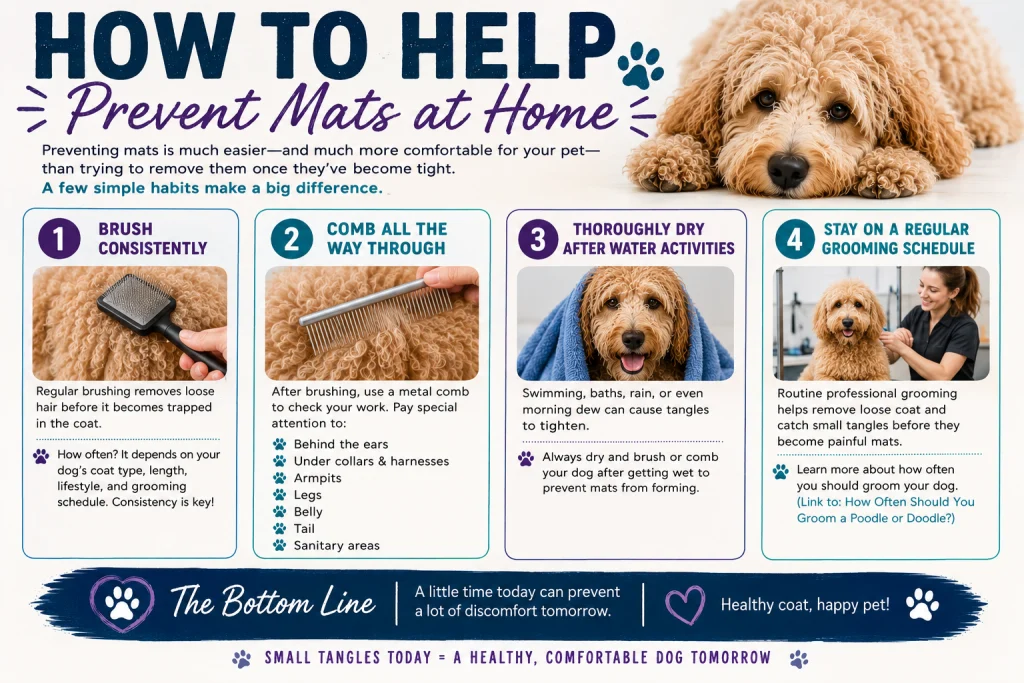
Preventing mats is much easier, and much more comfortable for your pet, than removing them once they're tight. A few habits make a big difference:
- • Brush consistently: regular brushing removes loose hair before it gets trapped. The right frequency depends on your pet's coat, length, lifestyle and grooming schedule.
- • Comb all the way through: check behind the ears, under collars and harnesses, armpits, legs, belly, tail and sanitary areas.
- • Dry thoroughly after swimming or baths: then brush and comb mat-prone coats.
- • Stay on a regular grooming schedule: routine professional grooming removes loose coat and catches small tangles before they progress.
Want an easy way to put this into practice? Save The Ultimate Mat Prevention Checklist: Keep Your Pet Happy & Tangle-Free and refer back to it anytime.
Small Tangles Become Big Problems
One tiny tangle may not seem like much. But left alone, it keeps interacting with the same ingredients that created it: hair, moisture and friction, with movement, debris and time keeping the process going.
Finding a little tangle today is easier, safer and far more comfortable for your pet than waiting until it becomes a dense mat.
Once mats become tight or widespread, they can pull on the skin, reduce airflow, trap moisture and debris, restrict movement and hide what's happening underneath. Read the next article in our series: When Matting Becomes More Than a Cosmetic Issue.
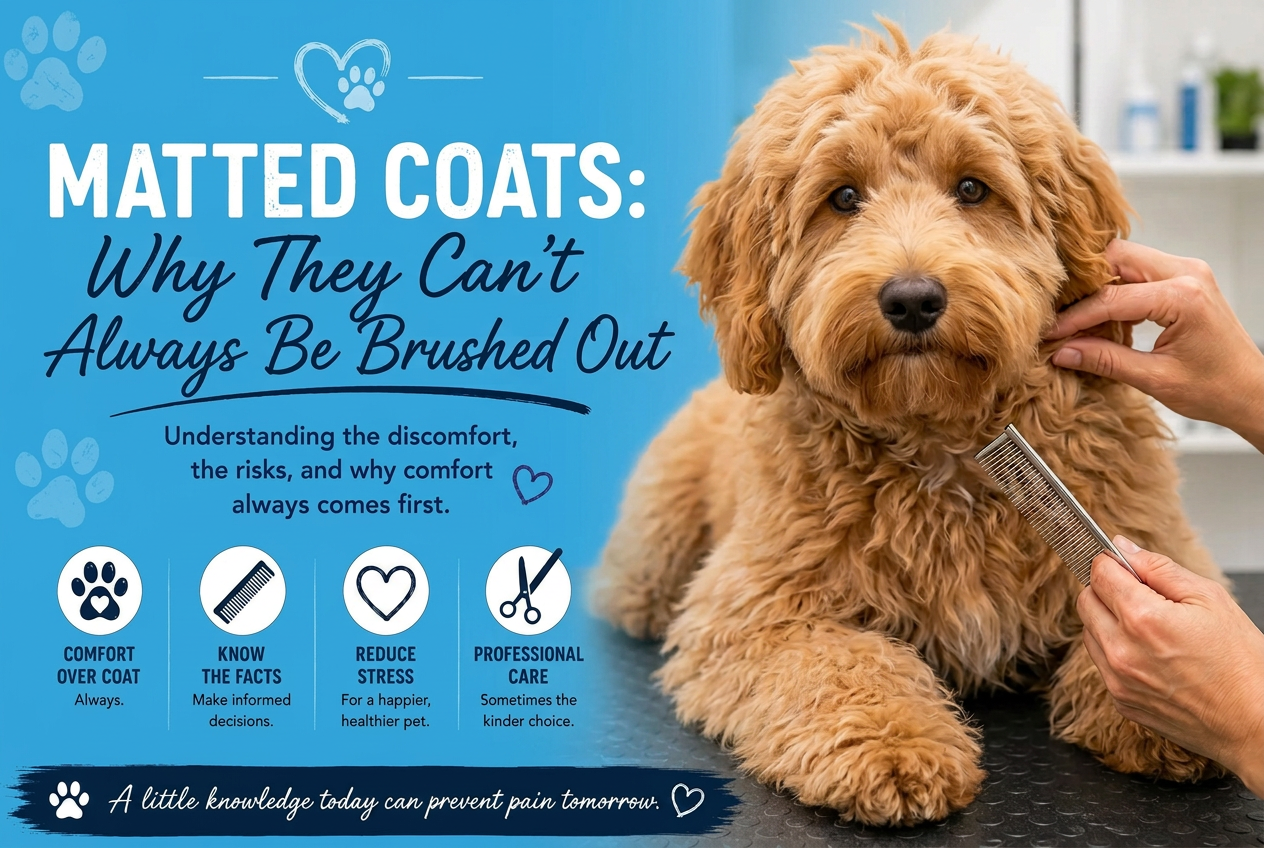
Already dealing with a tight mat? Learn why you can't always brush mats out, and see how cats are affected in Yes… Even Cats Get Mats!
Ready to Keep Your Dog Tangle-Free?
AZ Pet Stylist provides mobile dog and cat grooming in Queen Creek and across our Southeast Valley service area. Explore our dog grooming services to find a maintenance routine that fits your pet's coat and lifestyle.
Frequently Asked Questions
Why does my dog get matted so quickly?
Mats usually start as small tangles beneath the surface. Loose hair, moisture and friction from movement, collars or harnesses tighten them over time, so a coat can look fine on top while mats form near the skin.
Do non-shedding dogs like doodles get mats?
Yes. Low-shedding and continuously growing coats can be especially mat-prone, because shed or broken hairs stay caught in the surrounding coat instead of falling out.
Where do dogs get mats most often?
High-friction areas: behind the ears, armpits, belly and chest, under collars and harnesses, between the legs, sanitary areas and the base of the tail.
Why does my dog mat after swimming or a bath?
When a tangle-prone coat gets wet, hair, dirt and oils cling together, and tangles tighten as the coat dries. Dry thoroughly, then brush and comb mat-prone coats.
How do I know if I'm brushing well enough?
After brushing, run a metal comb from near the skin through the ends. If it glides through, you're on track; if it catches, go back and gently work through that section.
Related reading


Ready to pamper your pet?
Our mobile spa comes to your driveway — climate-controlled, filtered water, and one-on-one attention from start to finish.