When Matting Becomes More Than a Cosmetic Issue: How Severe Matting Can Affect Your Pet
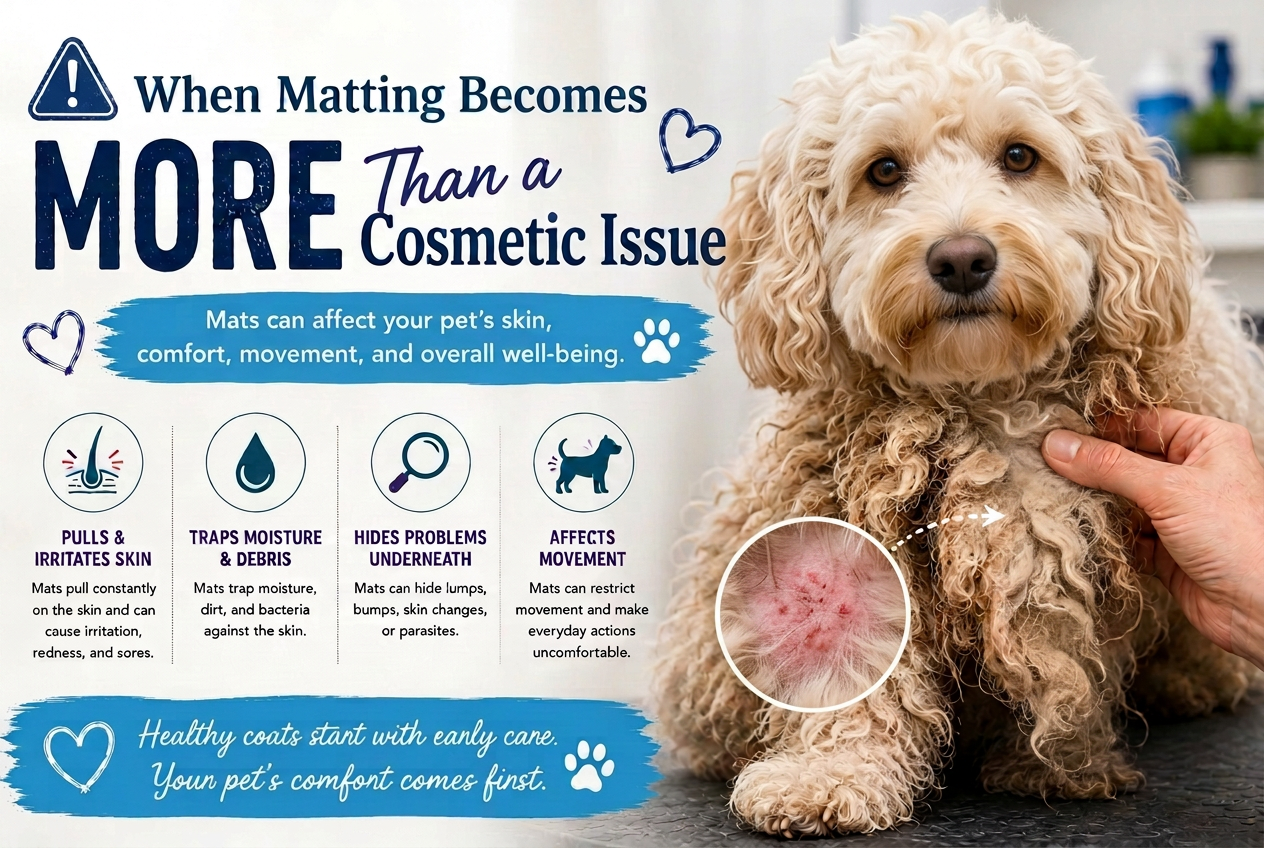
Matting is easy to think of as a cosmetic problem: the coat looks messy, the hair feels tangled, and your pet may not look as fluffy as usual. But the health risks of severe matting go far beyond appearance. Tight, widespread, or compacted mats can affect your pet's skin, movement, comfort, and overall well-being. Because mats may completely cover the skin, you may not know there is a problem underneath until the coat is safely removed. Matting isn't just about how your pet looks — it's about the pet underneath the coat.
Severe Matting Is More Than Tangled Hair
Severe matting can:
- • Pull tightly on the skin with movement
- • Reduce airflow to the skin
- • Trap moisture, dirt, oils, and debris close to the body
- • Create warm, damp conditions where irritation and infection can develop
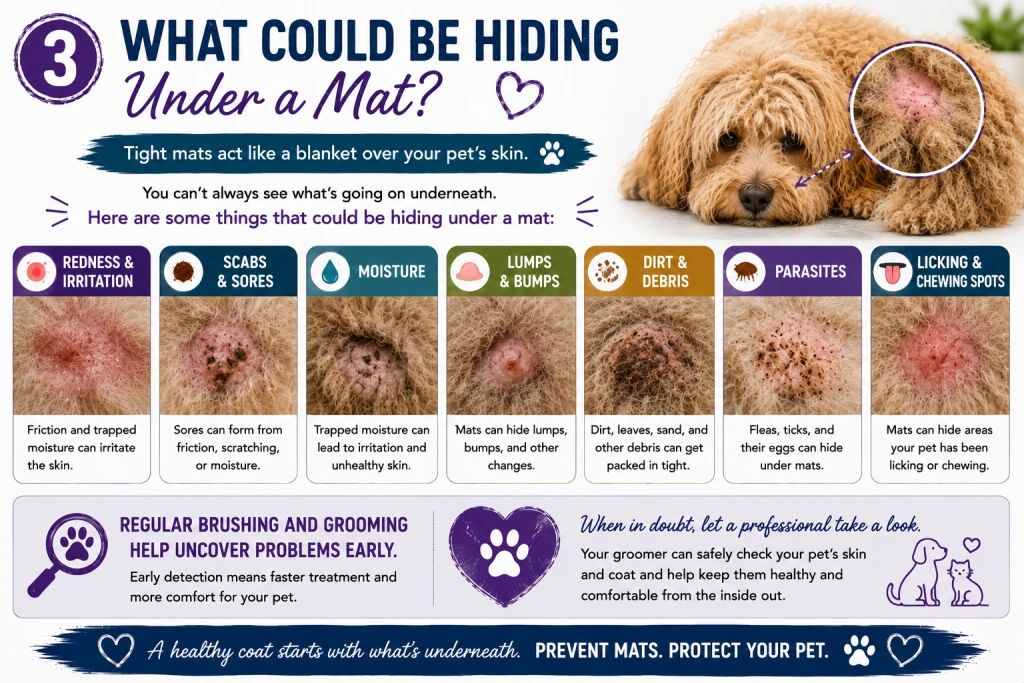
- • Hide redness, sores, swelling, lumps, parasites, and other changes
- • Make normal movement uncomfortable
This article is educational and does not replace veterinary advice. Your groomer can assess coat condition and point out concerns; a veterinarian diagnoses and treats medical problems.
It Starts With a Tangle
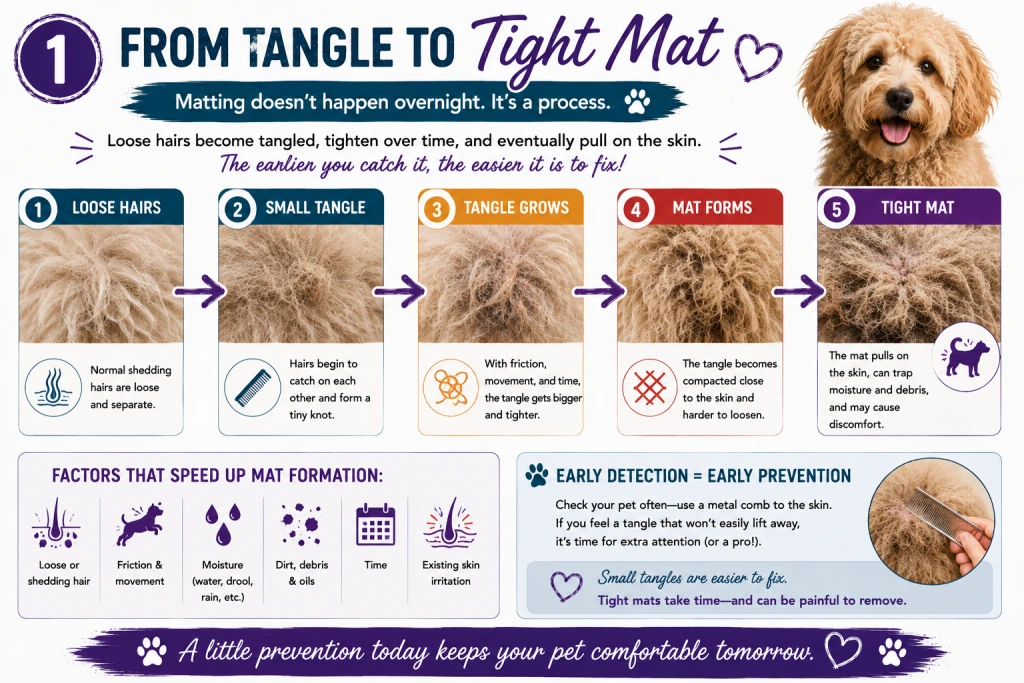
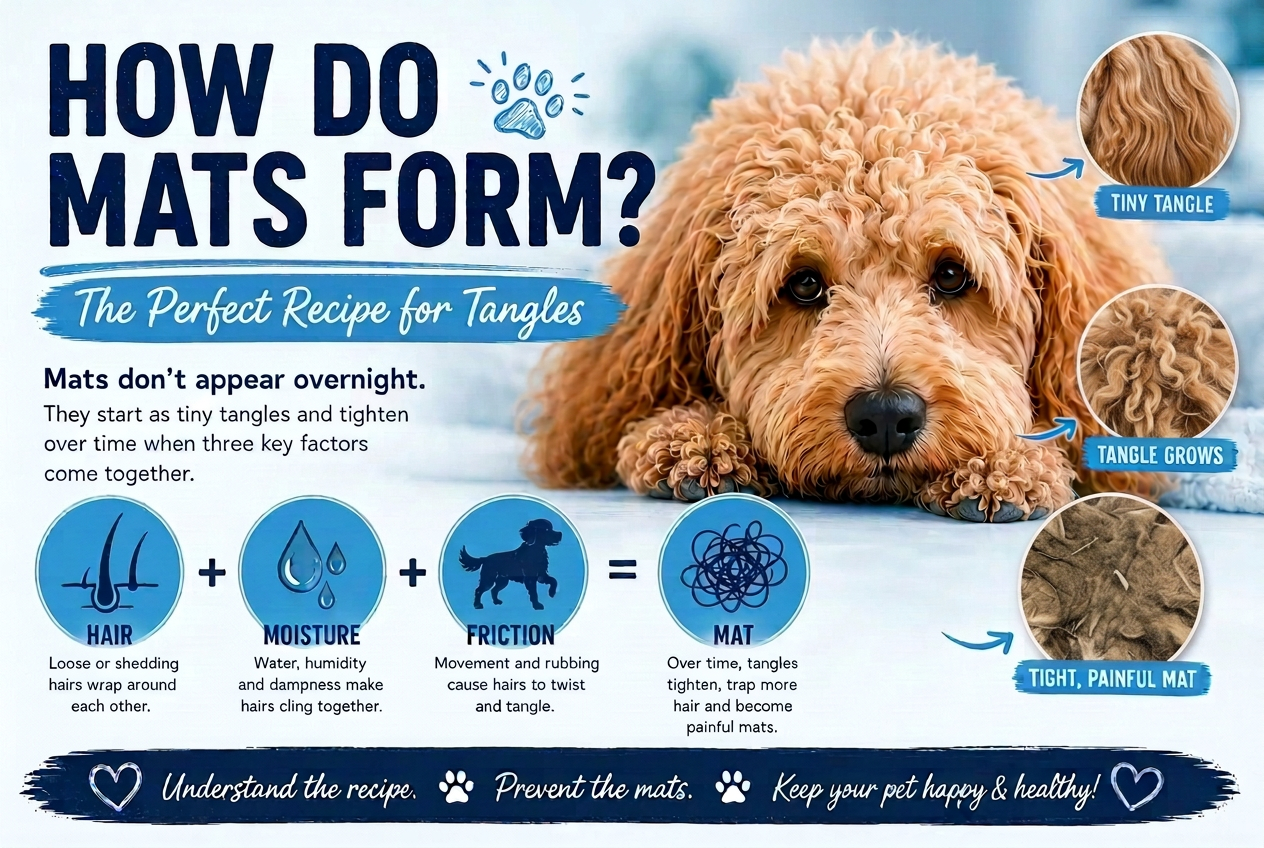
Mats usually don't appear overnight.
Loose or shedding hair becomes caught in the surrounding coat. Add friction, movement, moisture, dirt, and time, and those hairs begin intertwining.
As your pet continues moving, the tangle becomes tighter and more compacted.
Think of it like a knot.
A loose knot may be relatively easy to work apart.
But keep pulling and tightening that knot, and eventually it becomes much harder to separate.
Except your pet's coat is attached to something important:
Their skin.
Constant Pulling Can Become Uncomfortable
Imagine wearing a ponytail that's just a little too tight.
At first, you might simply notice it.
But now imagine never being able to take it down.
Every time you turn your head, lie down, stretch, or move around, the same hairs continue pulling against your scalp.
A tight mat can create a similar constant pulling sensation.
Matted hair doesn't move freely the way a healthy coat does. As the coat becomes more tightly compacted, normal movement can create tension on the skin underneath.
Your pet may feel that pulling when they:
- • Walk
- • Run
- • Sit or lie down
- • Stretch
- • Scratch
- • Play
This can be particularly uncomfortable when matting develops around high-movement areas such as the armpits, groin, belly, neck, behind the ears, and legs.

But My Dog Doesn't Seem Like They're in Pain
This is important.
Dogs don't always show obvious signs of discomfort.
Matting usually becomes tighter gradually. Your pet may continue eating, playing, sleeping, and behaving relatively normally even while the coat is becoming increasingly uncomfortable.
Some possible dog matting pain signs can include:
- • Sensitivity when touched or groomed
- • Restlessness or difficulty getting comfortable
- • Discomfort with certain movements
- • Increased licking or chewing at particular areas
- • Avoiding brushing or handling
- • Reacting when a matted area is touched
- • Changes in normal grooming tolerance
- • Red or sensitive skin once the mats are removed
And sometimes there may be very few obvious behavioral signs at all.
That's one reason we don't want to wait for a pet to clearly tell us they're hurting before addressing severe matting.
What they aren't showing us doesn't necessarily tell us what's happening underneath the coat.
Matting Can Create Problems for the Skin
Severe matting can create conditions that contribute to skin irritation and infection.
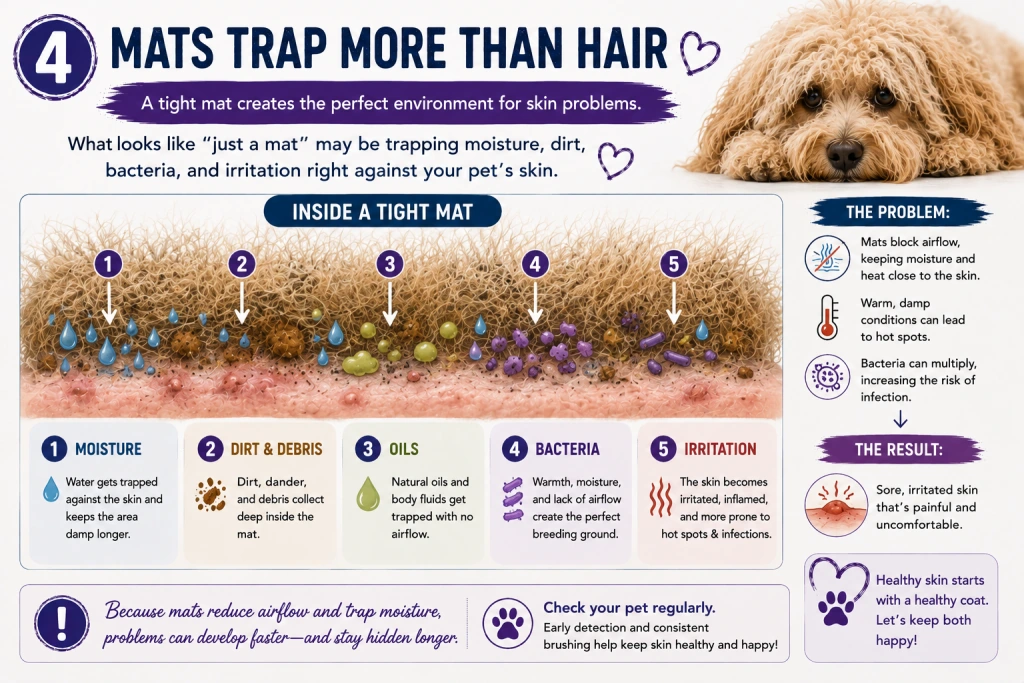
A healthy coat allows air to circulate around the skin.
A severely compacted coat can reduce that airflow while holding moisture, dirt, oils, and debris close to the body.
Now add:
Moisture + Warmth + Reduced Airflow + Skin Irritation
…and you have conditions that can contribute to skin problems.
Mats may trap moisture from:
- • Bathing
- • Swimming
- • Rain
- • Sprinklers
- • Licking
- • Everyday activity
The skin underneath may stay damp much longer than it would beneath a loose, properly maintained coat.
Combined with friction and the constant pulling of the mat, the skin may become irritated and inflamed.
Hot spots or skin infections may develop or worsen underneath a severely matted coat.
And because the mat covers the area, you may not know it's happening.
Severe matting can:
- • Trap moisture
- • Hold bacteria close to irritated skin
- • Collect dirt, oils & debris
- • Reduce airflow
- • Continuously pull on skin
- • Hide developing problems
What you see: tangled hair.
What may be happening underneath: irritated skin that you can't see.
Matting Can Affect More Than the Surface of the Skin
In advanced cases, matting can become extremely tight and compacted against the body.
At that point, the coat may create continuous tension and pressure on the skin underneath.
That can contribute to:
- • Persistent irritation
- • Tenderness
- • Skin inflammation
- • Reduced comfortable movement
- • Damage from repeated friction or pulling
If the matting is extremely tight or there are concerns about swelling, skin injury, or tissue underneath the coat, removal may need additional veterinary oversight.
This isn't something we want pet parents trying to assess or remove themselves.
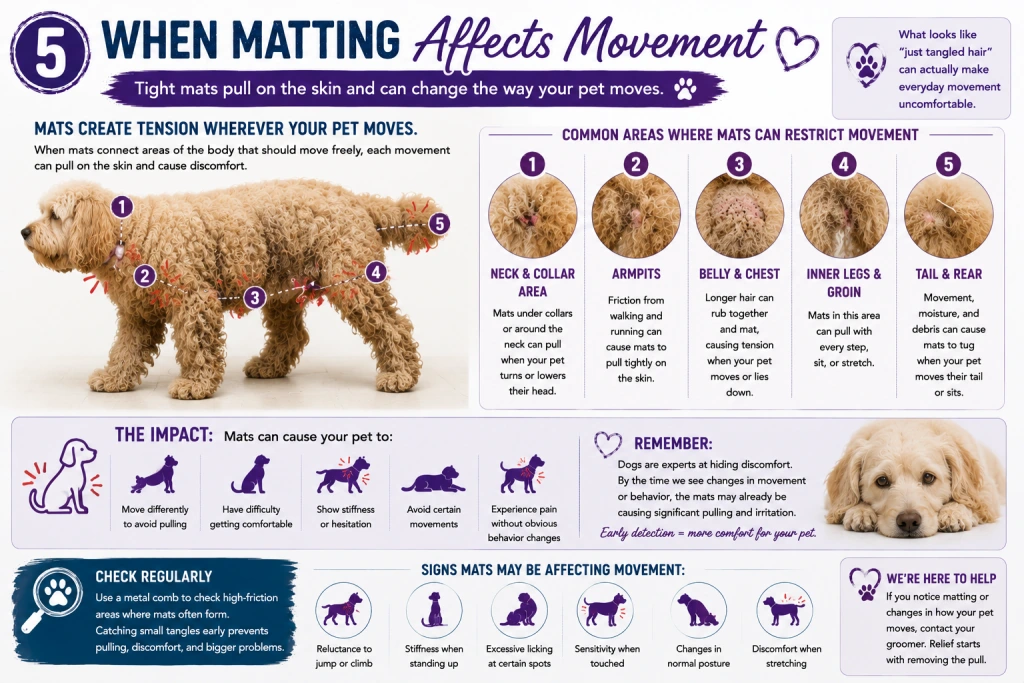
Matting Can Restrict Movement
Think about what happens when tightly tangled hair connects areas that normally move independently.
Every time the pet moves one area, it pulls on another.
This is especially problematic around:
- • Armpits
- • Inner legs
- • Groin
- • Belly
- • Neck
- • Tail
In severe cases, large areas of the coat can become connected into a tight sheet.
Movement that should feel completely normal can begin pulling against the skin.
A pet may adjust how they sit, stand, walk, or stretch without the change being immediately obvious to us.
What Happens After Severe Mats Are Removed?
Many pet parents understandably expect that once the mats are gone, everything immediately goes back to normal.
And often, pets do appear much more comfortable once that tight coat is removed.
But when matting has been severe or present for an extended period, the skin underneath may need time to recover.
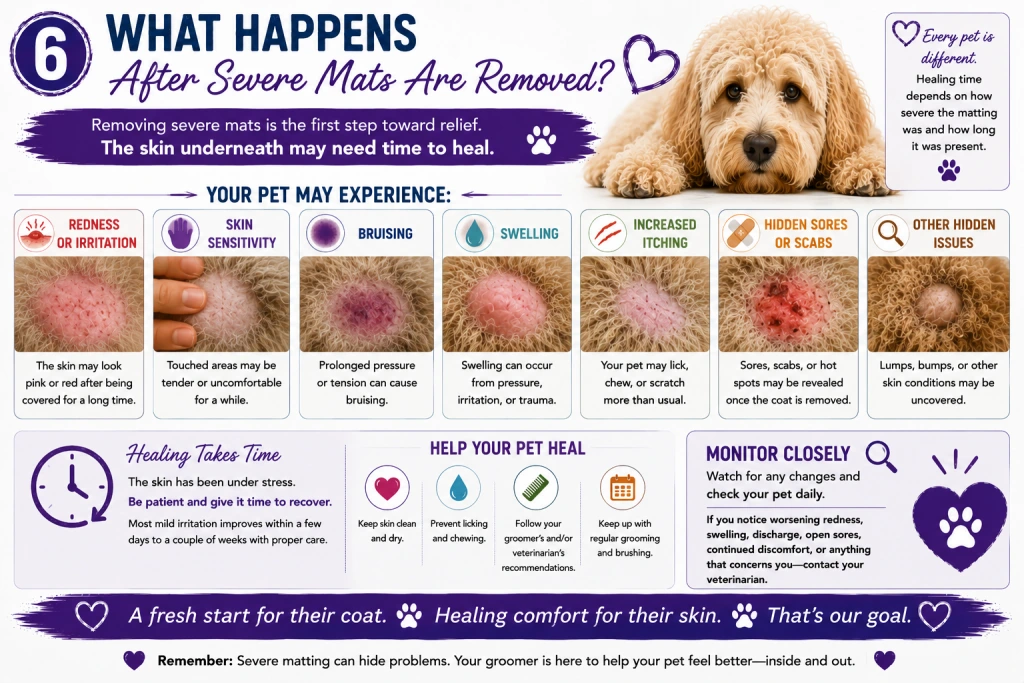
After removing a heavily matted coat, you may notice:
- • Redness or irritation
- • Skin sensitivity
- • Bruising
- • Swelling
- • Increased licking or itching
- • Tenderness in previously matted areas
- • Sores or scabs that were previously hidden
Removing the coat also suddenly exposes skin that may have been covered by dense matting for quite some time.
This is why we want you to monitor your pet closely after a severe shave-down.
If your pet develops significant swelling, open sores, discharge, persistent discomfort, worsening redness, or anything else that concerns you, contact your veterinarian.
A Special Note About Severely Matted Ears
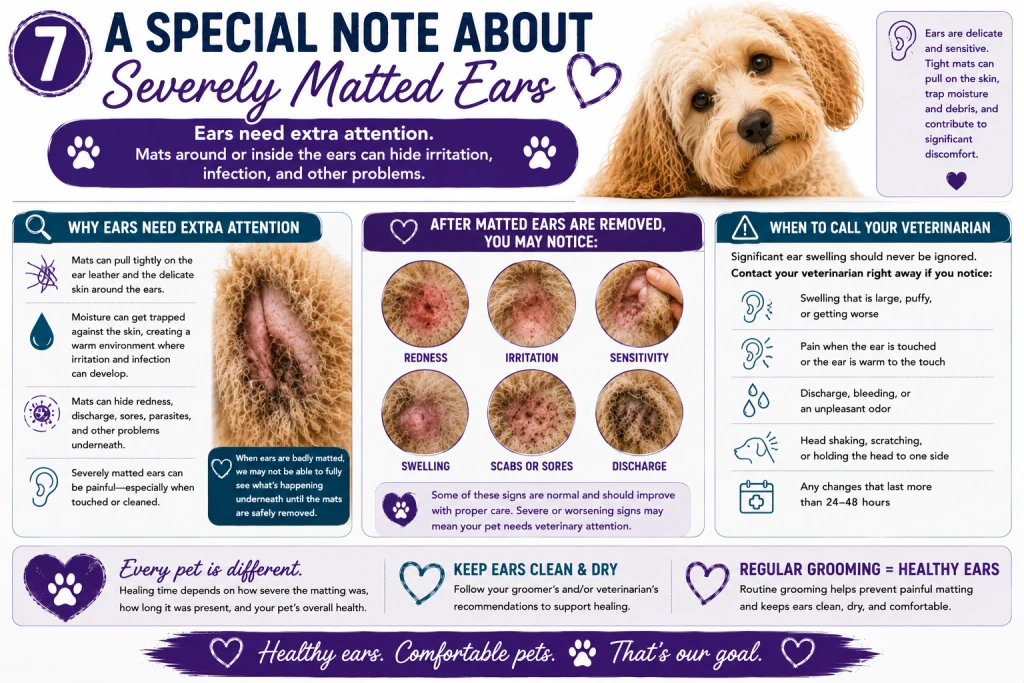
Ears deserve particular attention.
Long-haired dogs can develop very tight matting around the ear leather. Matted ears may also be associated with irritation, scratching, inflammation, and other problems that aren't fully visible until the hair is removed.
After severe ear matting is removed, an ear may occasionally appear:
Red Irritated Sensitive Swollen Significant ear swelling should never be ignored.
If an ear suddenly becomes puffy, enlarged, painful, or otherwise abnormal, contact your veterinarian.
When Veterinary Care May Be the Safest First Step
There are situations where a grooming appointment shouldn't necessarily be the first stop.
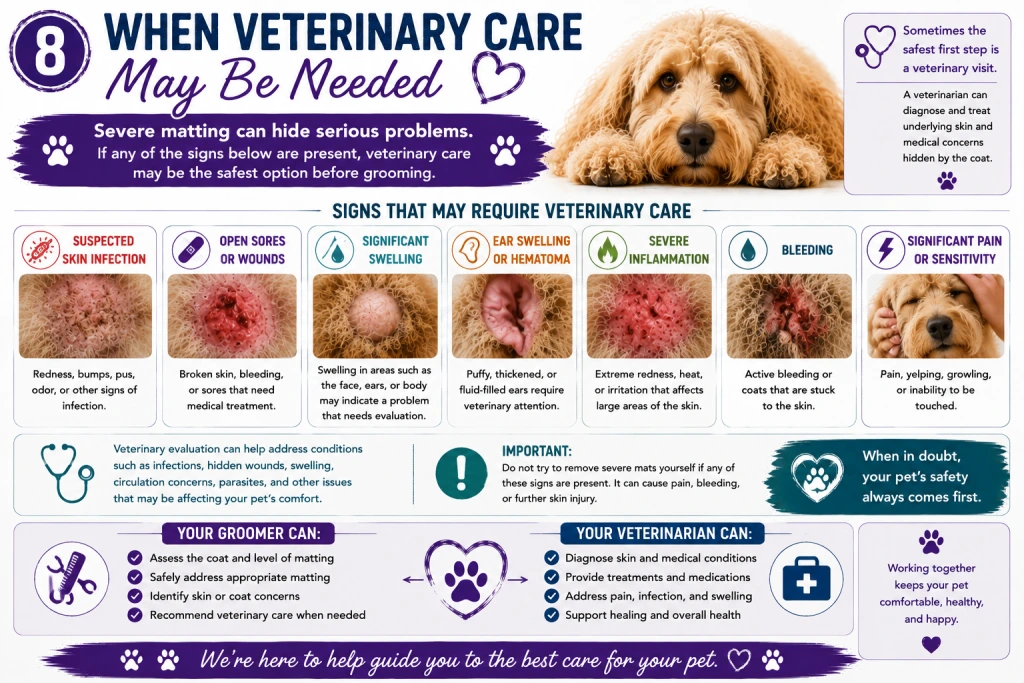
If a coat is extremely matted or the visible skin already appears compromised, veterinary evaluation may be the safest option before grooming.
A veterinarian can evaluate concerns such as:
- • Suspected skin infection
- • Open sores or wounds
- • Significant swelling
- • Ear swelling or possible hematomas
- • Severe inflammation
- • Bleeding
- • Significant pain or sensitivity
- • Other underlying conditions hidden by the coat
Veterinary involvement may also be appropriate when safely removing the matting would be difficult for a pet to tolerate because of their age, health, skin condition, or the severity of the coat.
Groomers and veterinarians have different roles.
Your groomer can assess the coat, safely address appropriate matting, and tell you about abnormalities we see or feel.
Your veterinarian can assess, diagnose, and treat medical concerns involving the skin and underlying tissues.
Sometimes providing the safest care means those two pieces need to work together.
Don't Try to Cut Tight Mats Out at Home
If you discover a tight mat, please don't reach for scissors.
Mats can pull skin up into the tangled hair, making it extremely difficult to tell where hair ends and skin begins.
Trying to slide scissors underneath can cause serious accidental cuts.
Leave tight mats alone and let a professional determine whether they can be safely worked through or need to be clipped.
And that leads perfectly into our next article...
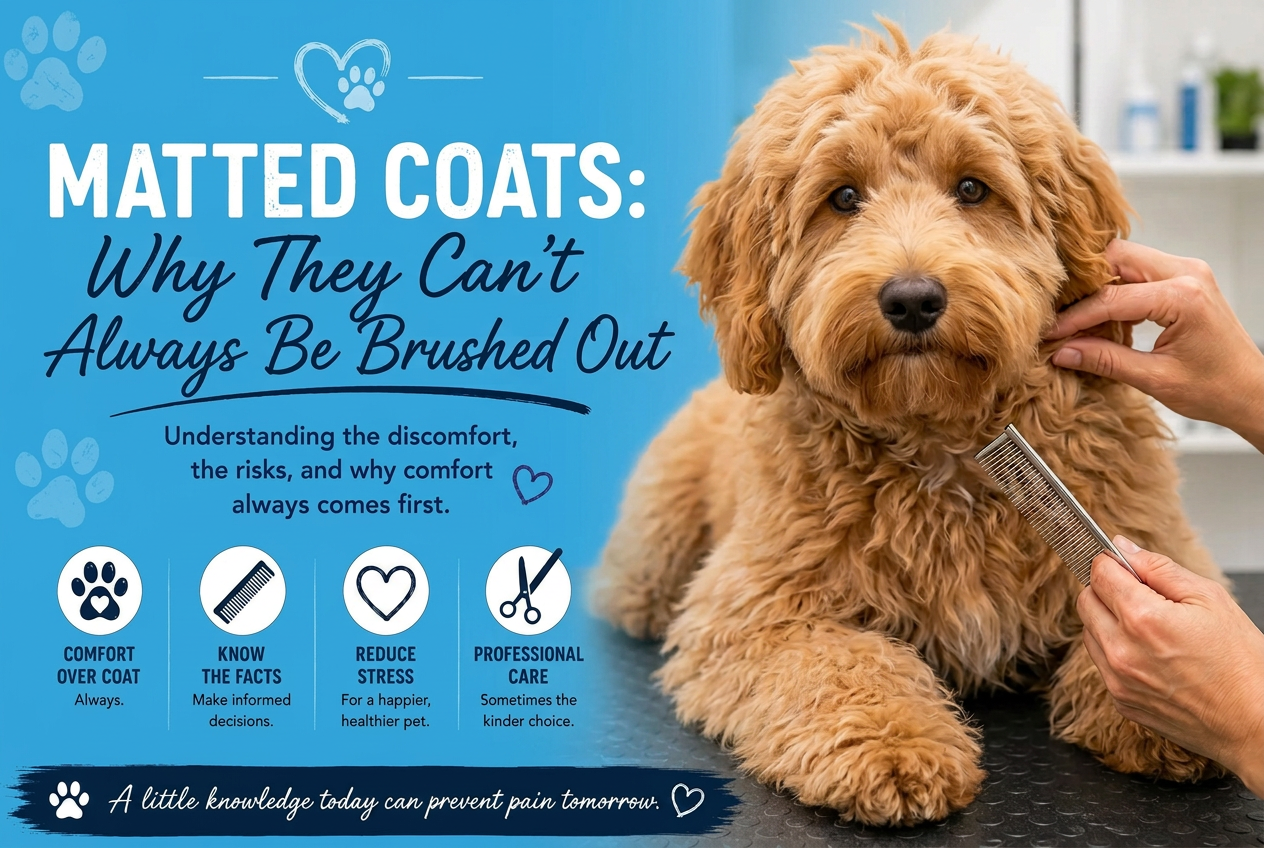
Why Can't You Just Brush the Mats Out?
If matting can cause all of these problems, you might understandably wonder:
Why not just brush it all out and save the coat?
Sometimes we can! Small, loose tangles may be safely worked through. But once matting becomes tight and compacted, trying to save the coat can mean repeated pulling on already-sensitive skin.
At that point, saving the hair may come at the expense of the pet's comfort.
We explain exactly how groomers make that decision in:
Prevention Is About Comfort, Not Perfection
None of this is meant to scare pet parents.
It's meant to explain why groomers take matting seriously.
The goal isn't a perfectly fluffy coat every day.
The goal is catching small problems before they become uncomfortable ones.
That means:
- • Brush consistently
- • Check with a metal comb
- • Pay attention to high-friction areas
- • Brush and thoroughly dry appropriate coats after they get wet
- • Maintain a grooming schedule appropriate for your pet
- • Choose a coat length you can realistically maintain
Not sure if you're using the right brush?
Your brush and comb do different jobs, and using the right tools for your pet's coat can make preventing tangles much easier.
Brush Smarter, Not Harder: Choosing the Right Grooming Tools
Want an easy routine to follow at home?
We've put everything together into a simple checklist you can come back to whenever you need it.
The Ultimate Mat Prevention Checklist: Keep Your Pet Happy & Tangle-Free
What About Cats?
Dogs aren't the only pets that can develop painful mats. Cats can become matted too, even though they're known for grooming themselves.
Age, mobility, coat type, shedding, health changes, and difficulty reaching certain areas can all affect a cat's ability to maintain their coat.
Worried About Your Pet's Matted Coat?
If you've found matting and aren't sure how severe it is, please don't feel like you have to tackle it yourself.
Our groomers can assess your pet's coat and help determine the safest, most comfortable next step.
Need help with a matted dog? Explore Our Dog Grooming Services.
Have a matted cat? Cats require a different grooming approach, and our cat grooming services are designed specifically with their needs in mind.
Explore Our Cat Grooming Services
Not sure whether your pet needs a groomer or veterinarian first?
Give us a call and tell us what you're seeing. If there are signs that your pet may need medical evaluation, we'll let you know when veterinary care may be the more appropriate first step.
AZ Pet Stylist provides mobile dog and cat grooming in Queen Creek and across our Southeast Valley service area. We can assess the coat and help you decide whether grooming or veterinary evaluation is the appropriate next step.
It's About the Pet Underneath the Coat
Matting may start with hair.
But severe matting can affect much more than a hairstyle.
It can affect your pet's:
- • Comfort
- • Movement
- • Skin airflow
- • Skin environment
- • Our ability to see what's underneath
- • Grooming experience
That's why early prevention matters so much.
Because the goal has never been a perfect coat. It's a comfortable, healthy pet underneath it. 💙 Healthy coat care doesn't end when matting season does.
Your pet's coat and grooming needs will continue to change throughout their life—from puppyhood or kittenhood through their senior years.
A Lifetime of Healthy Coats: Building Healthy Grooming Habits for Every Life Stage
Frequently Asked Questions
Can severe matting hurt my dog even if they act normally?
Yes. Tight mats can pull on the skin during everyday movement, and discomfort may build gradually without obvious behavior changes. Sensitivity, licking, chewing, avoiding brushing, or difficulty getting comfortable can be reasons to seek help.
Can a matted coat cause skin problems?
A compacted coat can reduce airflow and hold moisture, dirt, and debris against the skin. This can contribute to irritation and conditions where infection may develop, while hiding changes beneath the coat. Your veterinarian should assess suspected infection.
Should I see a groomer or a veterinarian for severe matting?
Contact your veterinarian first if you notice open sores, bleeding, significant swelling, severe inflammation, marked pain, or suspected infection. If you are unsure, describe what you are seeing when you contact us; a grooming assessment does not replace veterinary diagnosis or treatment.
What should I watch for after my pet's mats are removed?
Monitor for worsening redness, persistent discomfort, increased licking, discharge, open sores, or swelling. Contact your veterinarian about concerning changes. A suddenly puffy, enlarged, or painful ear also needs veterinary attention.
Is it safe to cut tight mats out at home?
No. Skin can be pulled up into a tight mat, making it hard to see where hair ends and skin begins. Do not slide scissors underneath or force a brush through a painful mat; ask a professional to assess the safest next step.
How can I prevent mats from becoming severe?
Brush consistently with tools suited to your pet, gently check brushed sections with a metal comb, watch high-friction areas, and maintain an appropriate professional grooming schedule. Our Ultimate Mat Prevention Checklist offers a practical home-care routine.
Related reading

Ready to pamper your pet?
Our mobile spa comes to your driveway — climate-controlled, filtered water, and one-on-one attention from start to finish.