Brush Smarter, Not Harder: Choosing the Right Grooming Tools
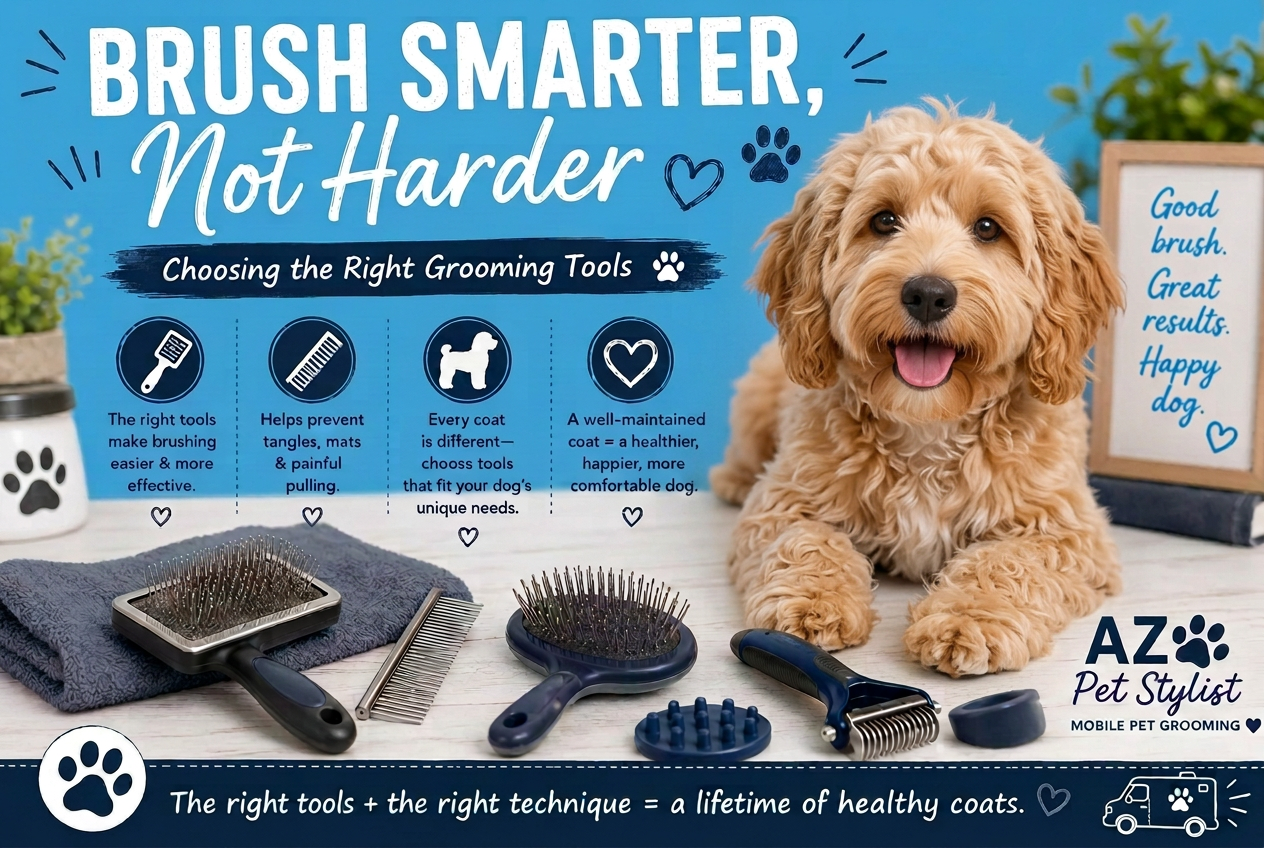
If you've ever stood in the pet store staring at an entire wall of brushes wondering which one to buy, you're not alone. One of the most common questions we hear from pet parents is which grooming tools to use at home. Different coat types have very different needs — but you don't need an entire grooming salon at home. You just need the right tools and to know how to use them.
Why Your Brush Matters
The right grooming tools can make home maintenance easier, more comfortable for your pet, and more effective at preventing tangles and mats. They can help:
- • Remove loose coat
- • Separate tangles before they become mats
- • Reduce shedding
- • Keep the coat manageable
- • Make brushing more comfortable
- • Help you find problem areas early
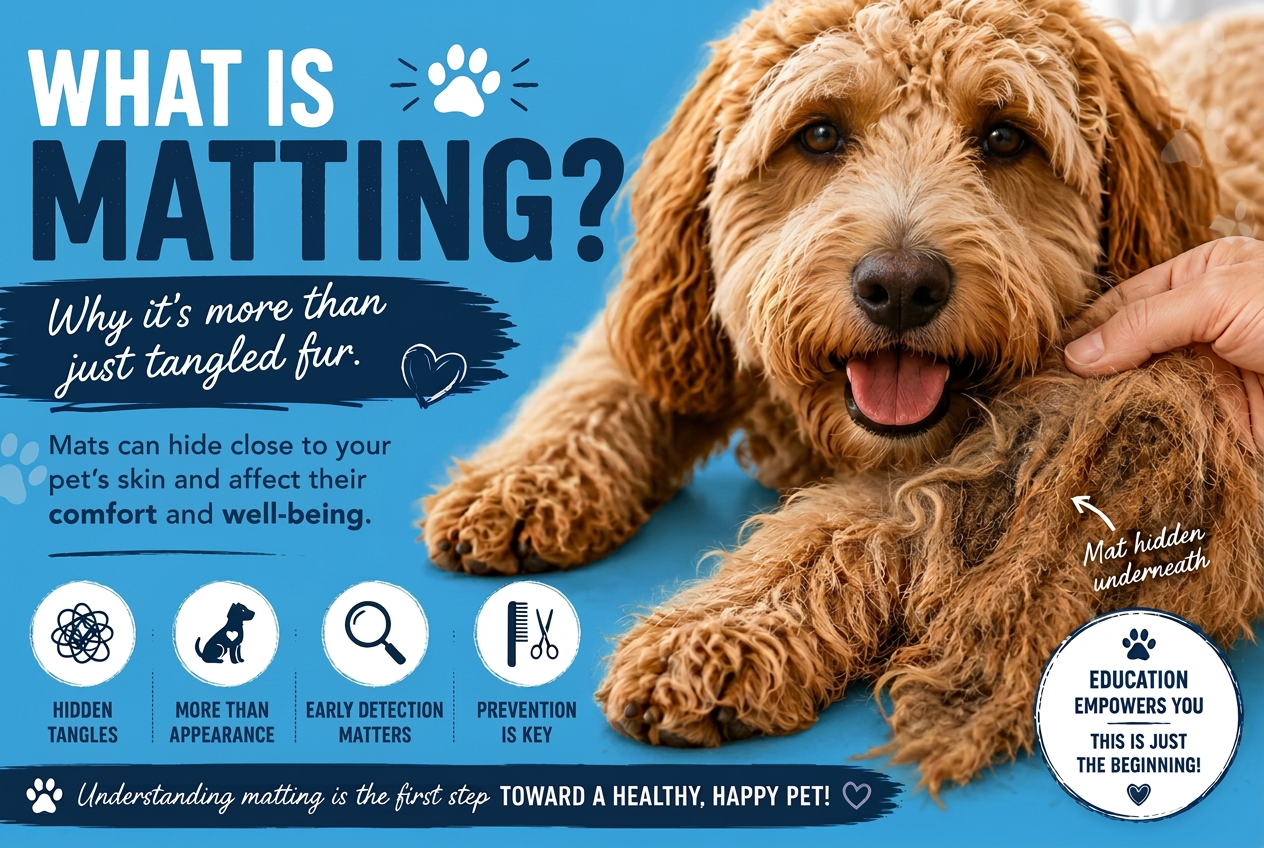
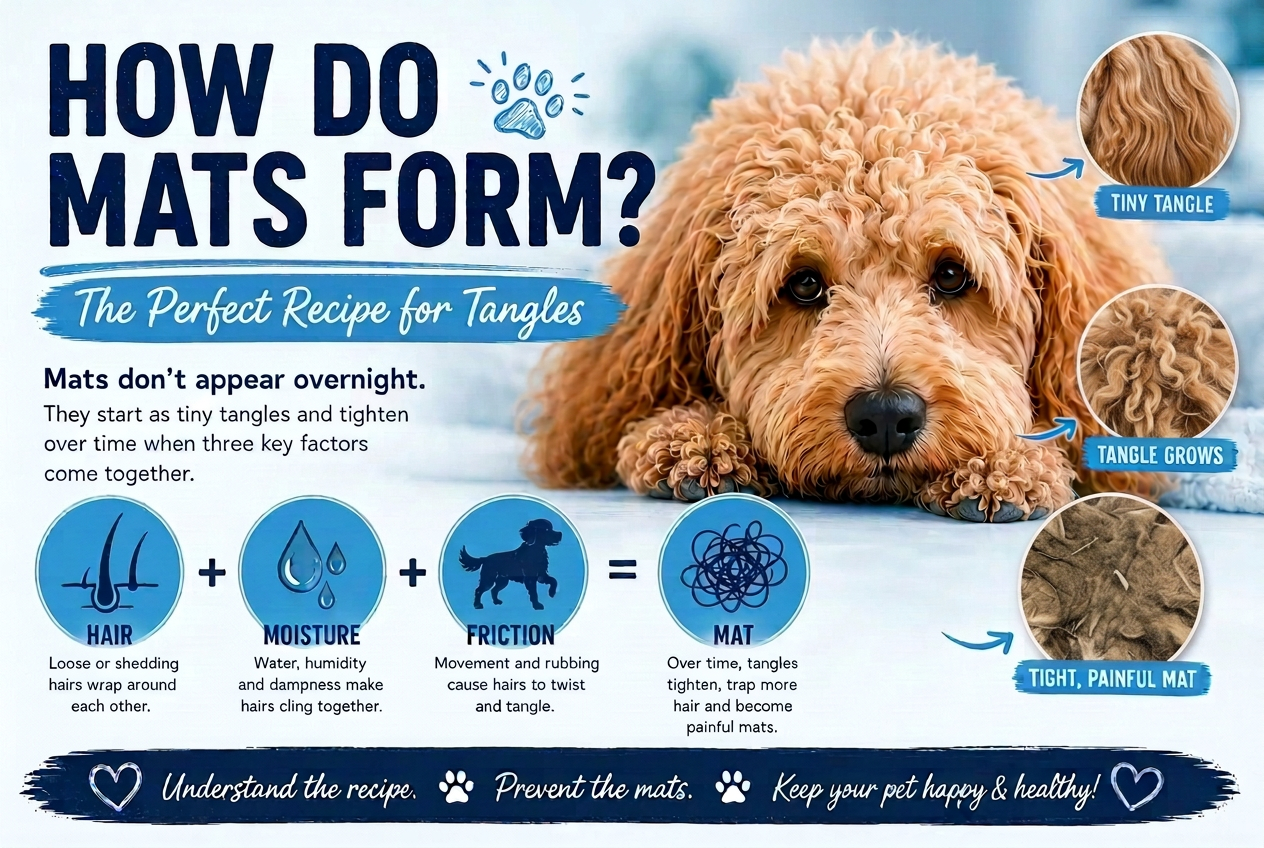
One of the biggest mistakes we see is a coat that looks beautifully brushed on top but is tangled underneath. Many brushes can glide across the outer layer without reaching all the way down toward the skin — exactly where mats like to hide.
The Two Tools Many Pet Parents Need: A Brush + A Comb
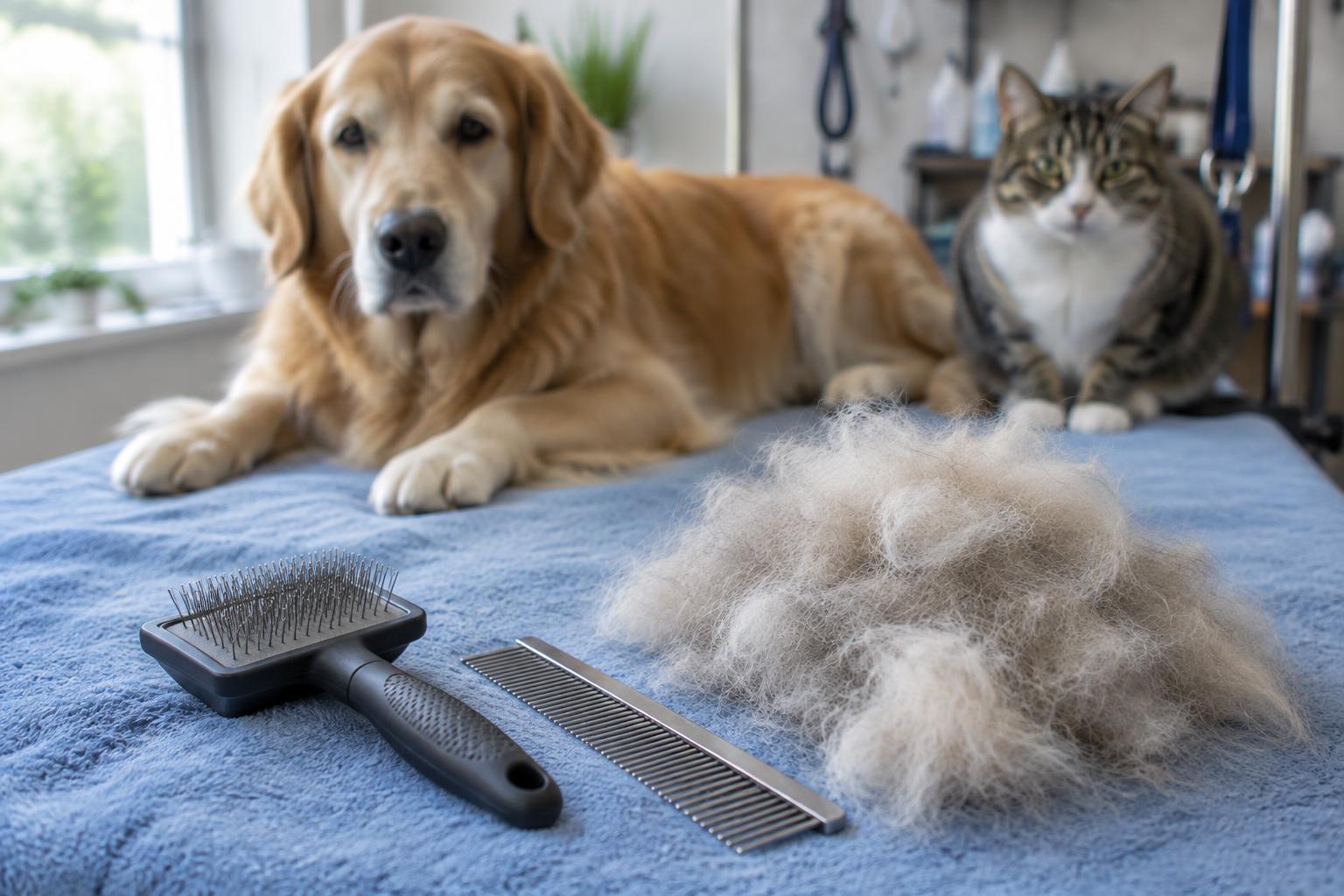
For many longer, curly, or fluffy coats, brushing isn't complete until you've checked your work with a comb. The tools have different jobs: your brush does the work, and your comb checks the work.
A slicker brush helps:
- • Separate and straighten the coat
- • Remove loose hair
- • Work through small tangles
- • Fluff longer or curly coats
- • Maintain the coat between professional grooms
A quality metal grooming comb helps:
- • Check your work after brushing
- • Find small tangles the brush missed
- • Reach through the coat toward the skin
- • Identify problem areas before they become severe
The Comb Test
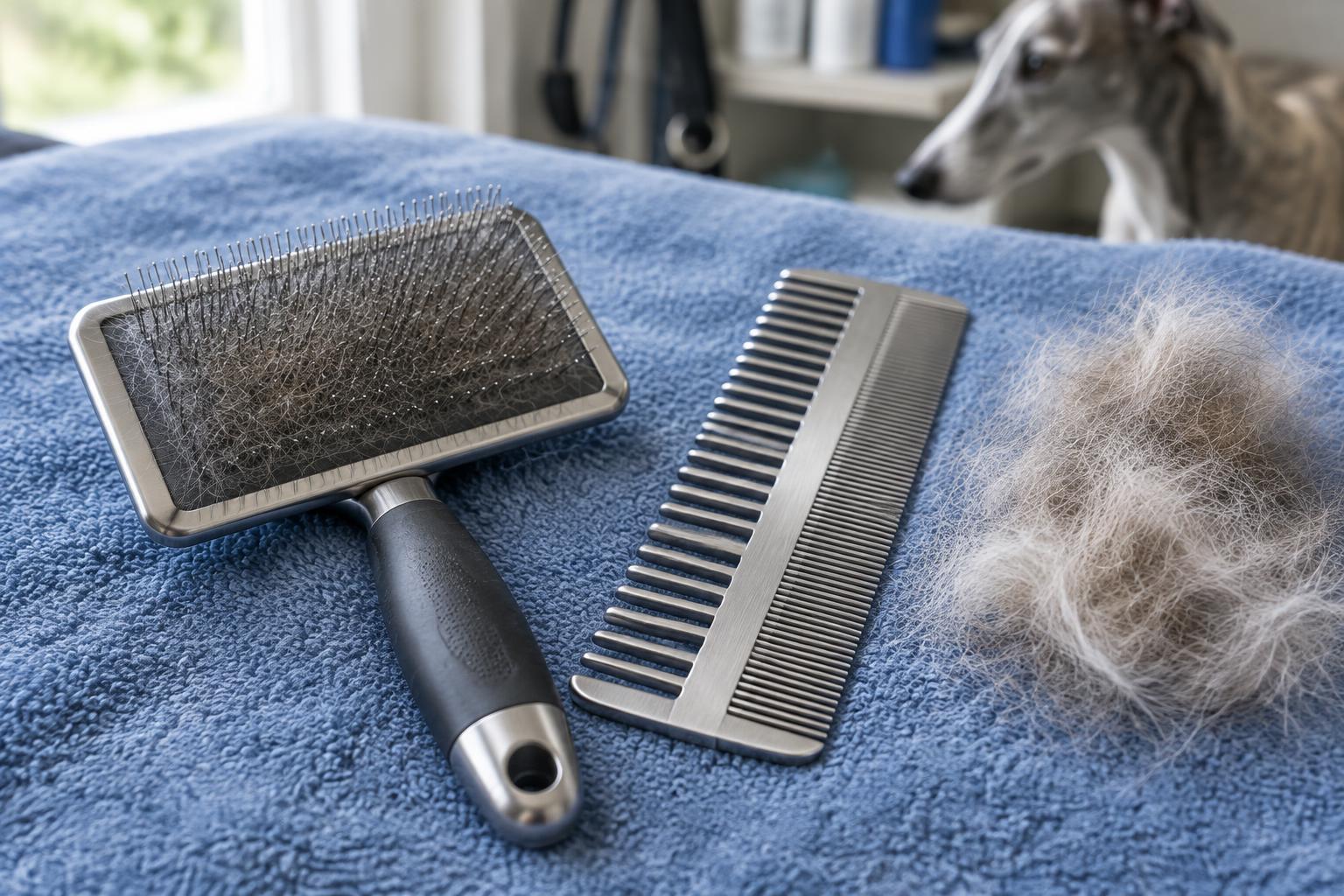
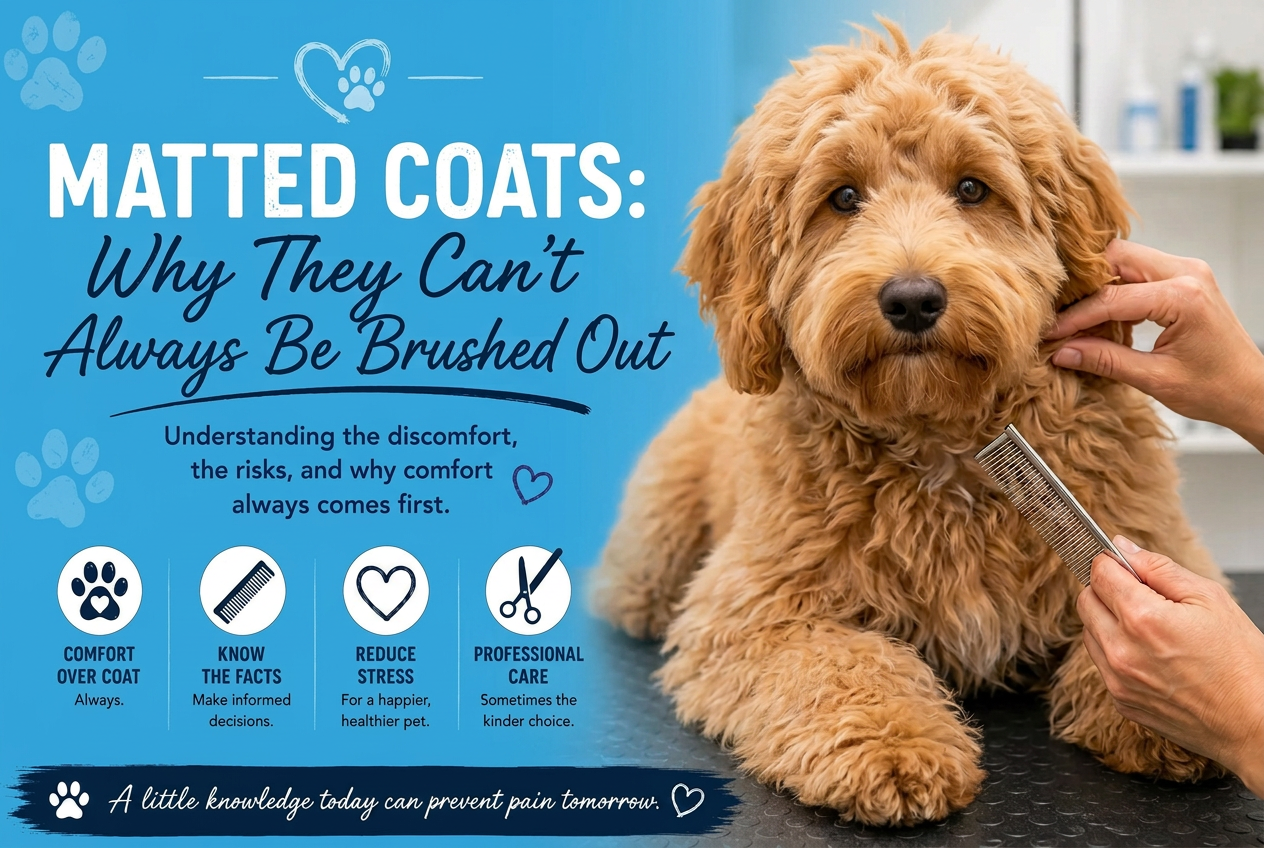
After brushing a section, gently run your metal comb through the coat from near the skin outward. If it glides through easily, that section is done. If it catches, there may still be a tangle hiding there.
Go back to your brush, gently work through that area, and try the comb again. Don't force the comb through a snag. If the area is uncomfortable or tightly matted, stop and ask your groomer for help.
Brush first. Comb second. The comb doesn't lie!
Which Grooming Tool Is Right for Your Dog?
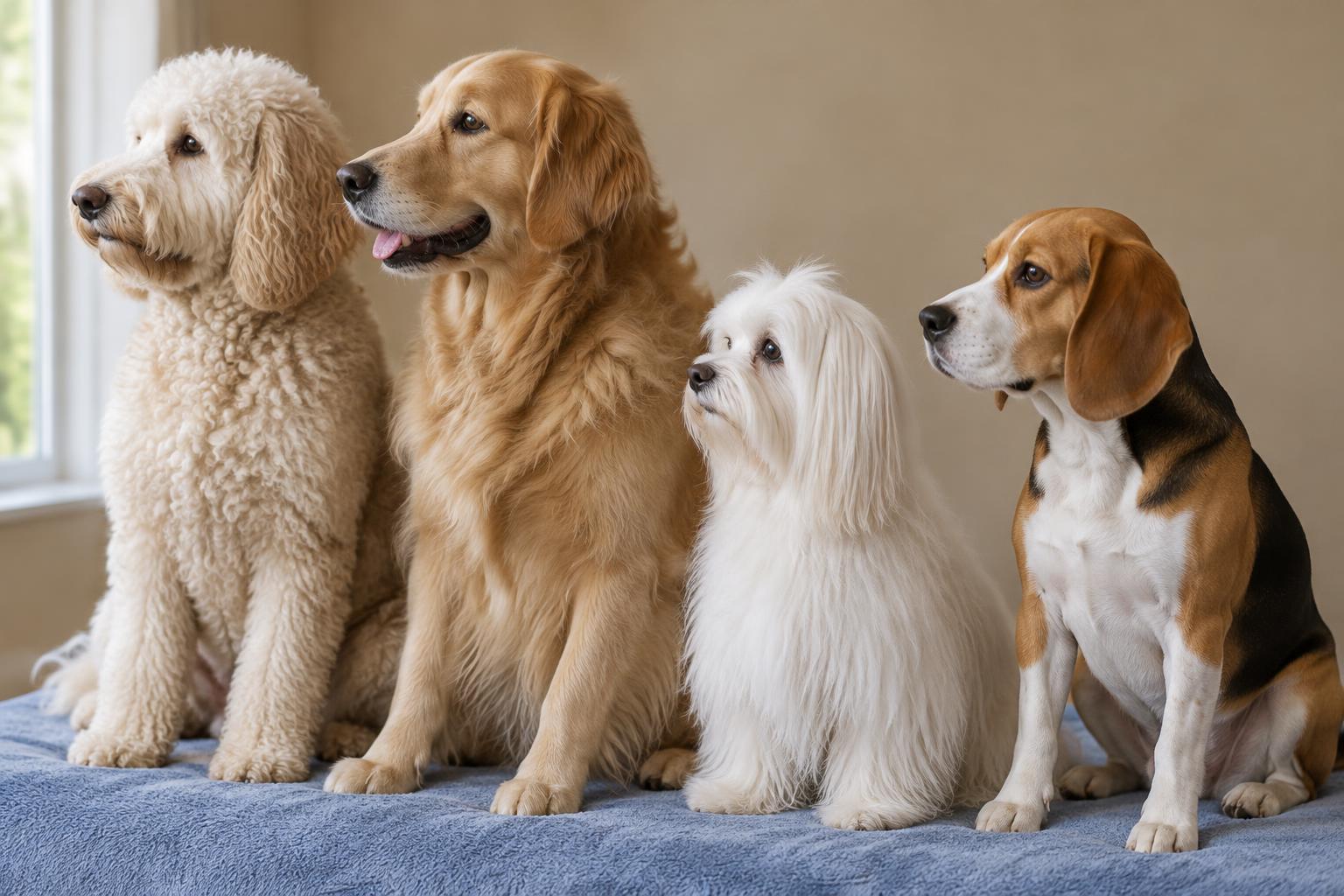
There's no single best dog brush for every pet. The right grooming tools depend on coat type, length, texture, density, lifestyle, and grooming style. Use these coat types as a starting point, not a one-size-fits-all shopping list.
Curly & Wavy Coats
Think Poodles, many Doodles, Bichons, and similar coats. A slicker brush and metal grooming comb are often helpful. These coats can tangle close to the skin even when they look fluffy and beautiful on the surface.
Double Coats
Think Golden Retrievers, Australian Shepherds, Huskies, and similar coats. Depending on the individual coat, your groomer may recommend a slicker brush, an undercoat tool or rake, and a metal comb. The goal is to remove loose undercoat without damaging healthy coat.
Silky & Longer Coats
Think Yorkies, Shih Tzus, Maltese, and similar coat types. A pin brush, an appropriate slicker brush, and a metal comb may help. Gentle, consistent maintenance is especially important where friction occurs.
Short & Smooth Coats
Think Beagles, Boxers, Pugs, and other smooth-coated breeds. They may benefit from a rubber curry, grooming mitt, or appropriate deshedding tools when recommended. Short-haired doesn't mean no maintenance: regular coat care helps remove loose hair and supports healthy skin.
Your Dog Is an Individual
Breed can give us a starting point, but it doesn't tell us everything. Two dogs of the same breed can have surprisingly different coats. Your groomer is one of the best resources for choosing tools specifically for your pet.
Coat-care needs change with age, too. Read A Lifetime of Healthy Coats for grooming habits that adapt from puppyhood through the senior years.
Common Brushing Mistakes
Even with the perfect brush, technique matters. Some of the most common mistakes include:
- • Only brushing the surface — the coat may look beautiful while tangles develop underneath.
- • Trying to brush too much coat at once — smaller sections make it easier to reach through the entire coat.
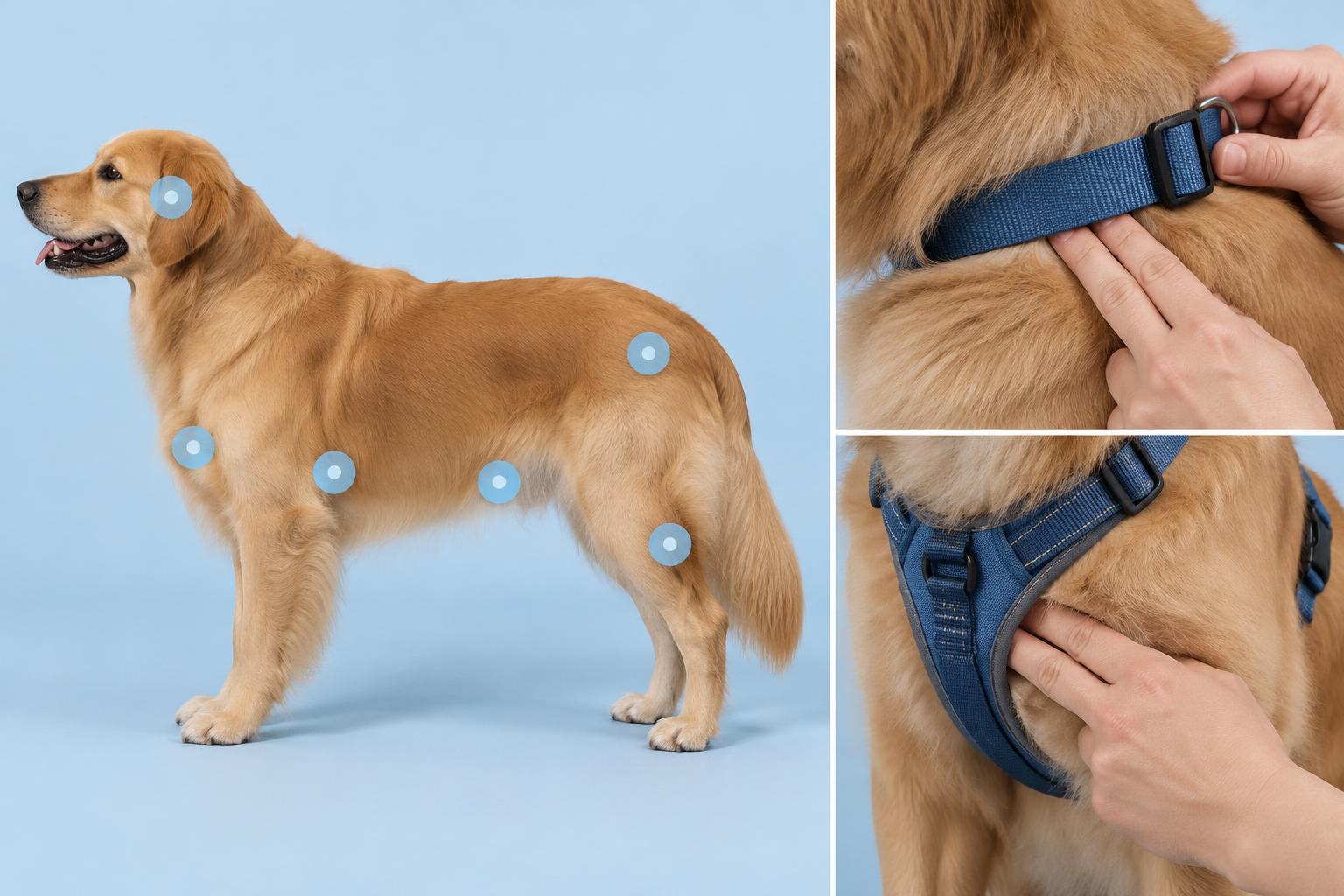
- • Skipping sensitive areas — armpits, ears, legs, bellies, and tails are some of the places most likely to mat.
- • Waiting until you see mats — prevention is easier and more comfortable than removing established mats.
- • Relying on one tool for everything — a brush and comb serve different purposes.
- • Pulling harder when you find a tangle — more force can cause pain and damage the skin.
If brushing becomes uncomfortable or a mat is tight against the skin, stop and ask your groomer for help. Brushing should be coat maintenance, not a battle between you and your pet.
Brush in Sections, Not Just Over the Top
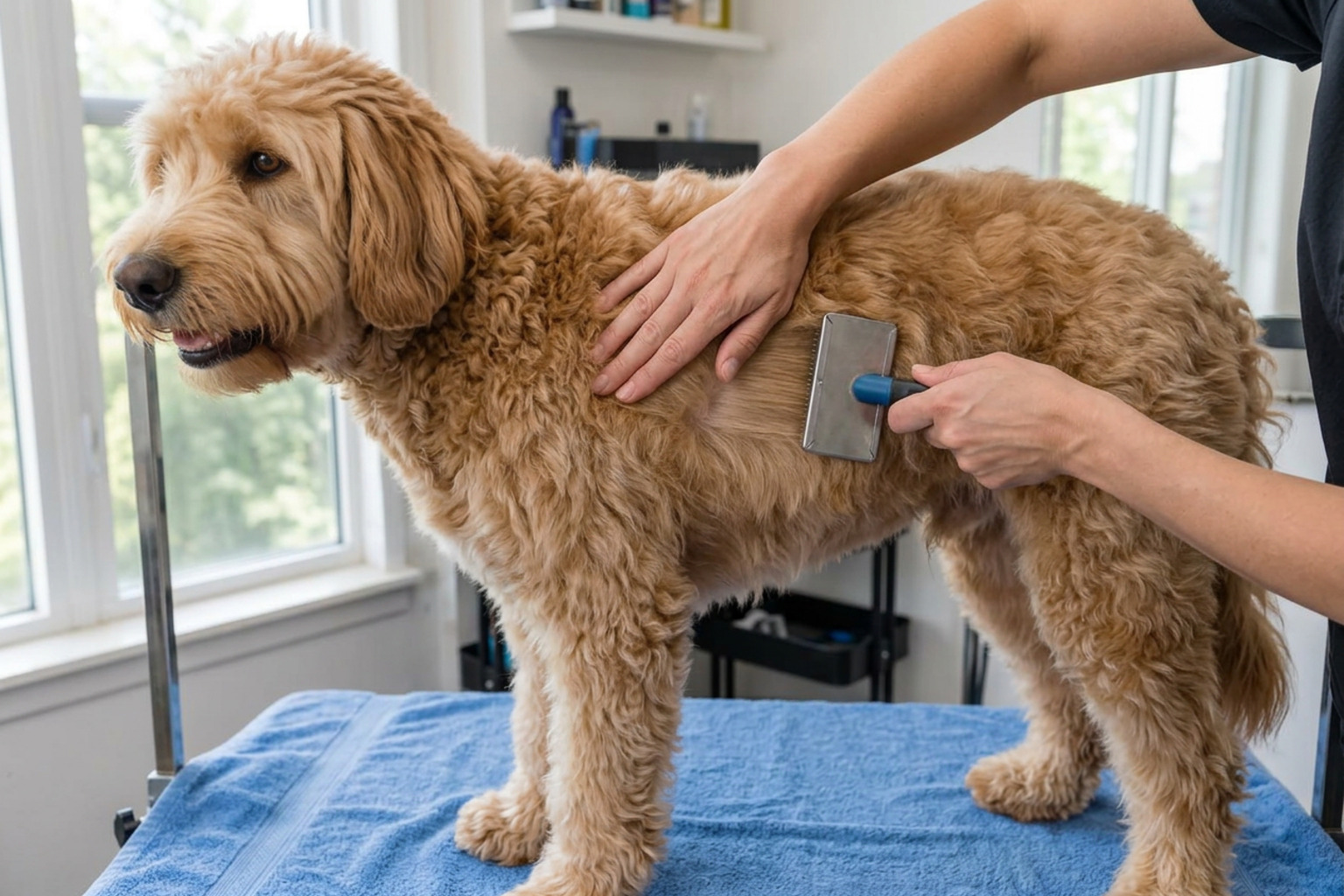
For longer and fluffier coats, work through small sections rather than brushing across the entire surface. Start with a manageable section, gently work through it, and use your metal comb to check before moving on.
- • Brush a small section.
- • Work carefully through the full depth of the coat without scratching the skin.
- • Check the section with your comb.
- • Move to the next section.
- • Reward your pet along the way.
Short, positive brushing sessions are usually much better than waiting until the coat needs a marathon grooming session.
How Often Should You Brush Your Dog?
There's no universal brushing schedule. A short-coated dog may need very different maintenance than a long Doodle kept in a fluffy haircut. Your routine depends on:
- • Coat type and length
- • Haircut
- • Activity level
- • Swimming
- • Harness or clothing use
- • Shedding
- • How frequently your dog is professionally groomed
The longer the coat, the more maintenance it generally requires. If maintaining a longer style at home becomes difficult, talk with your groomer. A shorter haircut may be more manageable for your lifestyle and more comfortable for your pet.
When Should You Stop Brushing and Call Your Groomer?
Sometimes the kindest thing you can do is put the brush down. Stop if a mat:
- • Is tight against the skin
- • Doesn't separate easily
- • Causes your dog discomfort
- • Covers a large area
- • Pulls the skin when you move it
Don't keep brushing harder. Trying to force a severe mat apart can be painful and can damage the skin underneath. Your pet's comfort and safety should always come before saving coat length.
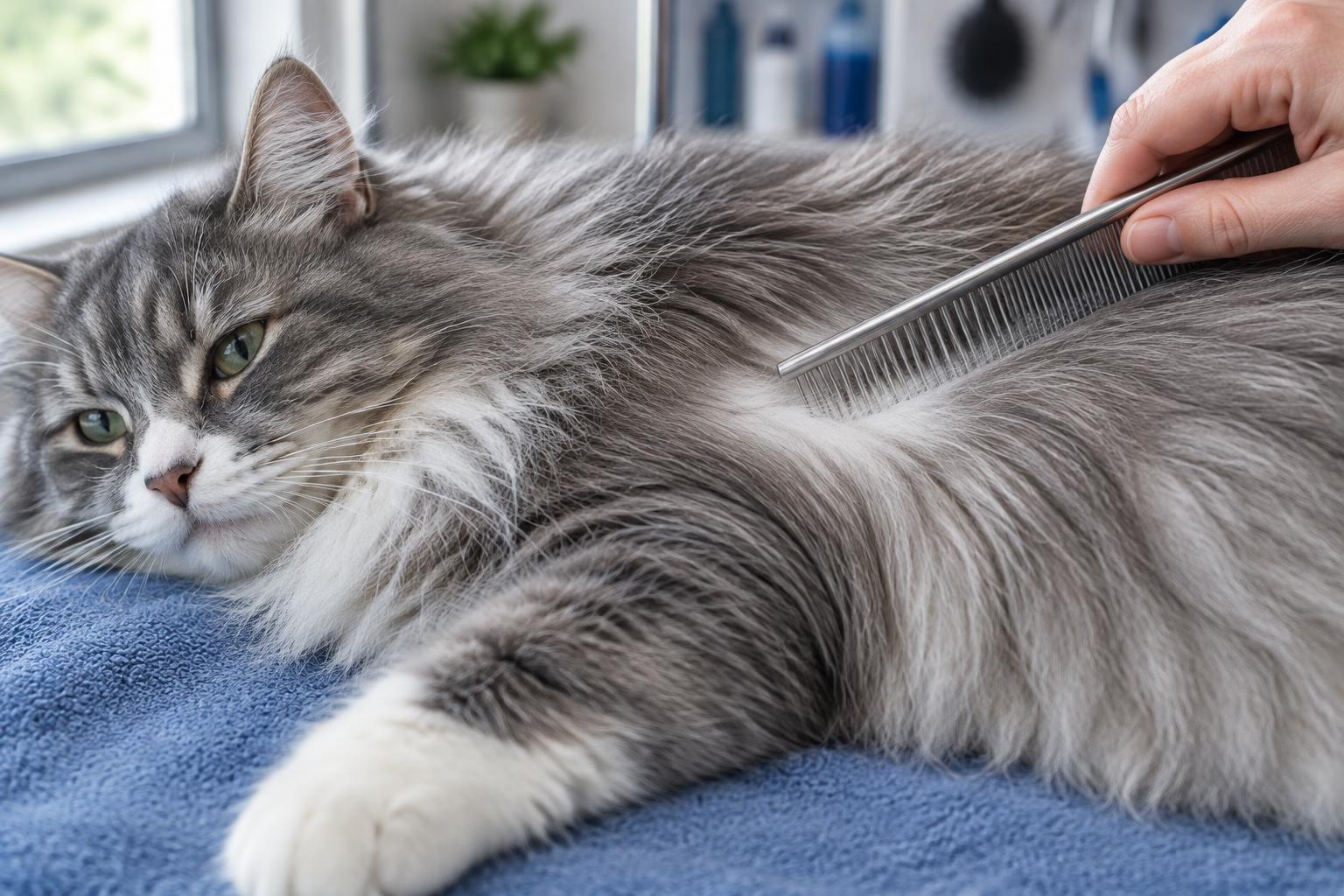
If you need help, contact your groomer. For cats with tangles, read Yes… Even Cats Get Mats! and explore our Cat Grooming Services.
Your Groomer Is One of Your Best Resources
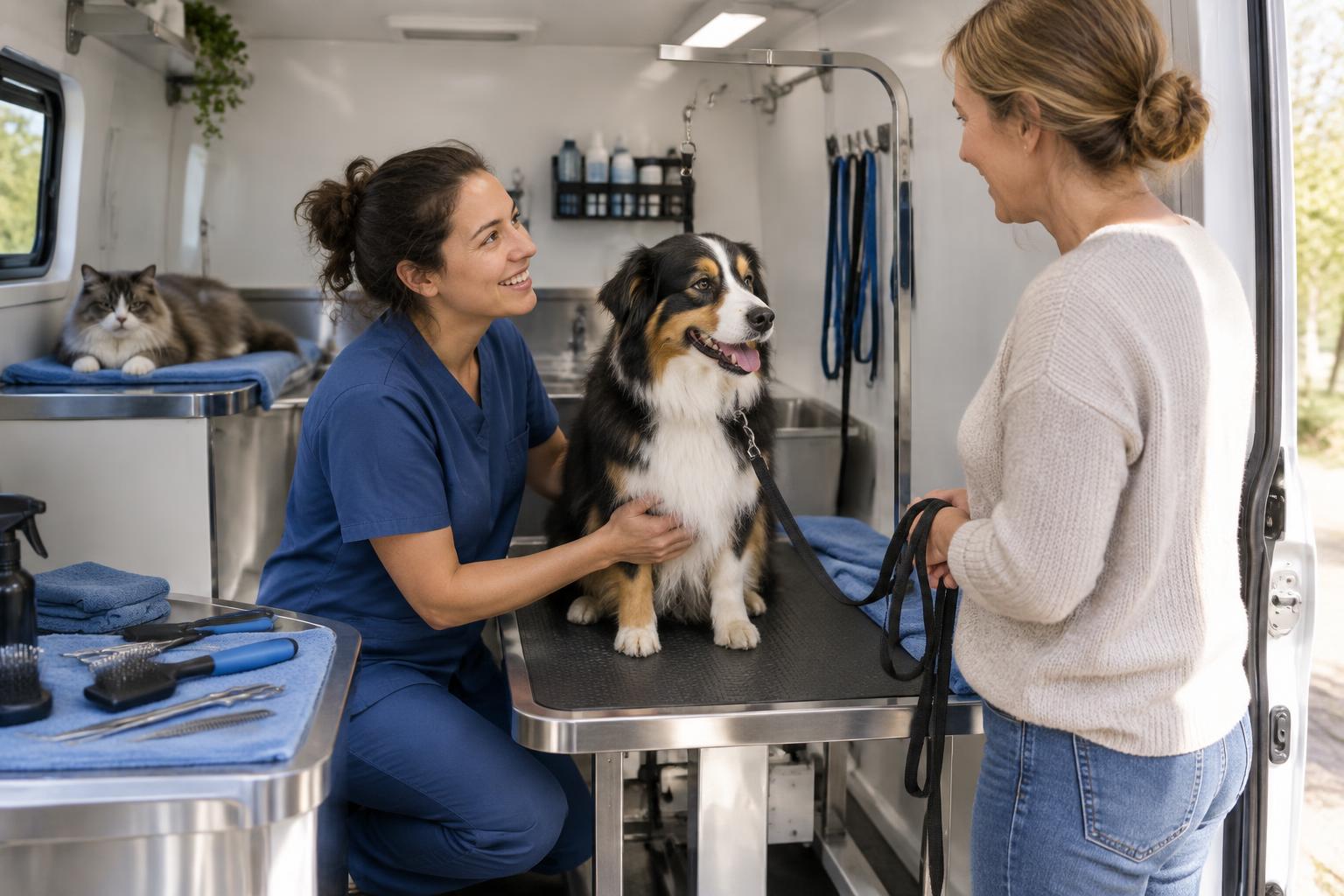
Still staring at all those brushes wondering which one to buy? Ask us! Your AZ Pet Stylist groomer can help you determine:
- • Which brush is best for your pet
- • Which comb to use
- • How to use the tools correctly
- • Where your pet tends to mat
- • How often you should brush
- • How frequently your pet should be professionally groomed
- • Whether your current haircut is realistic for the home maintenance you want to do
We're not just here to care for your pet on grooming day. We want to help you keep their coat healthy between appointments, too.
Healthy Coats Start at Home
The best grooming tool isn't necessarily the fanciest or most expensive one. It's the one that's appropriate for your pet's coat and that you can use consistently and comfortably.
The right tools, good technique, regular home maintenance, and professional grooming work together to help prevent mats. Brush first, comb second. If the comb glides through, great! If it catches, that area needs a little more attention — not more force.
Continue the Matting Season Education Series
Now that you know which grooming tools to use, put your routine into practice. Brushing all the way through the coat and checking easy-to-miss trouble spots can make a big difference in keeping your pet comfortable.
Our Ultimate Mat Prevention Checklist: Keep Your Pet Happy & Tangle-Free! brings everything together:
- • What to do during every brushing session
- • Which matting hot spots to check regularly
- • What to do anytime your pet gets wet
- • How home care and professional grooming work together
- • When it's time to ask your groomer for help
The Right Tools Are Just the Beginning
Having the right brush and comb makes a huge difference, but consistency is what keeps those tools working for your pet. Brush regularly, check with your comb, pay attention to problem areas, and ask your groomer when you are unsure.
AZ Pet Stylist brings mobile grooming to your driveway in Queen Creek and across the Southeast Valley. Explore our Dog Grooming Services and pricing, then book a visit to build a coat-care routine that fits your pet.
A few minutes of coat care today can help prevent a lot of discomfort tomorrow.
Frequently Asked Questions
What is the best brush for my dog's coat?
There is no single best brush for every dog. Curly or longer coats may benefit from a slicker brush and metal comb, while short, smooth coats may suit a rubber curry or grooming mitt. Ask your groomer to recommend tools for your dog's coat, haircut, and comfort.
Do I need a comb if I already use a slicker brush?
For many longer, curly, or fluffy coats, a comb is a useful way to check your brushing. Gently comb each section from near the skin outward. If it catches, stop rather than pulling; a small tangle may need gentle attention with the brush.
How often should I brush my dog at home?
The right schedule depends on coat type, length, haircut, shedding, and daily activities. Longer coats generally need more maintenance. Ask your groomer for an individual routine, and keep sessions short, gentle, and positive.
Should I keep brushing if I find a tight mat?
No. Stop if a mat is tight against the skin, causes discomfort, pulls the skin, or covers a large area. Don't force the brush or comb through it or try to cut it out with scissors. Contact your groomer to discuss a safe next step.
Related reading
Ready to pamper your pet?
Our mobile spa comes to your driveway — climate-controlled, filtered water, and one-on-one attention from start to finish.