Why Can't You Just Brush the Mats Out? Safe Mat Removal & Your Pet's Comfort
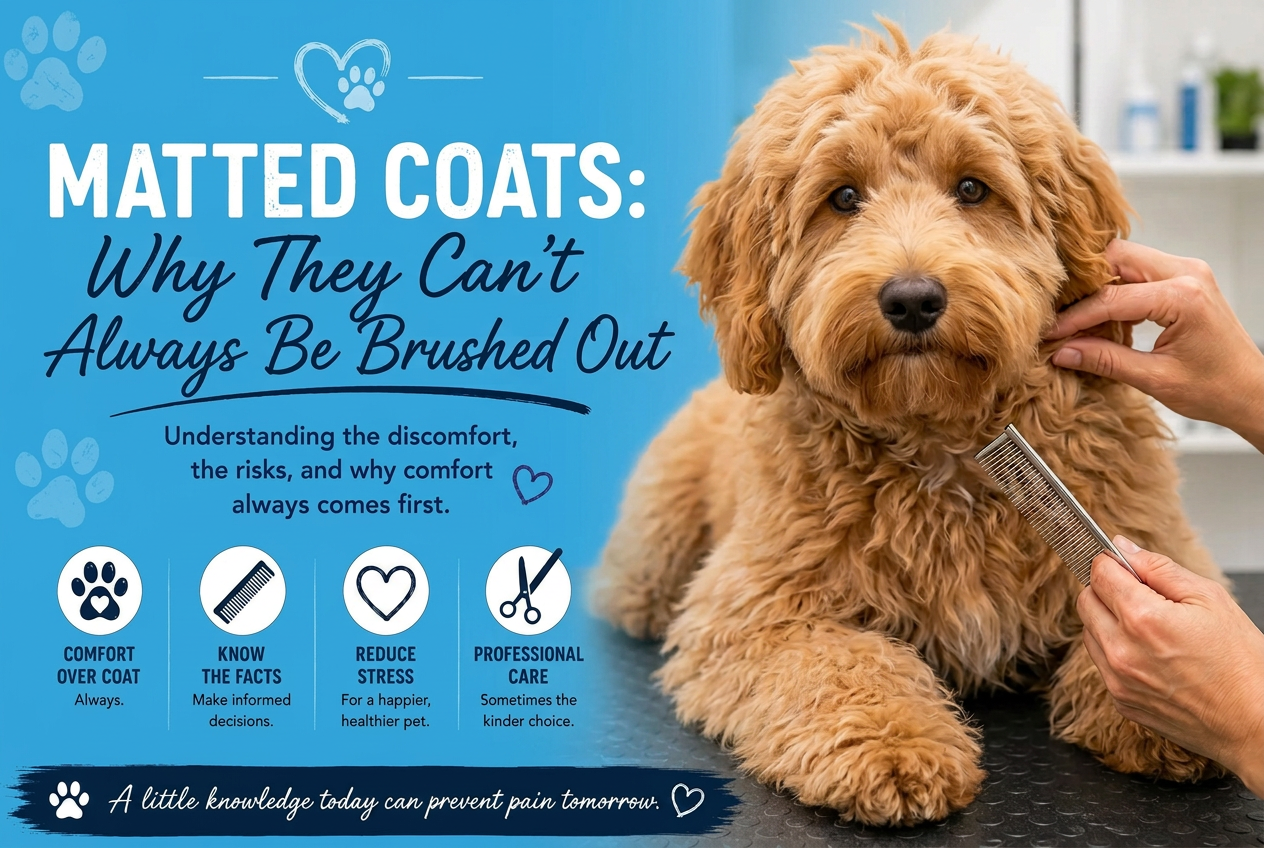
“Can't you just brush the mats out?” It's one of the most common questions groomers hear. Sometimes, yes: a small, loose tangle caught early may be something your groomer can safely work through. But once matting becomes tight, widespread, or close to the skin, trying to save the coat can mean repeated pulling on your pet's skin. At that point, the safest, kindest option may be to remove the matted coat and start fresh. When we have to choose between saving the hair and protecting your pet's comfort, your pet will win. Every time.
Tangle vs. Mat: There's a Difference
Think of a tangle like a knot in a shoelace. A small, loose knot can often be gently loosened. As that knot gets tighter and more compacted, it becomes much harder to separate. Now imagine it forming in a living coat that moves, rubs together, sheds loose hair into itself, collects moisture, and picks up dirt and debris.
Every time your pet moves, plays, gets wet, or sheds, more hair can become intertwined in an existing tangle. Over time, it can tighten into a mat — and unlike a shoelace, that mat is attached to your pet's skin.
A small tangle may:
- • Be loose within the coat and move away from the skin
- • Separate relatively easily when caught early
- • Cause little or no discomfort when gently worked through
A tight mat may:
- • Sit tightly against the skin and pull on surrounding skin
- • Trap shedding hair, moisture, dirt, and debris
- • Tighten as your pet moves
- • Cover more coat than you can see from the surface
- • Become difficult or painful to separate
A loose tangle may still be something that can be gently brushed, combed, or worked apart. Once it becomes tight against the skin, every attempt to separate it can also pull on that skin. Catching tangles early makes a big difference.
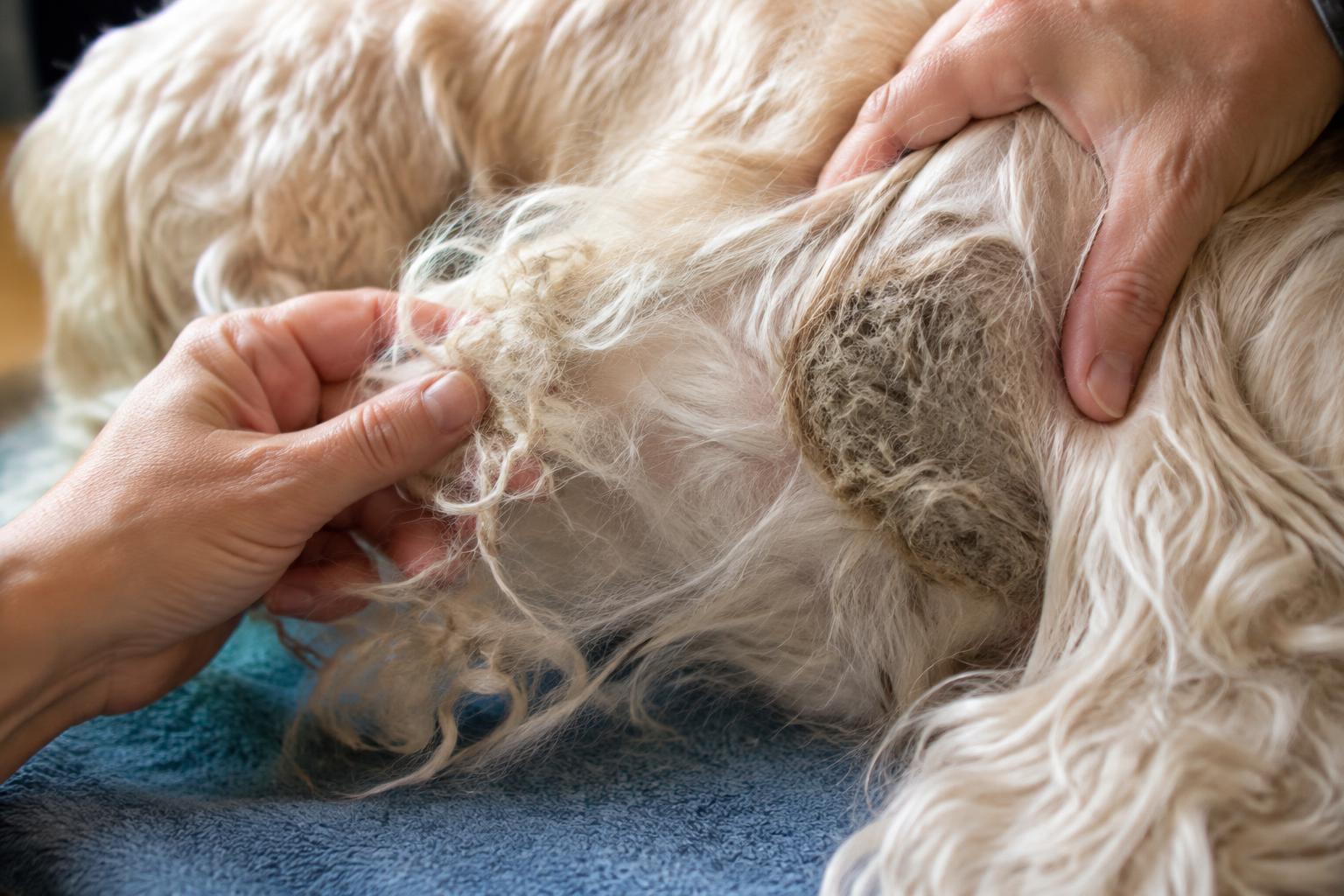
“But I Brush My Dog!” Why Mats Can Hide Underneath
Many pet parents truly are brushing regularly. The problem is that matting often starts underneath the surface: a coat can look clean and fluffy on top while knots develop closer to the skin. This is sometimes called surface brushing.
Friction and movement make these areas especially prone to hidden tangles:
- • Behind the ears
- • Armpits
- • Under collars and harnesses
- • Belly and chest
- • Between the legs
- • Base of the tail
If a brush only passes through the outer layer of hair, it can glide over tangles underneath. “My brush goes through!” doesn't always mean the entire coat is tangle-free.
Brushing and Combing Do Two Different Jobs
For many longer, curly, or mat-prone coats, we recommend both a brush and a metal comb. The brush helps separate the coat, remove loose hair, work through small tangles, and maintain larger areas efficiently. The comb is your double-check.
After brushing an area, gently run your metal comb through the coat from near the skin outward. If it glides smoothly through to the ends, that section is done. If it catches or stops, there may still be a tangle hiding there. Don't force the comb through a snag.
For a small, loose tangle, return to your brush, gently work through that section, and check again. If the area is tight or uncomfortable, stop and ask your groomer. Brush → Comb → Check. The brush does the work; the comb checks the work.
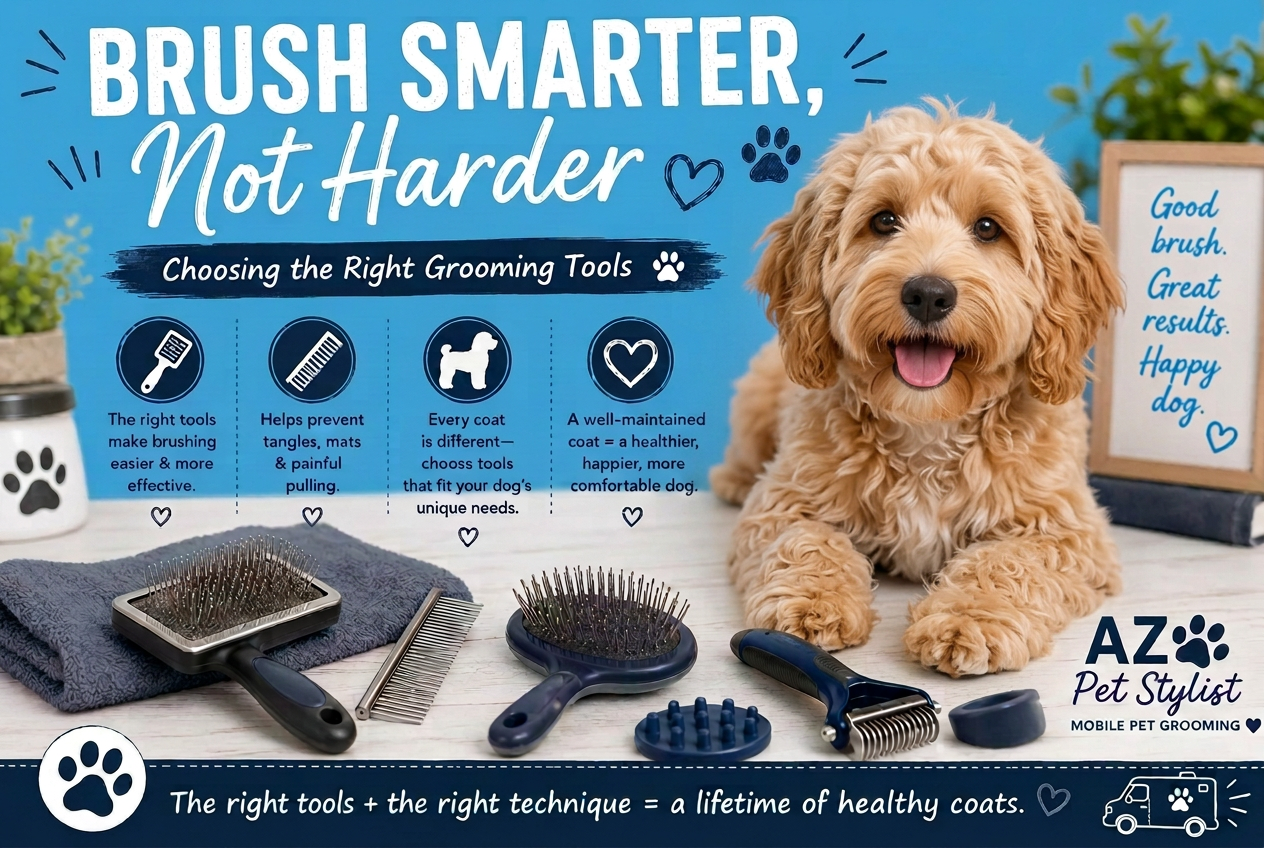
Different coats need different tools. Our Brush Smarter, Not Harder: Choosing the Right Grooming Tools guide explains brushes, combs, coat types, and gentle section-by-section maintenance.
What Does Dematting Actually Feel Like?
From the outside, brushing out a mat may sound simple: find the tangle, brush through it, save the hair. But hair is attached to skin. When a brush or comb pulls against a tight mat, your pet feels that pulling at their skin.
Imagine someone repeatedly pulling at a tight knot in your hair as they try to separate each strand. Now imagine several knots being worked through across different areas of your body. That is often what extensive dematting can feel like for a pet.
Many mat-prone areas are also sensitive, including behind the ears, the armpits, belly, inner legs, under the tail, and beneath collars and harnesses. A minor, loose tangle is very different from extensive matting that requires repeated pulling and prolonged handling of sensitive skin.
Trying to work through extensive matting may cause:
- • Repeated pulling and tugging
- • Redness, skin irritation, and increased sensitivity
- • Physical discomfort
- • Stress and fatigue
- • A negative association with brushing or grooming
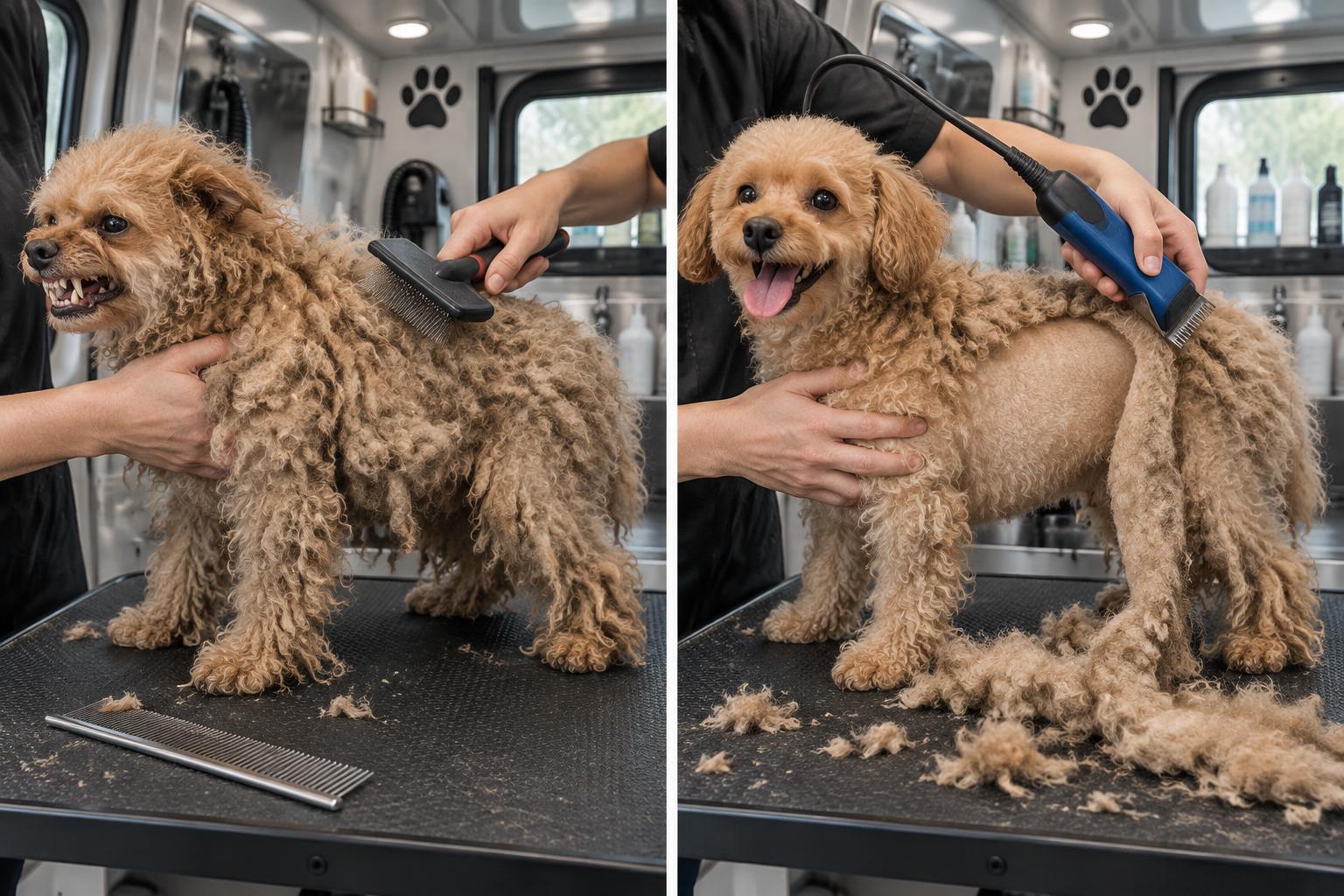
Painful dematting
Painless shaving
Comfort Comes Before Coat
Professional groomers must consider more than whether a mat is technically possible to brush apart. We also consider what the pet would have to experience for us to save that hair. Instead of asking only, “Can this mat be brushed out?” we also ask, “Should it be?”
If saving the coat requires prolonged pulling, repeated manipulation of sensitive skin, and unnecessary stress, preserving hair is no longer our first priority. Sometimes the kinder option is to safely remove the matted coat and start fresh.
When Can a Groomer Demat?
Not every mat requires a short haircut. Depending on the coat and severity, your groomer may be able to safely work through some tangles. We consider:
- • How tight the tangles are and how close they sit to the skin
- • How much of the body is affected and where the mats are located
- • Your pet's skin condition and coat type
- • Your pet's age, physical comfort, and response to the process
A few loose tangles in a manageable area are very different from a coat tightly matted across the body. Dematting should always have limits. Just because a mat can technically be brushed apart doesn't mean it's fair to ask your pet to tolerate the process.
Can Mats Really Be Brushed Out? Watch Matting Part 2
This is easier to understand when you can see what we're talking about. In our AZ Pet Stylist Matting Part 2 video, we take a closer look at matting and the decisions that go into determining what can be safely worked through and what may need to be removed.
Every matted coat has to be evaluated individually. The biggest takeaway isn't simply, “Can we brush this out?” It's, “Can we brush this out without causing unnecessary discomfort?”
You can also watch Matting Part 2 on YouTube.
When Is a Mat Too Much to Brush Out?
Your groomer may recommend clipping underneath the mats when:
- • Mats are tight against the skin
- • Large areas of the body are affected
- • The coat is heavily compacted
- • Brushing causes significant discomfort or your pet becomes stressed
- • The skin underneath needs to be exposed
- • Dematting would require excessive brushing
- • Your pet's age, mobility, or tolerance makes a lengthy session inappropriate
This isn't giving up on the coat. It's choosing your pet's comfort and safety over hair length.
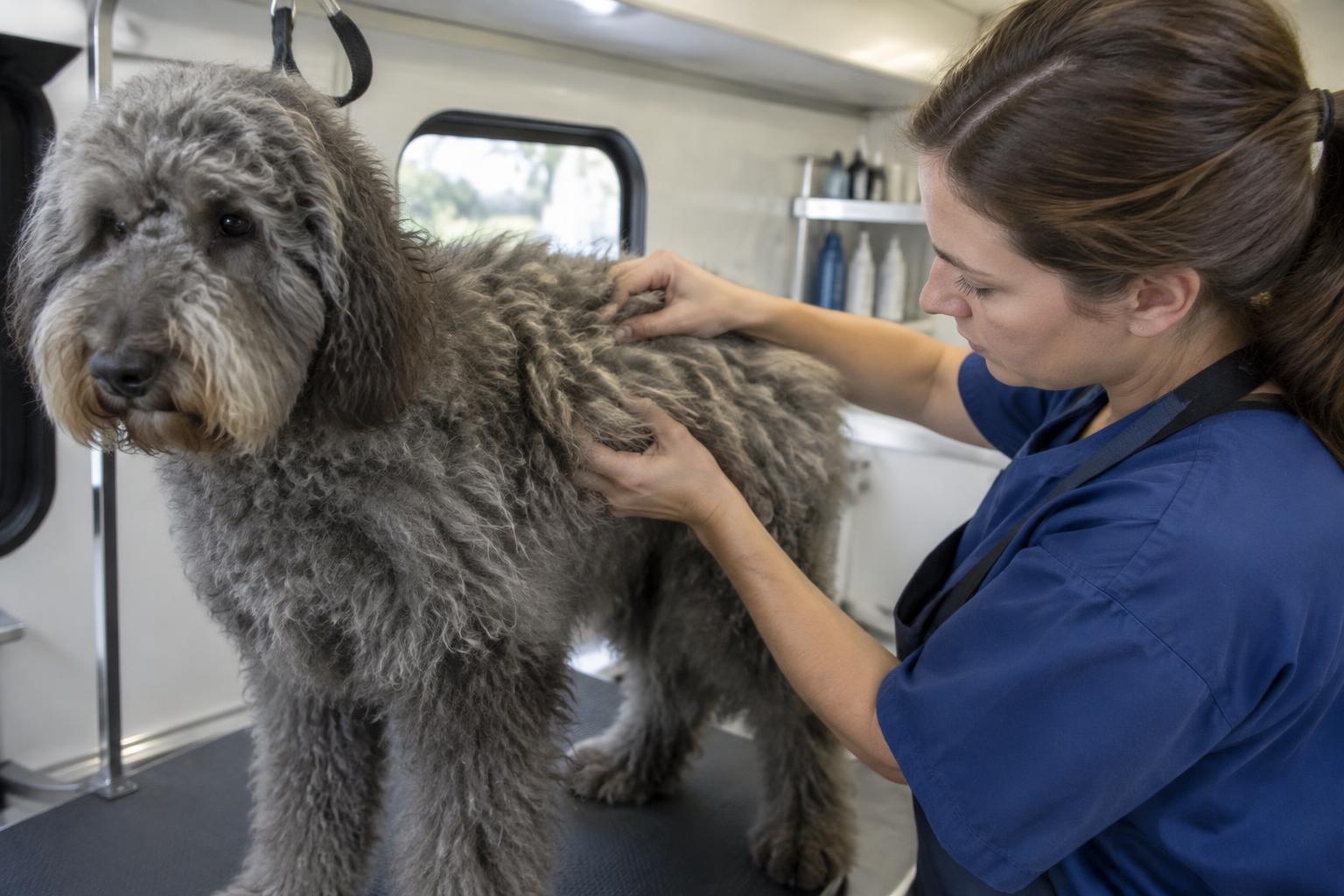
Why Does a Matted Dog Sometimes Have to Be Shaved So Short?
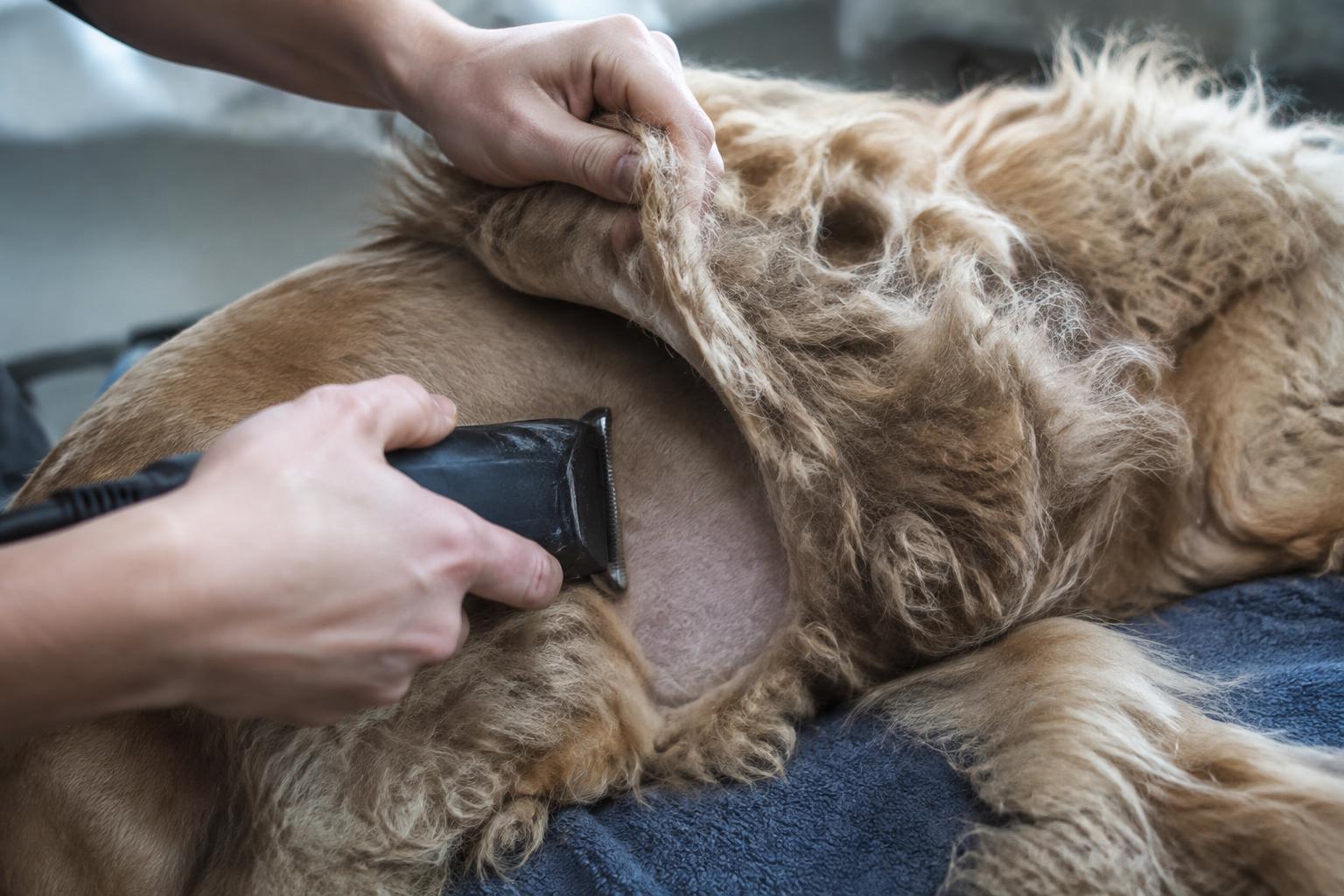
A fluffy dog may arrive for grooming and leave with a much shorter haircut than expected. The reason is simple: clippers have to get underneath the mat. If a mat sits tightly against the skin, there may be very little room between the skin and tangled coat.
Your groomer isn't choosing the length based on which haircut would look cutest. We're looking for the safest point underneath the mat where the coat can be removed. The tighter the mat is against the skin, the shorter the resulting haircut may need to be.
Think of a mat like a tightly woven blanket over the skin. Clipping across the top won't make it disappear; the blade has to carefully travel beneath the compacted coat. The available space underneath determines the haircut length.
Removing a tightly matted coat also requires extra care. Mats can pull and distort the skin, hide irritation or sores, conceal lumps and bumps, and make delicate areas harder to access.
Never Cut Tight Mats With Scissors
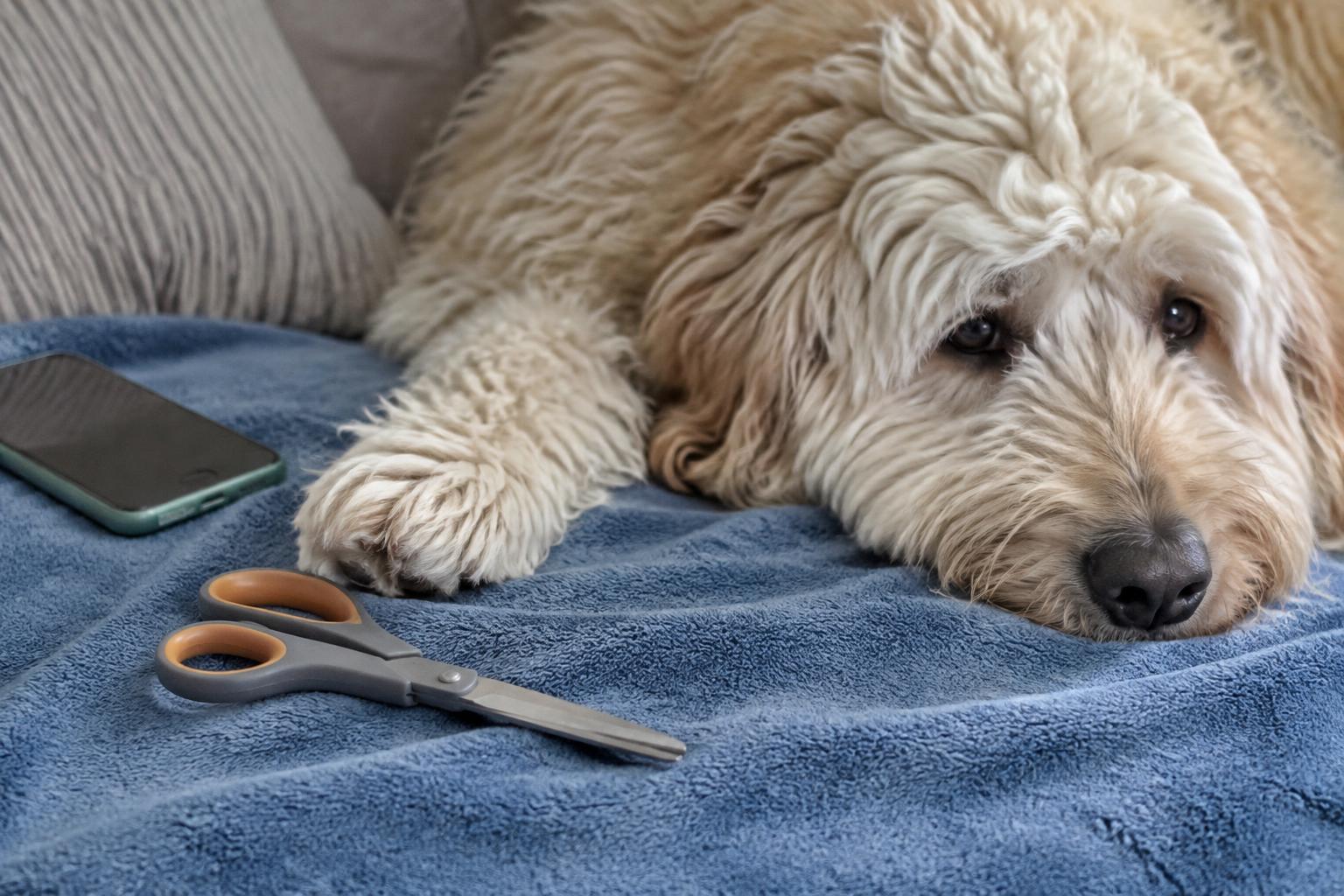
A tight mat can pull skin upward into the tangled hair, making it difficult to tell where hair ends and skin begins. What looks like “just hair” may have skin much closer than you realize. Trying to slide scissors beneath a mat can result in an accidental cut.
If a mat is tight against the body, put the scissors down:
- • Leave tight mats alone
- • Contact your professional groomer
- • Let them determine the safest removal method
Found a mat you're afraid to remove? Don't risk cutting it at home. Explore our Dog Grooming Services or Cat Grooming Services, or contact us for help with the next step.
What Happens After the Mats Come Off?
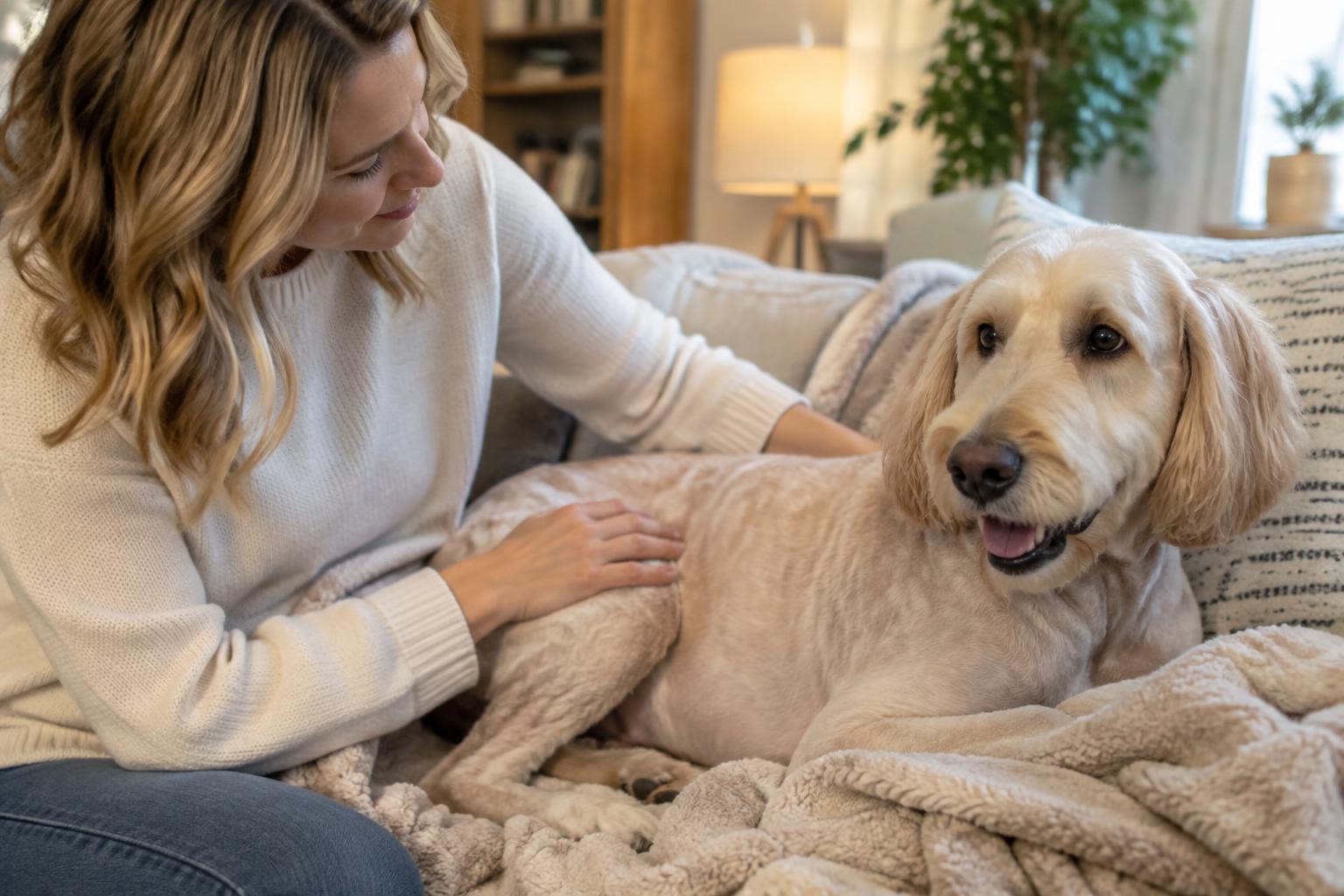
Removing a matted coat sometimes reveals skin that looks very different from what a pet parent expected. You may notice redness, irritation, flaky skin, moisture, discoloration, sores or scabs, or areas your pet wants to lick or scratch. These issues aren't necessarily caused by the haircut; they may have been hidden underneath the mat.
Mats can trap moisture and debris while continuously pulling against the skin. For more on coat problems in cats, read Yes… Even Cats Get Mats!.
After removal, your pet may suddenly feel air, touch, and movement against skin that was previously covered by tight coat. Keep an eye on them. If you notice significant irritation, sores, swelling, persistent licking, or anything concerning, contact your veterinarian.
Your groomer may recommend veterinary follow-up when they notice something concerning. Groomers can identify changes we see or feel, but we don't diagnose medical conditions.
A Short Haircut Is Not a Punishment: Fresh Coat, Fresh Start
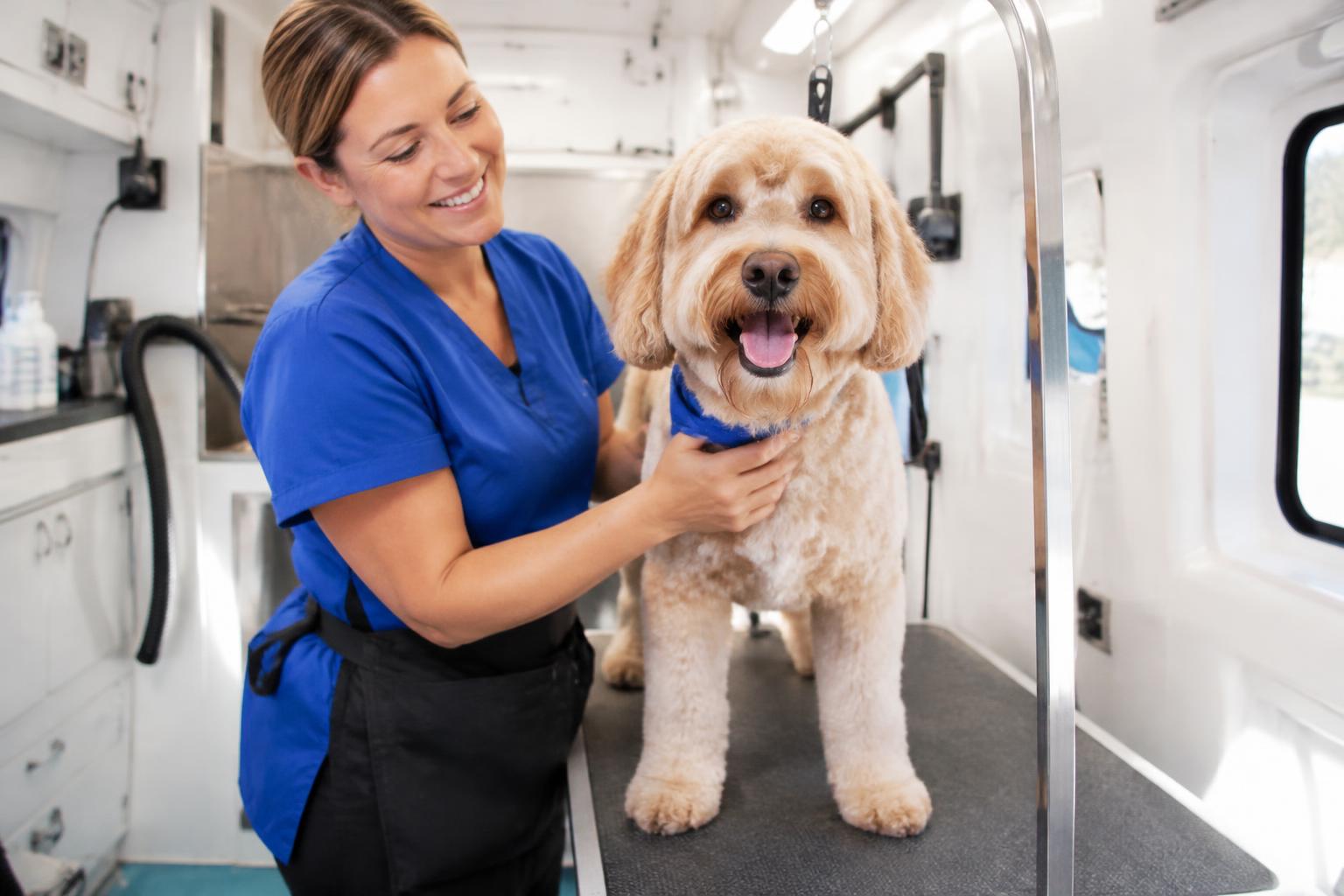
We understand that a much shorter haircut than expected can be disappointing. But a shave-down isn't a punishment or a groomer taking the easy way out. When severe matting is present, it may be the most humane way to give your pet relief without prolonged, uncomfortable dematting.
What happens next matters most. This is an opportunity to reset and create a maintenance routine that helps prevent the same problem from happening again:
- • Let the coat regrow — keep your pet clean and comfortable.
- • Start brushing early — don't wait until the coat is long again to begin home maintenance.
- • Use the right tools — ask your groomer which brush and comb suit your pet.
- • Stay on schedule — regular professional grooming helps keep small tangles from becoming major mats.
- • Choose a manageable length — a beautiful haircut should fit your lifestyle and the home care you can realistically provide.
For an easy routine as the coat grows back, use The Ultimate Mat Prevention Checklist. For habits that adapt as your pet ages, read A Lifetime of Healthy Coats.
We're Not Here to Judge. We're Here to Help.
Matting happens. Coats change, schedules get busy, and pets swim, roll, play, shed, and wear harnesses. Our goal isn't to make pet parents feel bad. It's to find the safest, most comfortable approach for the pet in front of us and help you plan what comes next.
If maintaining your pet's current coat length is becoming difficult, tell us. We can help you choose tools, plan grooming visits, find an easier-to-maintain haircut, identify trouble spots, and make home care more manageable.
AZ Pet Stylist brings mobile dog and cat grooming to Queen Creek and the rest of the Southeast Valley service area. We'll assess your pet's coat and help you decide the next step — you can explore our grooming services while you're here.
Continue the Matting Season Education Series
Now that you understand why severe mats can't always be brushed out, the next question is: what should you be brushing with? Continue with Brush Smarter, Not Harder: Choosing the Right Grooming Tools for slicker brushes, metal combs, coat types, the comb test, and common brushing mistakes.
Comfort over coat. Every time. The goal of grooming isn't to save every inch of hair — it's to care for the pet underneath it. Sometimes that means gently working through a few tangles; sometimes it means a shorter haircut or starting over. Hair grows back. Trust can be much harder to rebuild.
Frequently Asked Questions
Can you brush mats out of a dog's coat?
Sometimes a few small, loose tangles can be gently worked through. Tight mats close to the skin or widespread matting may need professional clipping instead. Your groomer considers the coat, skin, location of the mats, and your pet's comfort before recommending an approach.
Why does my dog have mats even though I brush regularly?
A brush may pass over the outer coat while tangles remain closer to the skin. For many longer or curly coats, gently checking each brushed section with a metal comb helps find hidden tangles. Don't force a comb through a snag; stop if the area is tight or uncomfortable.
Why can't my groomer leave a longer haircut on a matted dog?
Clippers have to pass underneath the mat. When compacted coat sits tightly against the skin, there may not be enough space for a longer haircut. The safest removal length depends on the individual coat and matting.
Is it safe to cut a mat out with scissors at home?
No. Tight mats can pull skin into the tangled hair, making an accidental cut possible even when you think you're only cutting coat. Leave tight mats alone and ask your professional groomer to assess them.
What should I watch for after severe mats are removed?
Keep an eye out for significant redness, irritation, sores, swelling, or persistent licking and scratching. Contact your veterinarian if you notice concerning changes. Your groomer can point out what they observe but cannot diagnose a medical condition.
Related reading


Ready to pamper your pet?
Our mobile spa comes to your driveway — climate-controlled, filtered water, and one-on-one attention from start to finish.