Thanksgiving with Pets: A Little History, a Lot of Food, and How to Keep Your Pets Safe
Thanksgiving is a time for gathering around the table, enjoying favorite family recipes, and appreciating the people and pets who make our lives better. And if you share your home with a dog or cat, you already know that holiday dinners often come with an extra guest sitting nearby, watching every bite like it's the most important event of the year! Those hopeful eyes can make it awfully tempting to share a little something from your plate. But before you slip your pup a piece of turkey or let your cat investigate the mashed potatoes, let's talk about Thanksgiving's canine history, which holiday foods are safe to share, and which ones should stay firmly on the human menu.
A Little Thanksgiving History: Dogs Aboard the Mayflower?

Did you know that dogs were part of the early Pilgrim story?
Historical accounts indicate that at least two dogs accompanied the Pilgrims aboard the Mayflower in 1620: a Mastiff and a spaniel. Dogs were valuable companions in early colonial life, helping with tasks such as hunting and providing protection.
The spaniel is a fun connection for fans of today's English Springer Spaniels! While we can't say that a modern English Springer Spaniel's direct ancestor was sitting beneath the table at the first Thanksgiving, spaniels were part of the world the Pilgrims brought with them.
And did those dogs attend the famous 1621 Plymouth harvest feast? There's no reliable historical evidence confirming that they did. Still, it's easy to imagine a dog hoping for a dropped morsel while people gathered to celebrate a successful harvest.
Some things never change. Dogs have been finding ways to get closer to dinner for centuries!
The Thanksgiving Dinner Guide: What Can Pets Eat?
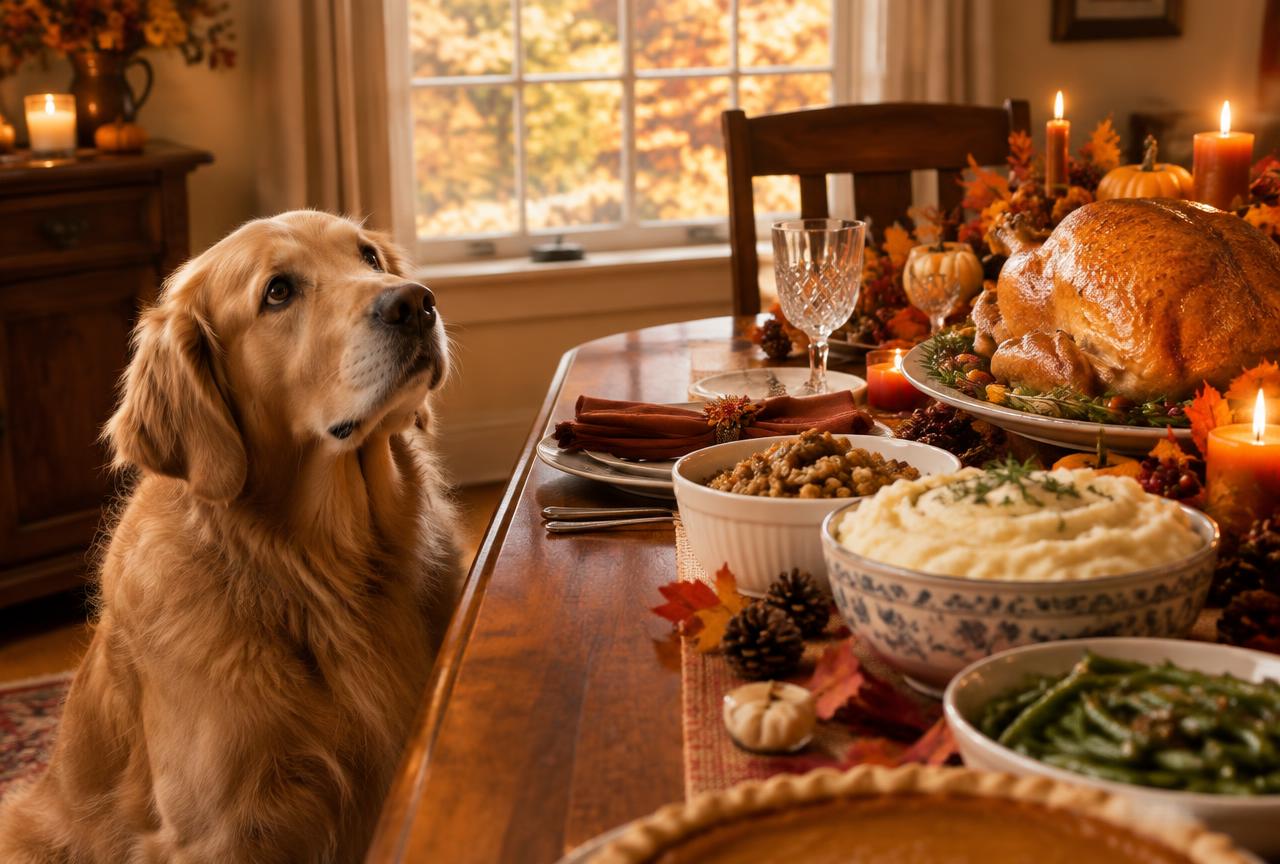
The good news is that your pet doesn't have to miss out on every holiday flavor. Some simple, unseasoned foods can make an occasional treat for healthy dogs and cats. The trick is knowing what is safe, preparing it properly, and keeping portions small.
Every pet is different, so if your dog or cat has food allergies, a sensitive stomach, pancreatitis, kidney disease, diabetes, or another health concern, check with your veterinarian before introducing new foods.
Foods You Can Share in Small Amounts
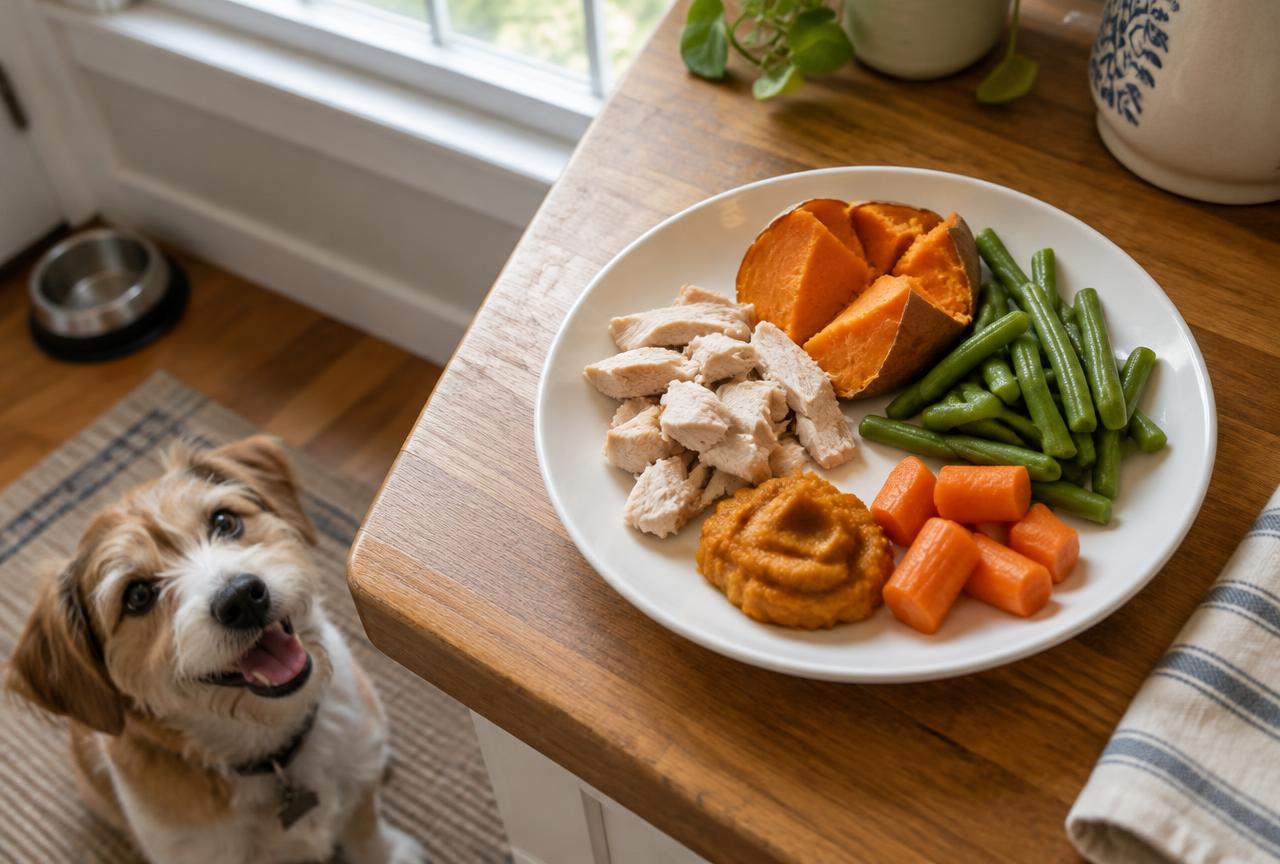
• Plain, fully cooked turkey: Turkey can be a reasonable holiday treat when prepared correctly. Offer a small amount of fully cooked, boneless, skinless meat without butter, gravy, marinades, or seasoning. Remove every bone, and avoid raw or undercooked poultry.
• Plain sweet potatoes: Cooked sweet potato can be a tasty treat for many pets. Serve it plain, without butter, brown sugar, marshmallows, or spices. Skip the sweet potato casserole!
• Plain green beans: Fresh or cooked green beans can be a crunchy or tender treat. Keep them free from salt, butter, garlic, onions, and other seasonings. Green bean casserole, however, is not the same thing.
• Plain pumpkin: Plain cooked pumpkin can be offered in a small amount. Canned pumpkin is fine when it contains only pumpkin. Avoid pumpkin pie filling, which may contain added sugar and spices.
• Carrots: Plain carrots, either raw or cooked, can be an option for many dogs and cats. Cut them into appropriately sized pieces to reduce choking risk, particularly for small pets or enthusiastic eaters.
• A little plain, cooked potato: A small amount of fully cooked potato without butter, salt, gravy, or seasoning may be suitable for some pets. Never offer green potatoes or raw potato, and avoid rich mashed potatoes loaded with dairy and extras.
Keep these foods as occasional treats rather than replacing your pet's regular balanced diet. Even safe foods can cause stomach upset when pets eat too much, and rich, fatty foods can trigger pancreatitis in dogs.
Thanksgiving Foods to Keep Away from Pets
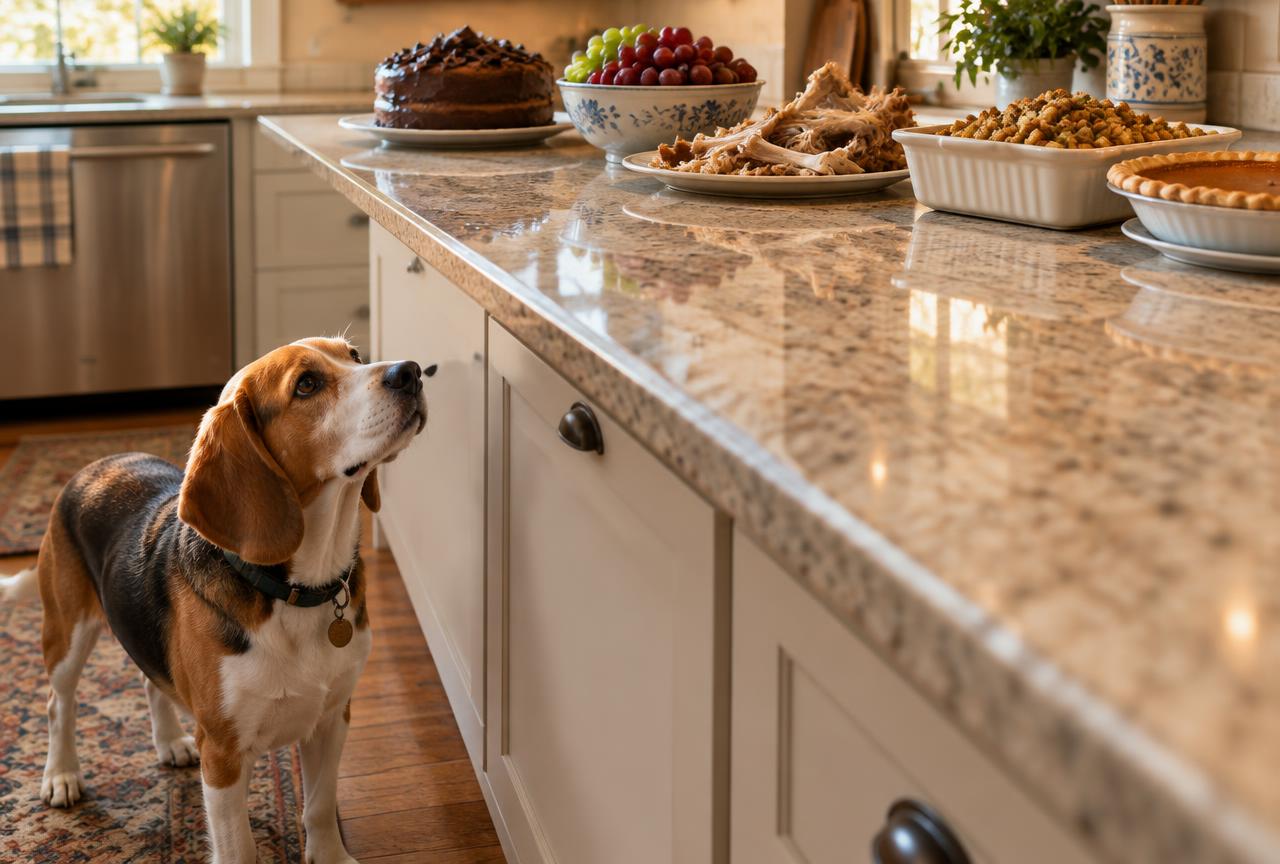
Some of the most popular holiday dishes contain ingredients that can be dangerous for dogs and cats. Others are simply too rich, fatty, salty, or difficult to digest.
• Turkey bones, skin, and fatty scraps: Cooked poultry bones can splinter or cause choking, blockages, and injuries to the digestive tract. Turkey skin, fat, and greasy drippings can upset the stomach and may contribute to pancreatitis.
• Stuffing and dressing: Stuffing often contains onions, garlic, chives, herbs, butter, and seasonings. Onions and garlic are particularly concerning because they can damage red blood cells in dogs and cats.
• Gravy and rich sauces: Gravy may contain onion, garlic, high levels of sodium, and large amounts of fat. It's best to skip it rather than guess what's in the recipe.
• Mashed potatoes and casseroles: Plain cooked potato may be okay in small amounts, but traditional holiday versions often contain butter, cream, cheese, salt, onion, or garlic. Keep the loaded versions on the human menu.
• Grapes and raisins: These can cause serious kidney injury in dogs. Raisins may hide in breads, stuffing variations, and desserts, so check ingredients carefully. Do not offer them to pets.
• Chocolate and sweets containing xylitol: Chocolate can be toxic to dogs and cats. Xylitol, a sweetener found in some sugar-free products, can cause a dangerous drop in blood sugar and other serious complications in dogs. Keep desserts, candy, gum, and baking ingredients secured.
• Macadamia nuts and heavily salted foods: Macadamia nuts are toxic to dogs. Nuts and salty snacks can also cause digestive upset, and excessive salt can be dangerous.
• Raw bread dough and alcohol: Raw yeast dough can expand in the stomach and produce alcohol as it ferments. Alcoholic drinks and foods containing alcohol are also unsafe for pets.
• Pumpkin pie and other rich desserts: Pumpkin itself can be fine in small amounts, but pumpkin pie contains added ingredients that aren't appropriate for pets. Desserts may also contain chocolate, raisins, xylitol, or other hazardous ingredients. Keep the dessert table for people.
These aren't the only foods that can pose a risk. For more information, review the ASPCA's guide to foods pets should avoid.
How to Make Thanksgiving Safer for Your Pets
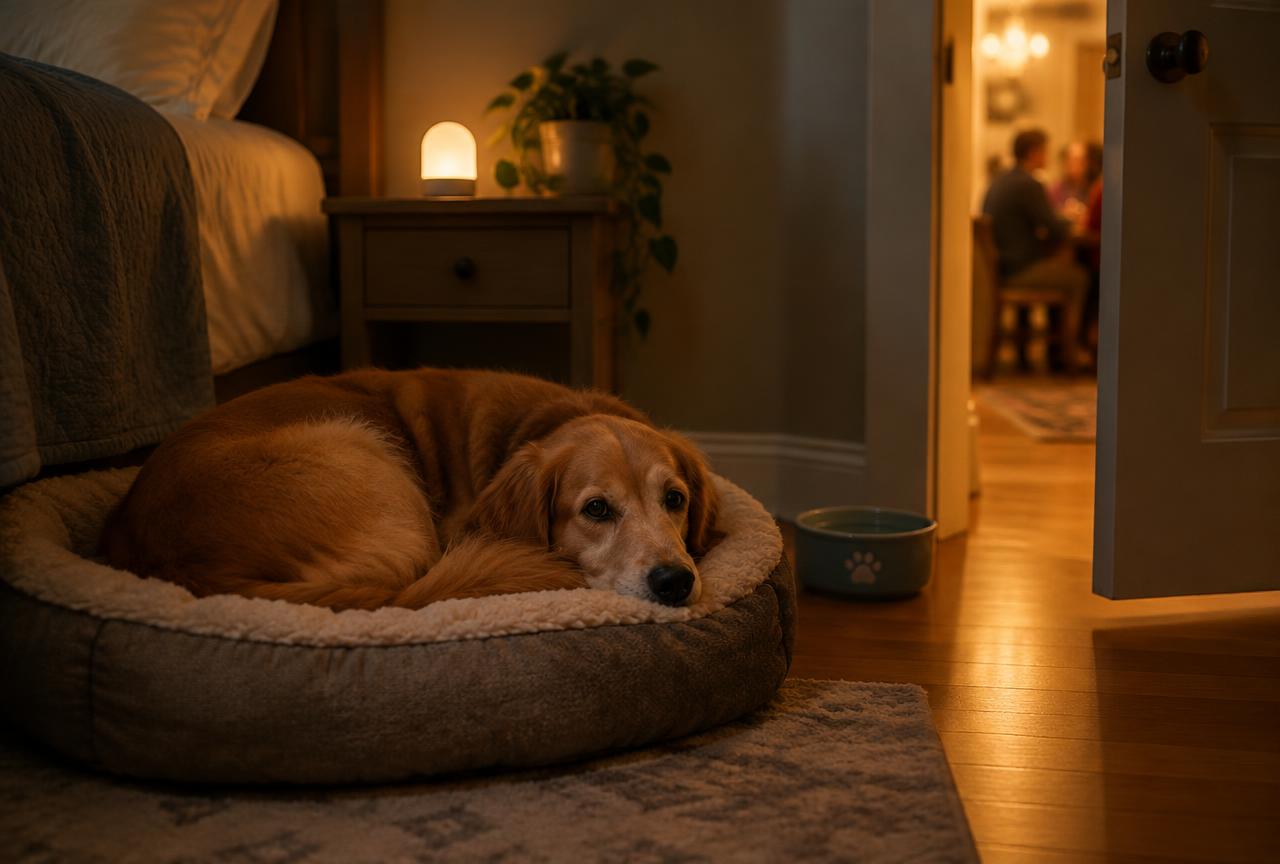
Food isn't the only thing to consider during a busy holiday. Visitors, open doors, tempting trash cans, and a bustling kitchen can all create opportunities for trouble. Here are a few simple ways to help your pets enjoy the holiday safely.
• Give your pet their own holiday treat. If you'd like to include your pet in the celebration, set aside a few small pieces of plain turkey or another suitable food before adding seasonings. You can also offer their normal meal or a favorite pet-safe treat.
• Ask guests not to share table scraps. Your family and friends may mean well, but it's easy for several small bites to add up. Let guests know that only approved treats are allowed.
• Keep food and trash secured. Put leftovers away promptly, use a secure trash can, and keep turkey bones, foil, plastic wrap, skewers, and food packaging out of reach. A quick trip to the kitchen can become an opportunity for a determined counter-surfer.
• Watch the kitchen. Hot pans, dropped food, open ovens, and busy feet can all pose risks. Consider keeping pets out of the cooking area while everyone is preparing dinner.
• Create a quiet retreat. Some pets love having a house full of people; others prefer a quiet room, a cozy bed, and a break from the excitement. Make sure your pet has access to a comfortable space where they can relax undisturbed.
• Be careful with doors and decorations. Guests coming and going can make it easier for pets to slip outside. Keep an eye on exits and make sure identification information is current. Keep candles, cords, and potentially hazardous plants or decorations out of reach.
What If Your Pet Eats Something They Shouldn't?
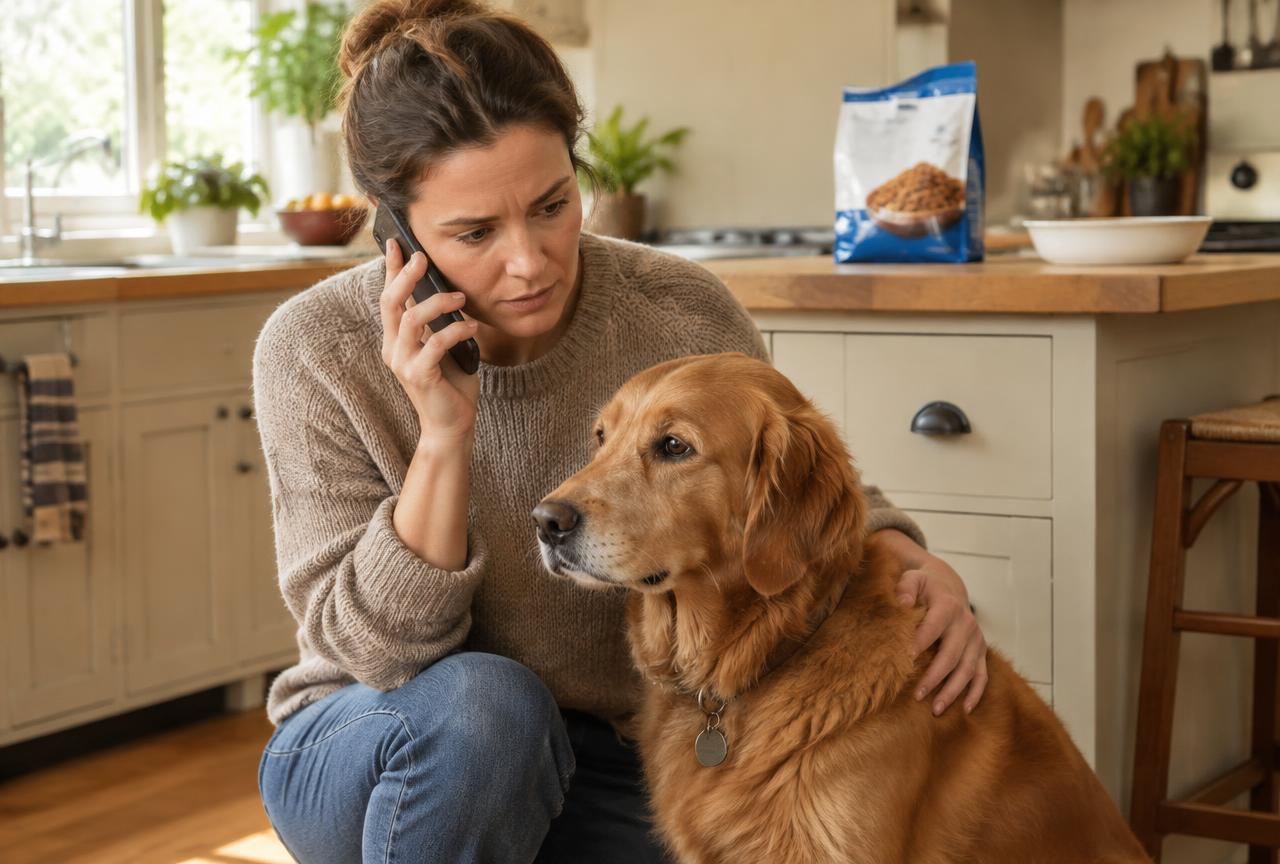
Accidents happen, especially when everyone is busy preparing a holiday meal.
If your pet eats a potentially toxic food or ingredient, contact your veterinarian or an animal poison control service promptly. Don't wait for symptoms to appear, and don't try to induce vomiting unless a veterinary professional specifically instructs you to do so.
In the United States, the ASPCA Animal Poison Control Center can be reached at (888) 426-4435. Fees may apply.
If your pet is choking, having trouble breathing, collapsing, experiencing seizures, or showing other severe symptoms, seek emergency veterinary care immediately.
When contacting a veterinarian or poison control service, try to have the food packaging or ingredient list available, along with an estimate of how much your pet ate and when it happened.
A Thanksgiving Wish from AZ Pet Stylist
At AZ Pet Stylist, we're thankful for the pets who make us laugh, the families who trust us with their care, and all the little moments that make working with animals so rewarding.
We hope your Thanksgiving is filled with good food, happy memories, and plenty of tail wags. If your pets want to join the festivities, a little planning can help make sure their holiday treat is both delicious and safe.
And remember: your pet doesn't need a plate piled high with Thanksgiving leftovers to feel included. Sometimes their favorite treat, a cozy place to nap, and a little extra time with their favorite people are all they need.
From our family to yours, have a wonderful, safe, and happy Thanksgiving!
With gratitude, The AZ Pet Stylist Team
This article is for general educational purposes and is not a substitute for advice from your veterinarian.
Thanksgiving Pet Safety FAQ
Can dogs eat turkey on Thanksgiving?
Yes, in small amounts — as long as it's fully cooked, boneless, skinless, and free of butter, gravy, marinades, and seasoning. Remove every bone, since cooked poultry bones can splinter and cause choking or digestive injuries.
Can cats eat Thanksgiving turkey?
A small piece of plain, fully cooked, unseasoned turkey is generally fine for healthy cats. Skip the skin, bones, gravy, and anything seasoned with onion or garlic, and check with your veterinarian first if your cat has any health concerns.
What Thanksgiving foods are toxic to pets?
The biggest concerns are cooked bones, onions, garlic, grapes, raisins, chocolate, xylitol (a sweetener in some sugar-free products), macadamia nuts, raw bread dough, and alcohol. Rich, fatty foods like gravy, skin, and casseroles can also trigger pancreatitis in dogs.
What should I do if my pet eats something they shouldn't?
Contact your veterinarian or an animal poison control service right away — don't wait for symptoms. In the U.S., the ASPCA Animal Poison Control Center is (888) 426-4435 (fees may apply). If your pet is choking, collapsing, having seizures, or struggling to breathe, seek emergency veterinary care immediately.
Related reading
Ready to pamper your pet?
Our mobile spa comes to your driveway — climate-controlled, filtered water, and one-on-one attention from start to finish.